
The Team Swell Methodology: Structuring the Lifecycle of High-Performing Team Framework
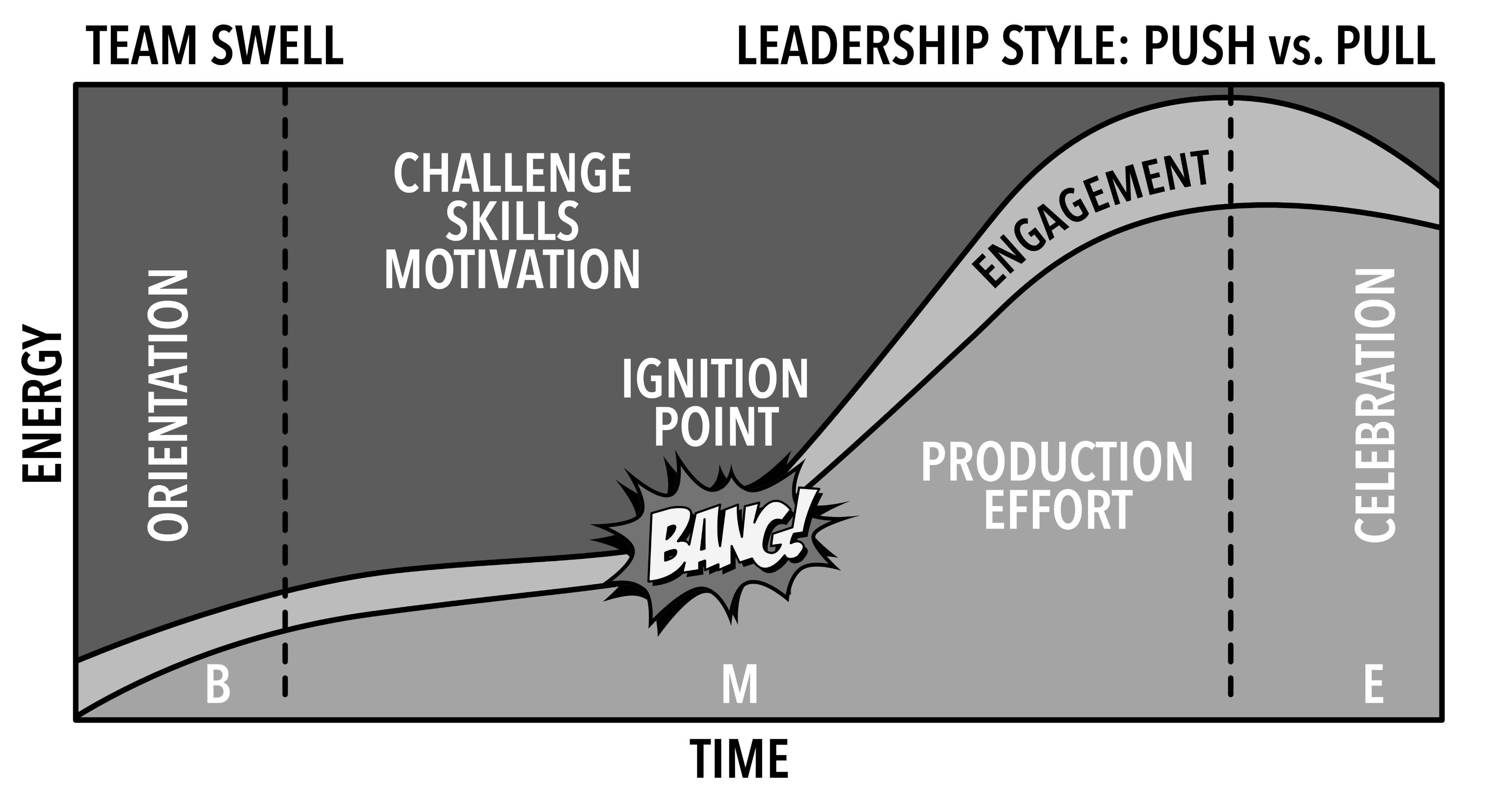
Formulated by Hall of Fame speaker Tyler Hayden, "The Team Swell" is an operational blueprint mapping the exact behavioral science of a high-functioning team hitting its absolute peak. From the moment your team walks through the door to the final project debrief, The Team Swell methodology decodes the specific leadership interventions required across a project’s lifecycle to sustain long-term engagement.
Core Deliverables: 1. The BME Lifecycle Framework 2. Push vs. Pull Leadership Matrix 3. Time & Energy Optimization Strategies.
Section 1: The Core Philosophy — What is The Team Swell?
Axiom: "A great team doesn't just happen; it is actively engineered through a beginning, middle, and an end."
Think back to a time when you had a high-functioning team that really knocked a project or venture out of the park. That momentum isn't accidental. It requires a leader who understands how to invest and plan for specific developmental stages.
The Team Swell methodology matters specifically for managers who want to:
🔥 Increase strategic engagement over long-term projects.
🔥Explore planning for sustained team production.
🔥Invest in levelling-up their dynamic leadership skills.
🔥Focus on building a deeply connected, strong team culture.
Section 2: The BME Lifecycle (Beginning, Middle, and End)
Every team project has a beginning, middle, and end phase (BME). Long-term operations should have micro-BME cycles built throughout their lifespan (quarterly, annually, etc.).
1. Beginning (The Orientation Stage)
The Profile: In this stage, production output is very low—it is strictly the planning and organizing phase. Done correctly, this is where the engagement foundation is laid.
Core Leadership Actions:
🔥Get to know basic information (names, roles, specific skills, and strengths).
🔥Establish the purpose of the team, how work will be measured, and share the overarching strategy.
🔥Set the clear timeline and expectations for the team's time together.
🔥Audit the resources and context in relation to what people need to get the job done.
2. Middle (The Active Work Phase)
The Profile: This is the reason the team exists. Through appropriate injections of challenge, skill allocation, and motivation tools, engagement elevates and production amplifies.
The Three Drivers of the Middle Phase:
🔥 Ignition: The tipping point when it all comes together, and output dramatically trends upward.
🔥 Production: The measurable work your team is tasked to complete because they are properly skilled and highly motivated.
🔥 Engagement: The experiential feeling of the team functioning together, sharing energy, and taking immense pride in the work done.
3. End (The Celebration Phase)
The Profile: The most critical, yet frequently overlooked stage. This provides the psychological closure that human beings crave.
Core Leadership Actions:
🔥 Recognize achievements and efforts with a logical "close" or "exit" from the project phase.
🔥 Leverage organizational success as a springboard into the "next phase" or future onboarding.
🔥 Create a touchstone of positive memories and feelings to ensure long-term talent retention.
Section 3: Push vs. Pull Leadership Tactics
Depending on the developmental stage of your team within the BME lifecycle, a savvy manager must purposefully utilize either a Push or Pull leadership strategy to get the best out of their people.
The Push Strategy (Task-Centred Approach)
Behavioural Profile: Exerting clear direction using strong motivational tactics, heightened challenges, and specific instructions to elicit a sense of urgency.
Strategic Timing: Critical to use at the Beginning of the team's time together, or during times of project crisis.
The Pull Strategy (Goal-Centred Approach)
Behavioural Profile: Sharing the locus of control with a positively functioning team. Involves inquiry, guided facilitation, and leading from an agreed-upon approach.
Strategic Timing: Highly effective in the Middle stages to encourage autonomy and a team-centred approach to decision making and effort.
Section 4: The Engines of Engagement — Time and Energy
The two most critical variables of team engagement are Time and Energy. Too often, leaders discount the function of time and its direct correlation to team energy.
Time (The Forgotten Key)
Time enables authentic engagement. If a project drags too long, the team loses focus; if the timeline is too short, the team fractures under stress. An engaged team thrives on a timeline built for connection, collaboration, eustress (positive challenge), celebration, and visioning.
Energy (The Leadership Maestro)
A great manager serves as the maestro of their team’s energy. By carefully calculating when to add tasks, when to inject challenges, and when to apply motivation, the leader inspires the team to generate and share their own energy. As collective energy increases, production and engagement universally amplify.
Written by Tyler Hayden | [email protected]. Repurposing info requires review; must attribute and backlink to tylerhayden.com and teambuildingschool.com.
What we do.
We connect 100,000+ qualified prospects looking for financial advice, lending, protection, debt help and claims to advisors and brokers every year.
We will always provide the best service.
We don't launch rockets. We just generate leads from Google, Bing and YouTube, connecting them with your team in real time. And you know what, we're bloody good at it.
Get leads from our existing matured campaigns.
Let us build bespoke lead-gen campaigns in your brand.
Deploy our AI sales androids to boost contact rate.
Utilise our proven systems and technology to increase your return on ad spend.

What We Do
Your proven customer acquisition system that increases conversion rates at every step of the customer journey so you can enjoy record breaking sales.
Effective Lead Generation
Strategically focused on high-intent leads generation tactics from Google, Bing, & YouTube.
Database Reactivation
Turn your old data into fresh appointments and sales, utilising our sales android that never rests.
Appointment Setting
Transform your contact rate and campaign profitability with our appointment setting sales android.
Blog
Your proven customer acquisition system that increases conversion rates at every step of the customer journey so you can enjoy record breaking sales.
Team Building Your Team Actually Likes - Delivery Tips and Ice Breakers
Delivering team building comes down to good team learning, 6 winning activities, a bunch of tips & a video on Youtube if you want t he full session.
Unlocking the Power of Team Building: Activities That Connect and Engage
Team building isn’t just a buzzword; it’s a vital part of creating a cohesive work environment where everyone feels valued and connected. Today, I’m going to guide you through fifteen impactful activities and share key strategies (in the video and 6 here in the blog) for making these experiences meaningful.
The Importance of Team Building
Let’s be honest: finding team building activities that everyone enjoys can feel like trying to find a cat that likes to flip burgers—it’s challenging! Often, you might encounter that familiar cringe when suggesting activities because someone had a negative experience in the past. But here’s the kicker: team building is crucial for enhancing safety, improving sales, and boosting employee retention. It’s not just about fun; it’s about creating an environment where people can learn and grow together.
Are You in the Right Place?
If you manage a team and want to foster better connections, or if you’re tired of traditional, stale team building activities, you’re in the right spot. I’ll provide you with fresh, tested activities that resonate with today’s workforce. The goal is to ensure that your team feels their time is well spent, and that they walk away feeling more connected.
Good Team Building Equals Good Team Learning
Here’s my philosophy: good team building is synonymous with good team learning. Every team building event should be viewed as a learning opportunity—an occasion to enhance productivity, trust, and the essential skills that contribute to our success. When we treat our teams as learning units, we can design activities that yield significant outcomes.
Understanding Learning Styles
Howard Gardner, a Harvard professor, introduced the concept of multiple intelligences in his book “Frames of Mind.” This framework can be a game-changer for team building. Understanding the diverse learning styles within your team—whether they are kinesthetic, mathematical, logical, or visual—will help you select activities that resonate with everyone.
Team Building Activities You Can Implement Today
Now, let’s dive into the activities! Here’s a sneak peek at some of the fun and effective team building exercises you can try out:
1. Commonalities
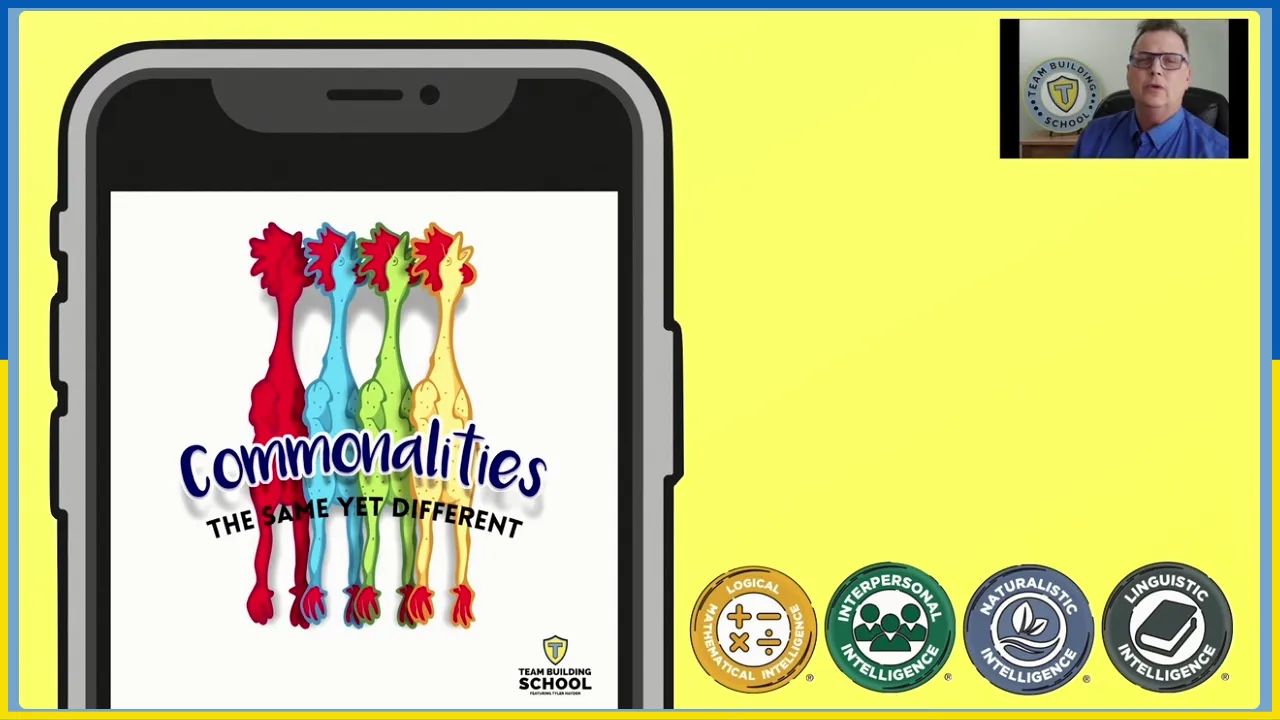
This activity is fantastic for both mathematical-logical and interpersonal learners. Break your team into smaller groups and challenge them to find commonalities among themselves. The catch? They can’t state the obvious! For instance, instead of saying, “We all have hair,” they might discover they all have traveled overseas. The team with the longest list wins!
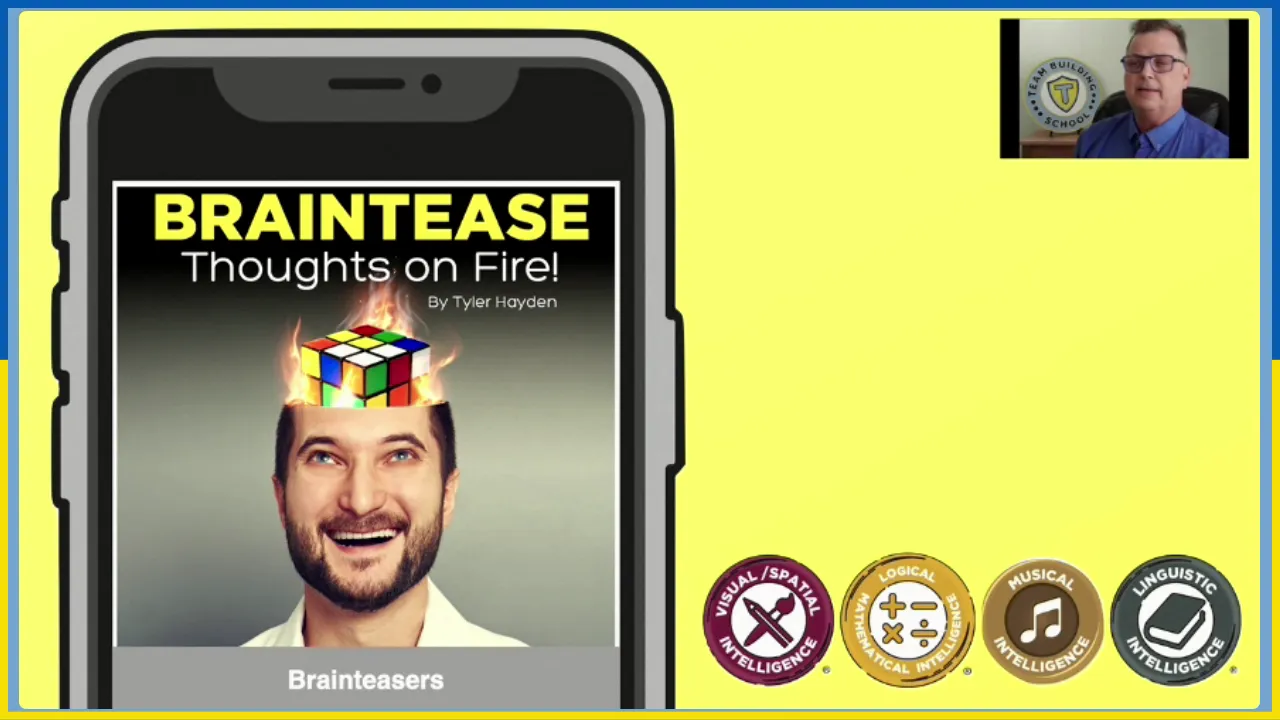
2. Braintease
Perfect for strategic thinking, brainteasers can help your team engage in problem-solving. Present a series of brainteasers during a planning session to stimulate strategic thought and collaboration.
3. Coffee Talk
This fast-paced activity allows team members to connect on a personal level. Pose open-ended questions, like “My dream vacation is…” and give each person a minute to share their thoughts. This not only fosters interpersonal relationships but also encourages active listening.

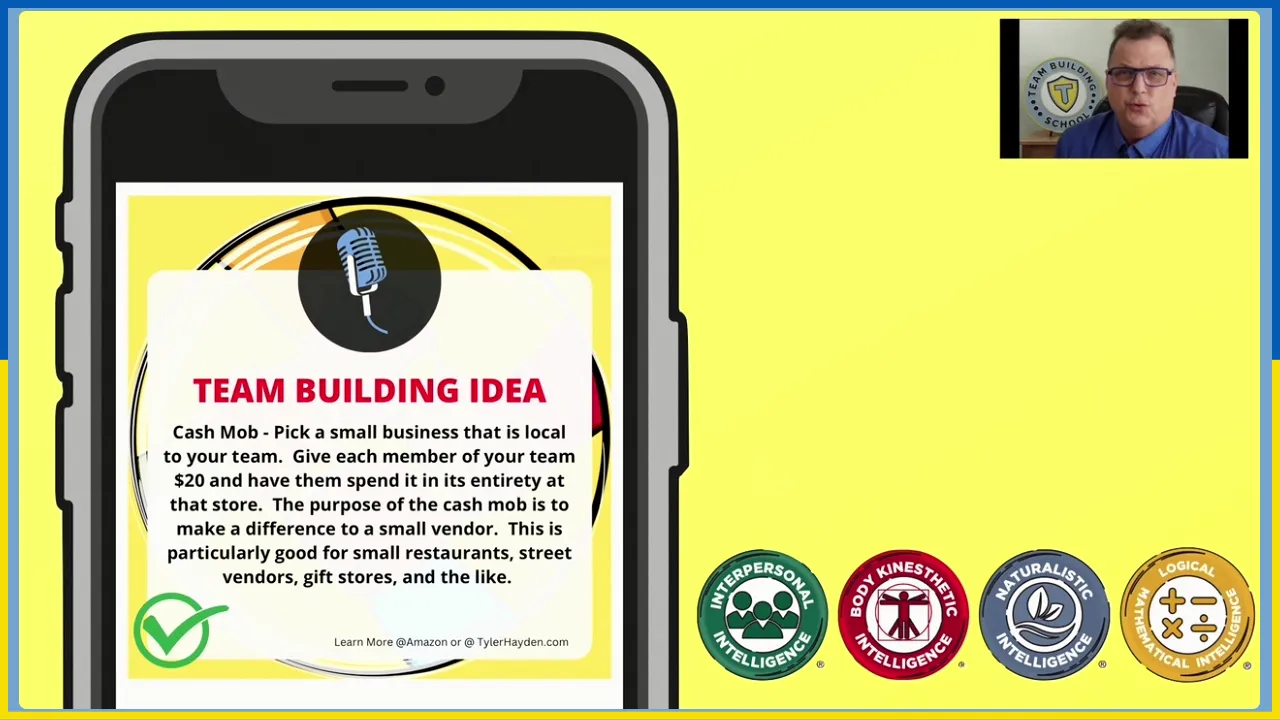
4. Cash Mob
Take your team out for lunch, but here’s the twist: each member receives a small amount of cash to spend at a local vendor. This not only encourages team bonding but also supports local businesses.
5. Two Thumbs Up
This fun activity involves passing around cards with questions. Each person shares their answer while others react with thumbs up or down. It’s a great way to gauge opinions while encouraging lighthearted conversation.

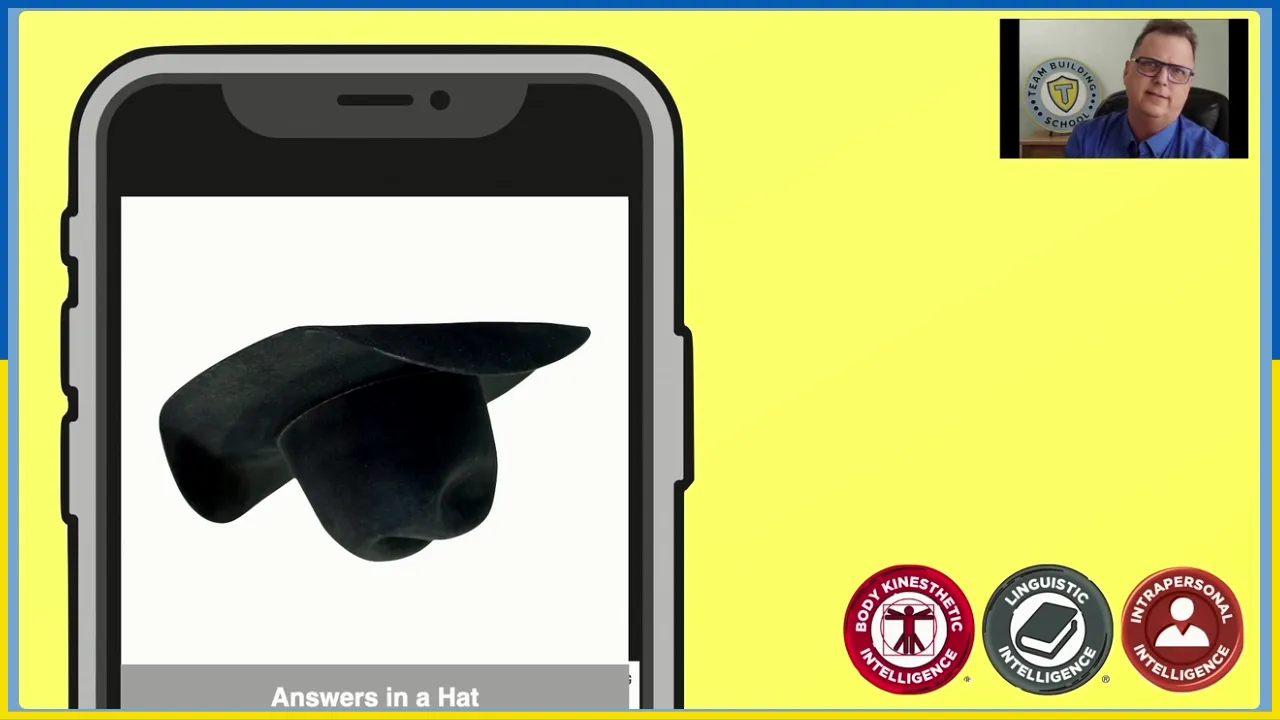
6. Answers in a Hat
In this activity, everyone writes down answers to a question and tosses them into a hat. This allows for anonymous sharing and can spark engaging discussions during debriefing.
The Three F's of Team Building
When planning your team building activities, keep in mind the three F’s: Fun, Fast Forward, and Fix. Here’s how they work:
Fun: This is the classic aspect of team building that everyone knows and loves.
Fast Forward: Use team building as a way to enhance training sessions, helping to solidify learning in a fun way.
Fix: If your team is facing challenges, use team building to address those issues constructively.
Final Thoughts
Team building is not just an activity; it’s a strategy for improving engagement, productivity, and retention within your team. By understanding your team’s learning styles and implementing a variety of activities, you can create a more cohesive and motivated workforce. Remember, the goal is to create an environment where everyone feels valued and connected.
If you're looking for more resources or want to dive deeper into team building strategies, consider joining my Team Building School. Together, we can create extraordinary experiences from ordinary activities!
Thank you for joining me today! I’m excited to see how you implement these ideas in your teams.
Free Stuff!
Join us at Team Building School
Unlocking the Power of Team Building: Activities That Connect and Engage
Team building isn’t just a buzzword; it’s a vital part of creating a cohesive work environment where everyone feels valued and connected. Today, I’m going to guide you through fifteen impactful activities and share key strategies (in the video and 6 here in the blog) for making these experiences meaningful.
The Importance of Team Building
Let’s be honest: finding team building activities that everyone enjoys can feel like trying to find a cat that likes to flip burgers—it’s challenging! Often, you might encounter that familiar cringe when suggesting activities because someone had a negative experience in the past. But here’s the kicker: team building is crucial for enhancing safety, improving sales, and boosting employee retention. It’s not just about fun; it’s about creating an environment where people can learn and grow together.
Are You in the Right Place?
If you manage a team and want to foster better connections, or if you’re tired of traditional, stale team building activities, you’re in the right spot. I’ll provide you with fresh, tested activities that resonate with today’s workforce. The goal is to ensure that your team feels their time is well spent, and that they walk away feeling more connected.
Good Team Building Equals Good Team Learning
Here’s my philosophy: good team building is synonymous with good team learning. Every team building event should be viewed as a learning opportunity—an occasion to enhance productivity, trust, and the essential skills that contribute to our success. When we treat our teams as learning units, we can design activities that yield significant outcomes.
Understanding Learning Styles
Howard Gardner, a Harvard professor, introduced the concept of multiple intelligences in his book “Frames of Mind.” This framework can be a game-changer for team building. Understanding the diverse learning styles within your team—whether they are kinesthetic, mathematical, logical, or visual—will help you select activities that resonate with everyone.
You can watch the whole Linkedin Live here on Youtube: https://youtu.be/TLttK2weBhA
Team Building Activities You Can Implement Today
Now, let’s dive into the activities! Here’s a sneak peek at some of the fun and effective team building exercises you can try out:
1. Commonalities
This activity is fantastic for both mathematical-logical and interpersonal learners. Break your team into smaller groups and challenge them to find commonalities among themselves. The catch? They can’t state the obvious! For instance, instead of saying, “We all have hair,” they might discover they all have traveled overseas. The team with the longest list wins!
2. Braintease
Perfect for strategic thinking, brainteasers can help your team engage in problem-solving. Present a series of brainteasers during a planning session to stimulate strategic thought and collaboration.
3. Coffee Talk
This fast-paced activity allows team members to connect on a personal level. Pose open-ended questions, like “My dream vacation is…” and give each person a minute to share their thoughts. This not only fosters interpersonal relationships but also encourages active listening.
4. Cash Mob
Take your team out for lunch, but here’s the twist: each member receives a small amount of cash to spend at a local vendor. This not only encourages team bonding but also supports local businesses.
5. Two Thumbs Up
This fun activity involves passing around cards with questions. Each person shares their answer while others react with thumbs up or down. It’s a great way to gauge opinions while encouraging lighthearted conversation.
6. Answers in a Hat
In this activity, everyone writes down answers to a question and tosses them into a hat. This allows for anonymous sharing and can spark engaging discussions during debriefing.
The Three F's of Team Building
When planning your team building activities, keep in mind the three F’s: Fun, Fast Forward, and Fix. Here’s how they work:
Fun: This is the classic aspect of team building that everyone knows and loves.
Fast Forward: Use team building as a way to enhance training sessions, helping to solidify learning in a fun way.
Fix: If your team is facing challenges, use team building to address those issues constructively.
Final Thoughts
Team building is not just an activity; it’s a strategy for improving engagement, productivity, and retention within your team. By understanding your team’s learning styles and implementing a variety of activities, you can create a more cohesive and motivated workforce. Remember, the goal is to create an environment where everyone feels valued and connected.
If you're looking for more resources or want to dive deeper into team building strategies, consider joining my Team Building School. Together, we can create extraordinary experiences from ordinary activities!
Thank you for joining me today! I’m excited to see how you implement these ideas in your teams.


Check Tyler's Availability for Your Next Event
Grab a time to connect or shoot us an email.
Follow Us & Join the Conversation


Locations Served
Shop, Learn, and Explore
Speaker Topics
Location and Contact
(902) 541-0858
23 Horizon Road
Bedford, Nova Scotia B4A 3N2
Canada
© 2026 Tyler Hayden Inc. All rights reserved.