
Hall of Fame Motivational Speaker & Bestselling Author
Looking for a great interview on your Podcast? A custom written article with your audience in mind? An expert to respond to a story in the media?
Send your request, we will respond back.
Biography :
Tyler Hayden CSP, HoF, BRM
Hall of Fame Speaker Tyler Hayden CSP HoF, is a keynote speaker like you’ve never experienced before!
Lorem ipsum dolor sit amet, consectetu adipiscing elit, sed do eiusmod tempor incididunt ut labore et dolore magna aliqua. Ut enim ad minim veniam, quis nostrud exercitation ullamco laboris nisi ut aliquip ex ea commodo.
Unlike generalist agencies, we are entirely focused on customer acquisition for financial advice, lending, protection, debt help, litigation and claims - understanding the complexities of regulatory requirements for advertising such services.
You’re the expert at delivering the service you provide. We’re the experts in generating, qualifying and nurturing leads that turn into profitable customers.
Lorem ipsum dolor sit amet, consectetu adipiscing elit, sed do eiusmod tempor incididunt ut labore et dolore magna aliqua. Ut enim ad minim veniam, quis nostrud exercitation ullamco laboris nisi ut aliquip ex ea commodo.
What we do.
We connect 100,000+ qualified prospects looking for financial advice, lending, protection, debt help and claims to advisors and brokers every year.
It's all about the numbers.
As a data driven performance marketing agency our whole business is based on making the numbers stack with a positive returns on ad spend.
500+
Project Delivered
$60M+
In Partner Revenue
10,346
Positive Reviews

What our clients love about GhlElite.
We treat every design and development project as an opportunity to create an online representation of our client, so we ensure that we give all our best to provide a beautiful and functional website or mobile application.
Create your amazing feature.
Add your ideas here.
Give more your amazing feature or ides.
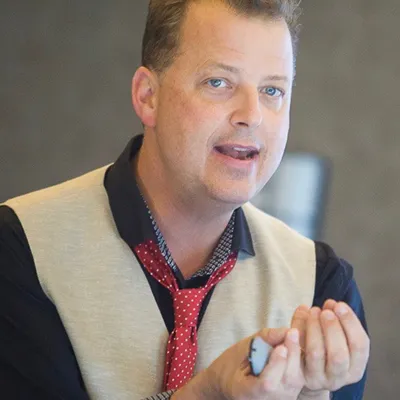
Motivational Speaker: Tyler Hayden, CSP, HoF, BRM
For 30 years Tyler has been a sought after internationally respected team building designer, best-selling author, and business speaker. He delivers a powerful punch that inspires teams, innovates management techniques, and invigorates team engagement.
When it comes to empowering audiences and teams to succeed—and to be their best every day—Tyler leads the way with insight and laughter.
His team building workshops and motivational keynote speeches receive rave reviews from managers and business leaders alike. “Energizing,” “hilarious,” “who knew learning could be this much fun.” and “ideas I can easily implement,” are things regularly said by Tyler’s clients about his keynotes and team building events.
He is the author of over twenty-five books and the creative mind behind 100s of powerful and fun team building products including:
The Business that Cared About People, Virtually Engaged Team Building Activities, The 14-Minute Mentor, Livin’ Life Large, Father’s & Mother’s Message in a. Bottle, TEAM Activities, and More.
Tyler is a thought leader who works internationally with Fortune 500, Inc 5000 and Premier Associations to level-up their learning design.
Tyler’s innovative gamification and in-depth understanding of multiple intelligences yields programs that increase engagement and learning in amazingly simple ways.
FOR MORE INFORMATION VISIT: https://www.tylerhayden.com and https://teambuildingschool.com
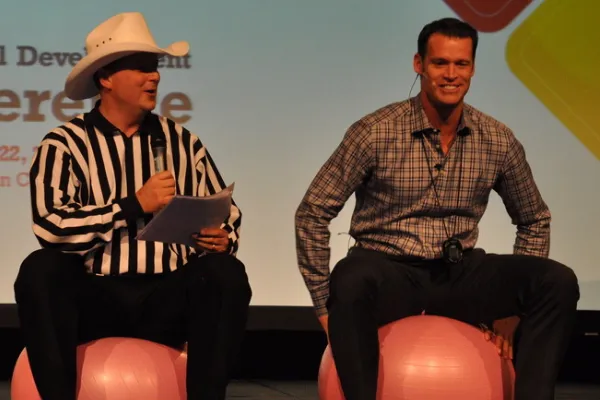

Thought Leader: Team Building School
Tyler Hayden is a Team Building Consultant and Trainer who is offering a multitude of courses that offer tips from his professional team building strategies.
Time is a commodity that is invested and should never be wasted. Using our laser focus team learning selection process you will be able to choose events that will transform team building into team learning. Investments in your team have shown marked improvements in: retention, safety, customer service, slippage, and much more.
Talk to our team to find out what team learning events will be best for your team. You can choose from a selection of ways to implement your team building experience.
You can hire us to provide the customized event live-and-in-person at your meeting or event. As well, many of our events can be produced both virtually or as a hybrid.
Finally, if you would like to do it yourself you can check out some of our Do-It-Yourself download and go tools. All of the team building events listed have been approved by Team Building School.
Each activity is built with defined and measurable learning objectives, high levels of fun and engagement, and built with specific learning intelligences in mind. Discover the difference professionally designed team building/learning can make on the success of your team.
Browse courses and other resources, go to: https://teambuildingschool.com
Images: Canadian Hall of Fame Speaker Tyler Hayden CSP, HoF, BRM
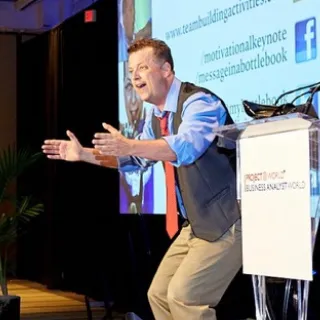
Live Action Photos
Discover Keynote and Team Building Photos of Canada's Answer to Alternative Energy Tyler Hayden from Vegas Stages to Boardrooms

Professional Head Shots
Professional Head Shots from strait laced to hilarious. We have them all ready to download. Great for byline photos.
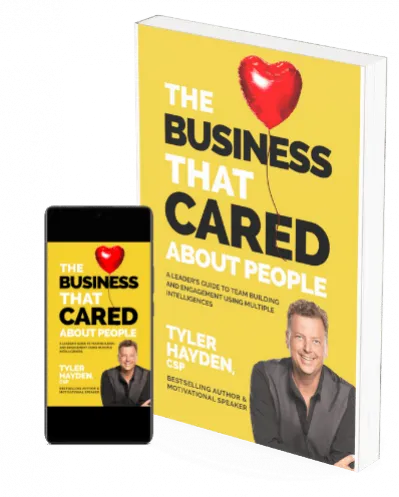
Book Covers
Book cover images and course images ready to download to enhance the graphical impact of your story or podcast ready at your fingertips.

Logos and More
Discover Tyler Hayden and Team Building School logos ready for print and digital media. High or Low resolution, black and white or colour.
Explore More: Let's Get Social, Websites & Links
LinkedIn: @Tyler Hayden
YouTube: @Teambuildingschool
Facebook: @motivationalkeynote
Instagram: @tylerhayden_teambuilding
Pintrest: @teambuildingactivity
Motivational Speaker: www.tylerhayden.com
Team Building Courses: www.teambuildingschool.com
Team Building AI: www.rubberchicken.ai
Amazon: Author Page
Blog: Team Building Blog

Story Angles & Questions:
For Possible Articles, Interviews & More
Expert Advice to Help Employers (& Employees!) Manage the Summer Slump, Slow Business, or Lazy Days
How to Effectively Build Trust in Work Teams
Addressing Work-From-Home Concerns: Electronic Communication, Accountability, & Employee Trust
Modern Team Building Strategies for Employers: Choosing Activities Based on Employees
Why Learning Modalities Are the Key to Real Team Building
Modern Team Building Strategies for Employers: Choosing Activities Based on Employees
How Team Building is the Key to Employee Productivity & Mental Health
How Team Building is the Key to Employee Productivity & Mental Health
Tips for Employers Managing the Multi-Generational Workplace
The Impact of Employee Mental Health on Profits & Productivity
Connection & Collaboration: How to Build Better Engagement in the Office
How Business Leaders & Managers Can Cultivate an Atmosphere of Positive Mental Health (& Self-Care) in the Office
Costumer review.
See why customers love GHL Elite.

"If you're looking for an all-in-one app to help you increase sales and save time on follow-ups, I would highly recommend NexLevel CRM."
– Rachel Johnson


"Our team has been using NexLevel for a few months and we are very happy with the results. We've closed more deals than ever before and our sales team loves it."
– Mike Nord
"You never know what you're missing until you try NexLevel. We've been using it for 9 months and it has helped us double our pipeline and close more deals."
– Heather Mathewson

"Since using NexLevel over a year ago, I’ve generated $300k+ in new revenue and saved more than 20 hours per week on administrative tasks like reminders and reschedules."
– Ranjana Muthaliar
Guided by our values, we deliver exceptional results.
Through our team of #GhlElite - who's bar for quality is set reassuringly high
Excellent consumers
We truly strive for the best outcome for the consumers, as great consumer outcomes will lead to fantastic campaign results - making life a whole lot easier.
Transparency and honesty
Like any partnership in life, these two elements are key to success. The good, bad and ugly needs to be shared, discussed and built upon to succeed.
Real time partnerships
We go beyond supplier and buyer, by deeply integrating our proven systems and processes into your business, squeezing the maximum juice from all your leads.


What We Do
Your proven customer acquisition system that increases conversion rates at every step of the customer journey so you can enjoy record breaking sales.
Effective Lead Generation
Strategically focused on high-intent leads generation tactics from Google, Bing, & YouTube.
Database Reactivation
Turn your old data into fresh appointments and sales, utilising our sales android that never rests.
Appointment Setting
Transform your contact rate and campaign profitability with our appointment setting sales android.
Blog
Your proven customer acquisition system that increases conversion rates at every step of the customer journey so you can enjoy record breaking sales.
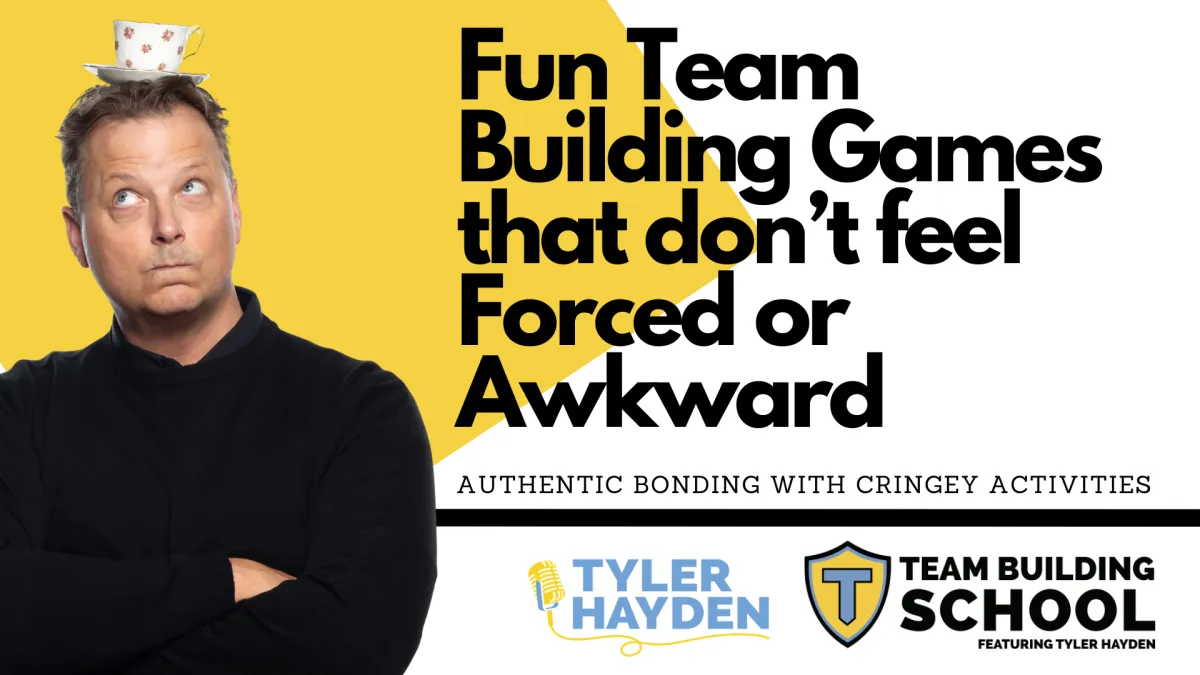
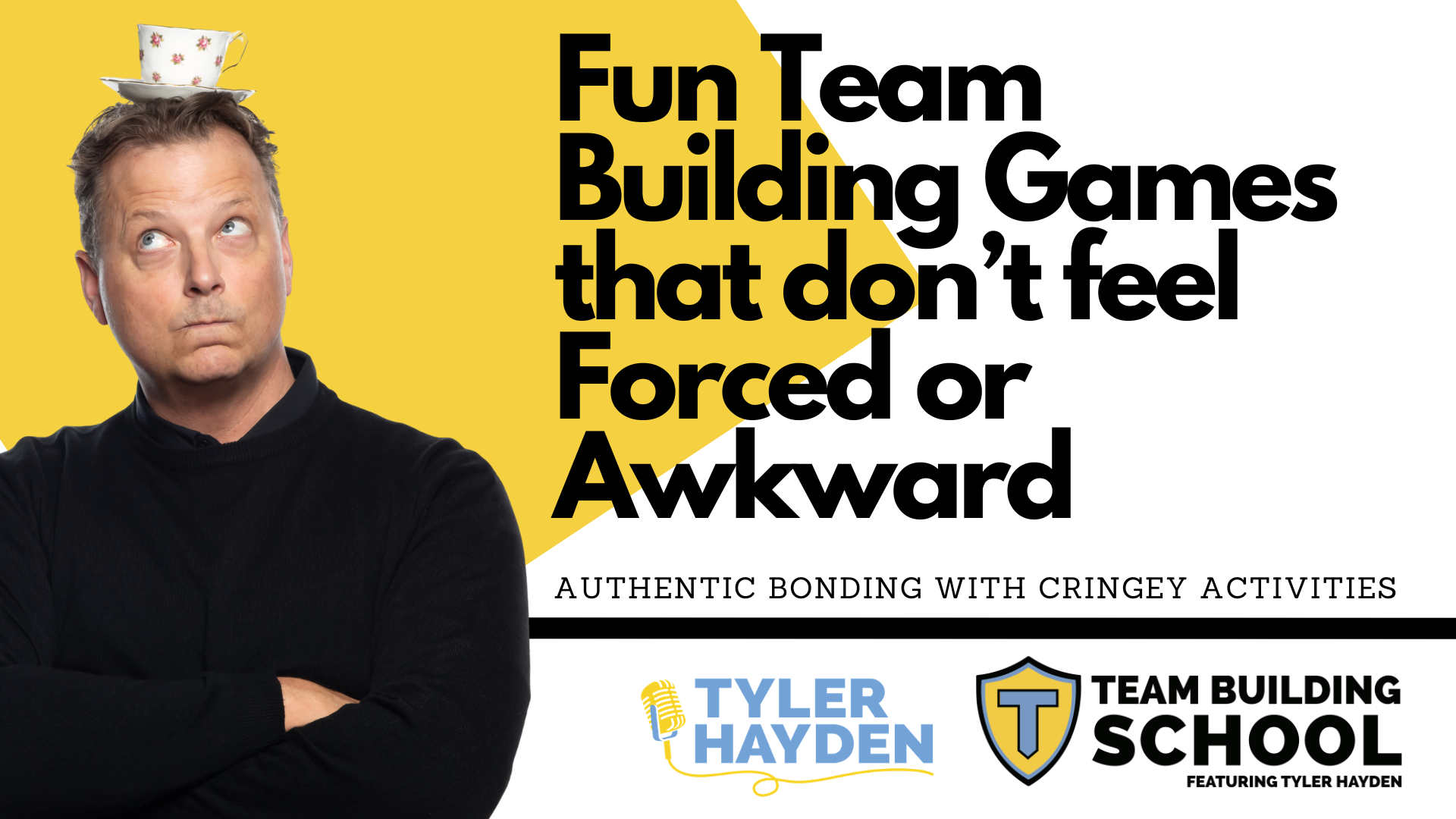
Fun Team Building Games That Don't Feel Forced or Awkward
Fun Team Building Games That Don't Feel Forced or Awkward
By Tyler Hayden CSP, HoF — Hall of Fame Motivational Speaker & Team Building Expert
Let's start with an honest confession: most team building activities feel awkward because theyshouldfeel awkward.
Not because team building itself is awkward. But because someone picked the wrong activity, for the wrong group, at the wrong time — and then wondered why the room didn't light up.
The problem isn't team building. It's the selection process. And after 30 years of designing and delivering team experiences for audiences from 8 to 8,000, I can tell you exactly where it goes wrong — and how to fix it.
Why Activities Feel Forced: The GRABBBS Checklist
Before you pick a single activity, you need to understand where your group actually is.
I use a framework from the bookIslands of Healingcalled theGRABBBS Modality Checklist. It stands for:
G— Goals
R— Readiness
A— Affect (how people are feeling emotionally)
B— Behavior (how the group is acting)
B— Body (physical readiness and energy)
S— Stage (where the group is in its development)
Every single letter matters. But in my experience,Goals is where it almost always breaks down.
If the activity isn't connected to something the team actually cares about — if it doesn't relate to the work they do, the challenges they're facing, or the direction they're heading — it will feel pointless. And pointless activities feel awkward by definition.
When people can see thewhybehind what you're asking them to do, they lean in. When they can't, they mentally check out and start counting ceiling tiles.
Start with goals. Always.
The Difference BetweenFeelingFun andBeing Fun
There's a distinction worth making here, and most facilitators never make it.
An activity thatfeelsfun might get a good laugh. People smile, maybe groan at the right moments, and move on with their day. But an activity that is fun -genuinely, deeply fun - aligns with who your people actually are and how they prefer to engage.
That's whereMIQ — Multiple Intelligence Quotient— comes in.
If your team skews toward mathematical-logical thinkers, give them activities with structure, metrics, and clear outcomes. If they're kinesthetic learners, build in movement and doing. If they're interpersonal, prioritize connection and conversation. If they're naturalistic, give them categories, patterns, and process.
The second ingredient is uniqueness. There's something neurologically significant about doing something you've never done before - it triggers dopamine responses that a familiar, repeated activity simply can't produce. Doing something new and different makes it feel special, even if the activity itself is simple.
The formula: MIQ alignment + novelty = genuinely fun.
The Activity I Run More Than Any Other: Coffee Talk
My go-to activity — the one I've run in hundreds of keynotes and team events — is something I callCoffee Talk.
The premise is simple: two people, one open-ended question or statement, five minutes to respond together. That's it.
What makes it work is that it'smultimodal— it hits almost every learning preference at once:
Intrapersonal learnerslove it because it's just two people. No big group. No spotlight. Just a private conversation.
Kinesthetic learnerslike it because it's fast-paced and pithy — no sitting through long explanations.
Mathematical-logical learnersappreciate it because the questions are crafted to measure something — preferences, tendencies, choices.
Naturalistic learnersengage because it creates a process for getting to know someone — categories, patterns, real insight.
Interpersonal learnersthrive in it because connection is literally the point.
Five minutes. Zero setup. Works in person, on Zoom, or in a hallway between sessions.
I've written three books based on this concept —Coffee Talk,Coffee Talk 2, andCoffee Talk: Business Edition— all available on Amazon, each packed with questions designed to spark real conversation without ever feeling forced.
The Activity That Looks Great on Paper (But Can Backfire Badly)
Here's a cautionary tale:I Like You Because.
The concept is beautiful. Everyone in the circle takes a turn in the center. The group goes around and finishes the sentence:"I like you because..."The person in the center just listens and says thank you.
On paper? Wholesome, powerful, heartwarming.
In reality? It can go sideways fast.
Here's why: it's aclosure activity. It's designed for a group that has already done significant relationship-building work together — not a team that just met, not a group with unresolved tension, and absolutely not a group full of intrapersonal learners who donotwant to be center stage receiving compliments from colleagues.
The facilitators who pick this activity too early in a group's development are the ones who end up with silence, awkward half-smiles, and a room that's suddenlyveryinterested in their phones.
Go back to GRABBBS. What's the Stage of this group? What's their Affect? How are they Behaving right now? The activity might be perfect — just not today, not with this group, not at this moment.
This is exactly why I builtRubber Chicken AI— to give managers and facilitators access to 30 years of experience and a rigorous diagnostic framework so they can identify therightactivity for therightgroup at therighttime, without having to guess.
Readiness Isn't Found — It's Built
Here's something a lot of managers get wrong: they walk into a room expecting people to be ready to play.
Readiness isn't found. It's built.
Think of it as an energy transfer. You start small — one low-stakes ask, one easy win, one moment of shared laughter or connection. The group does it. Trust increases, just slightly. You go again. A little bigger this time. Another win. More trust.
You're not demanding engagement. You're constructing it, layer by layer, through a progression of successively more challenging asks. Each small win gives the group permission to take the next step.
By the time you get to the main event, the room isn't just willing to play — they're ready for it. Because you built them there.
Let's Talk About Laughter — Honestly
Laughter is wonderful. It releases tension, builds connection, and makes people feel good. I love it in a room.
But here's the truth:laughter is not team building. It's one tool of team building, in certain situations.
Think about the Apollo 13 mission. A group of engineers and astronauts facing a life-or-death problem — working through the night, sharing resources, solving the impossible together. That brought people together in a profound way. Nobody was laughing. They wereconnectedthrough urgency, trust, shared stakes, and collective problem-solving.
That's team building.
So is a difficult conversation that clears the air. A strategic planning retreat where everyone argues passionately and lands on the right answer together. A new SOP built collectively by the people who actually have to use it. A challenging initiative task in a corporate retreat where nobody's sure it's going to work.
Team building is about success, productivity, connectedness, trust, and accomplishment.Sometimes that looks like laughter. Sometimes it looks like sweat. The goal isn't fun for fun's sake — the goal is a stronger, more connected, more capable team. Design for that, and the fun follows naturally.
For the Manager with Zero Facilitation Experience
You've been asked to run something at the next staff meeting. You've never done this before. Here's your three-step process:
Step 1: Know your room.Before you pick anything, understand how your team prefers to learn. Are they analytical? Kinesthetic? Do they like to talk or do they like to do? Pick an activity that aligns with that — not one you personally think sounds fun.
Step 2: Dry run it. No team wins a championship without practice. Run the activity with your friends, your family, your trusted co-workers first. Learn the instructions cold. Anticipate the questions. Find the rough edges. When you stand in front of your team, you should be able to deliver it with complete confidence — because you've already done it three times.
Step 3: End at the high note.Not when the clock says to. Not when the rules say it's over. End it when the energy is highest. When people are still laughing, still engaged, still leaning in. Leave them wanting more.
And remember:you're after the process, not just the product.The goal isn't to finish the activity — it's to create the experience of working together well.
The Adventure Wave: How to Structure a Full Session
If you're running more than a single activity — a half-day retreat, a full team session, or a structured event — here's the architecture I use for every single one:the Adventure Wave.
Picture a wave. There's a gradual rise, a crest, and a descent back to shore.
The Rise — Briefing:This is your opening. Set the context. Establish behavioral expectations. Do small, progressive activities that build energy incrementally and create early wins. You're not jumping straight to the deep end — you're building trust, orienting the group, and warming up the room.
The Crest — The Activity:This is the main event. A significant team experience - an initiative task, a social responsibility project (building bikes for kids, cleaning up a park), an escape room, an axe throwing session, a sport, a challenge. Whatever it is, it should be framed around real, relevant aspects of the team's work. Unique, purposeful, and designed to produce the behaviors you actually want to see.
The Descent — Debrief:This is where the learning happens, and it's the piece most facilitators skip or rush. The debrief asks three things:What did we do? How did it make us feel? How do we apply this back at work?
Tie it directly back to the learning objectives you established at the start. That connection - between what happened in the activity and what happens Monday morning - is what turns a fun afternoon into lasting behavior change.
Briefing. Activity. Debrief. That's the wave.
What Great Team Building Feels Like
I've had two moments over the years that remind me exactly why I do this work.
The first is when someone looks up at the end of a session and says:"That was an hour and a half? Where did the time go?"
That'sflow state- the place Mihaly Csikszentmihalyi described where challenge and skill come into perfect alignment and people lose themselves completely in what they're doing. When a team hits that together, you've done something genuinely special.
The second moment is the note I occasionally get from someone who was terrified going in. The introvert who almost didn't come. The skeptic who sat in the back with their arms crossed. And they write:"I felt included. I felt seen. I didn't feel pushed. This was nothing like what I expected."
Those are the moments that matter most. Not the laughs — the reach.
"My Team Doesn't Do Team Building"
Let me address this one directly, because I hear it all the time.
Every team does team building. Not every manager knows how to design activities that fit their team.
If your people are serious, analytical, data-driven — great. Pick serious, analytical, data-driven activities. Build leaderboards around workflow processes. Create measurable alignment exercises with real metrics at the end. Use structured problem-solving frameworks that feel like work, because theyarework — just done together.
In Team Building School, we deliberately call our resourcestools— not games. Because tools move the needle. Tools produce measurable outcomes. Tools respect the intelligence of the people in the room.
The reason team building feels cringy isn't because your team is too serious for it. It's because someone chose a game when they should have chosen a tool — and they chose it without running it through GRABBBS first.
Know the goals. Check the readiness. Match the activity. Run it with confidence. End at the high note.
That's how you make team building feel less like an obligation and more like the best part of the week.
Your Action Plan
✅ Run every activity idea throughGRABBBSbefore committing
✅ Match activities to your team'sMIQ learning preferences
✅ TryCoffee Talkat your next meeting — five minutes, pairs, one question
✅Dry runany new activity before you deliver it to your team
✅ Use theAdventure Wavestructure: briefing → activity → debrief
✅End at the high note— not when the clock says stop
✅ Call themtools, not games, if your team bristles at the word "team building"
Fun is the delivery. Better teams and energy on Monday is the point.
For ready-to-use team tools designed around real learning outcomes, exploreTeam Building SchoolandRubber Chicken AI.
And if you want the full Coffee Talk experience — questions designed to spark genuine conversation without a single awkward moment — grab a copy onAmazon.
Tyler Hayden CSP, HoF is Canada's Hall of Fame Motivational Speaker, author of 25+ books, and founder of Team Building School and Rubber Chicken AI. He has spent 30 years helping organizations build teams people actually want to be part of.

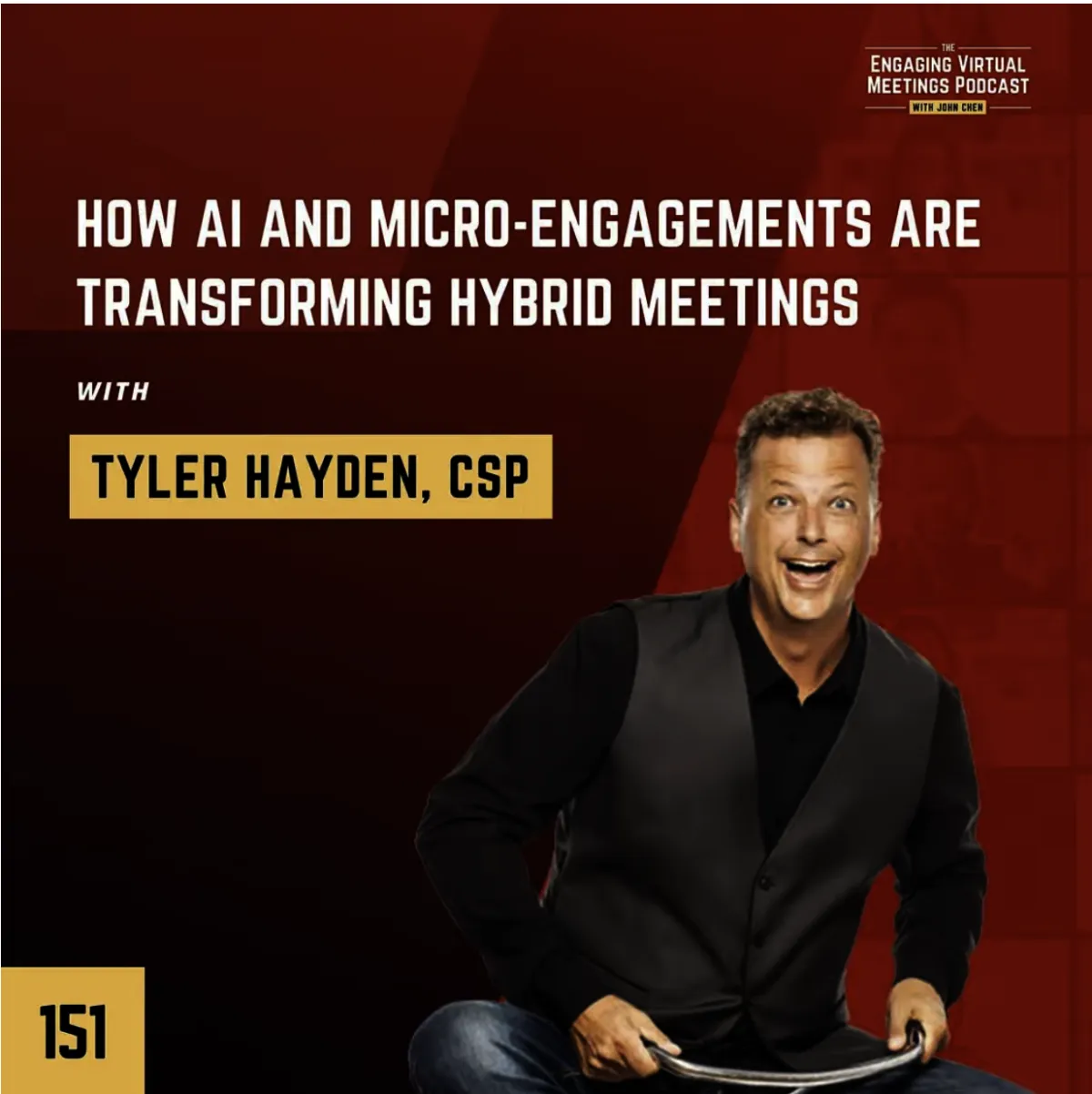
In The Press : Sample of Tyler's Press










Check Tyler's Availability for Your Next Event
Grab a time to connect or shoot us an email.
Follow Us & Join the Conversation


Locations Served
Shop, Learn, and Explore
Speaker Topics
Location and Contact
(902) 541-0858
23 Horizon Road
Bedford, Nova Scotia B4A 3N2
Canada
© 2026 Tyler Hayden Inc. All rights reserved.