
The Escape Room Team Building Methodology: Moving from Forced Fun to High-Impact Culture
Co-authored by Hall of Fame speaker Tyler Hayden and escape room industry pioneer Andrew Gipson, this landmark white paper decodes why immersive escape games have eclipsed traditional corporate training. Commissioned by the Association for Room Escapes of North America (ARENA), this framework provides a tactical blueprint for managers to turn an affordable, accessible experience into a measurable driver of corporate cohesion and organizational ROI.
Core Deliverables: 1. Hayden's 3 F's Objectives Framework 2. The 6-Step In-House Facilitation Process 3. Multiple Intelligence & Experiential Learning Integration.
Section 1: The Core Philosophy — Why Escape Rooms?
Axiom: "Escape rooms level the playing field—under the pressure of a ticking clock, corporate hierarchies dissolve and true team dynamics emerge."
For decades, corporate team building focused on physical, high-altitude endurance tests like ropes courses or mountain climbing. While impactful, these physical challenges exclude or intimidate a broad population of modern knowledge workers.
Escape rooms offer a powerful alternative: an intellectual, social, and immersive challenge with no safety harnesses required. When human resource directors treat these experiences as thoughtful investments in training rather than "cookie-cutter forced fun," the impact on a business's bottom line can be profound.
This methodology matters specifically for culture visionaries who want to:
🗝️ Engage all tiers of talent—from entry-level warehouse workers to C-suite executive officers.
🗝️ Bypass organizational silos and establish radical, ego-free team communication.
🗝️ Synergize diverse cognitive profiles to solve complex operational puzzles.
🗝️ Inject authentic, organic fun that naturally builds a deep sense of community.
Section 2: Hayden's 3 F’s of Team Building Objectives
To maximize your team building investment, a leader must first define what type of corporate culture they are trying to build. Tyler Hayden breaks these core objectives down into the Three F's: Fun, Fast Forward, and Fix.
1. Fun (The Bond Builder): Valuable entirely on its own. Fun acts as an immediate ice breaker for new hires and cements bonds between veteran staff. This level happens automatically without external facilitation—simply put your team in a room and let the chemistry happen with activations that have no other specific learning objectives other than "connection, get to know you, bonding, etc.".
2. Fast Forward (The Growth Accelerator): A more rigorous objective focused on moving a team from its current functionality to an advanced, highly productive state. It requires an internal culture builder or external facilitator to help employees leverage individual strengths, decode social dynamics, and optimize communication. These activations are typically aligned with express corporate objectives. The team activity can have the "fun" objectives too - but their primary focus is to help the team learn skills that align with enterprise work like a strategic plan, sales strategy, SAAS product implementation, budgeting, etc. Facilitator uses tools like metaphors and strategic game design to help align the learning transfer.
3. Fix (The Dysfunction Intervener): Targeted alignment designed for teams suffering from acute conflict, counterproductive cliques, or toxic behavior. Using the escape room as a diagnostic environment, an expert facilitator can pinpoint the exact root of team friction and address it during the debrief. These types of activations see the facilitator act often as a mediator, coach, and judge to help groups in crisis. This activation is best done by a highly trained outside facilitator.
The 3 F's Framework
To maximize your team building investment, a leader must first define what type of corporate culture they are trying to build. Tyler Hayden breaks these core objectives down into the Three F's: Fun, Fast Forward, and Fix.
FUN
Valuable entirely on its own. Fun acts as an immediate ice breaker for new hires and cements bonds between veteran staff.
- Designed for organic team chemistry to happen naturally.
- No complex or heavy external facilitation required.
- Focuses strictly on connection, getting to know you, and experiential bonding.
FAST FORWARD
A more rigorous objective focused on moving a team from its current functionality to an advanced, highly productive state.
- Requires an internal culture builder or external facilitator to help employees leverage individual strengths.
- Designed to decode social dynamics and optimize active communication.
- Directly aligned with express corporate objectives like strategic plans, sales strategy, SaaS product implementation, or budgeting.
- Utilizes tools like metaphors and strategic game design to ensure seamless learning transfer.
FIX
Targeted alignment designed specifically for teams currently suffering from acute conflict, counterproductive cliques, or toxic behavior.
- Uses the immersive environment as a diagnostic space to pinpoint the exact root of team friction.
- Enables the facilitator to act as a mediator, coach, and judge to systematically guide groups out of active crisis.
- Best executed by a highly trained outside facilitator to ensure psychological safety during the debrief.
Section 3: The 6-Step In-House Facilitation Process
You do not need a massive budget or an outside consultant to unlock the magic of an escape room. By stepping outside your comfort zone and acting as an ad-hoc facilitator, any manager can drive a massive return on investment by following this step-by-step cycle:
Step 1: Define Goals: Decide upfront if your objective is pure camaraderie (Fun), structural growth (Fast Forward), or conflict resolution (Fix).
Step 2: Identify Options: Select a top-flight room stocked with engaging puzzles and logical flow. Utilize the ARENA directory to locate certified rooms designed for team dynamics rather than just hardcore hobbyist gamers.
Step 3: Choose Challenge: Do your homework. Call local owners and audit their spaces. High price tags do not always equal a superior team-building environment.
Step 4: Foreshadow: Set learning objectives before the team enters the room. Draw explicit parallels between the whimsical game and real-world workplace realities (e.g., "Near the middle of this puzzle, you'll need to pause and synthesize data together, exactly like our Monday morning syncs.").
Step 5: Experience: Let the team play. Step back and observe how individual personalities adapt, delegate, communicate, and react under the pressure of a ticking clock.
Step 6: Debrief & Next Steps: The most vital step for optimizing the experience. Review the parallels to the workplace in detail, review individual contributions, and establish clear operational next steps through continuous coaching and mentoring.
Section 4: The Science Behind the Room — Intelligences & Learning Cycles
The unparalleled success of escape room team building is anchored heavily in two foundational psychological frameworks:
I. Howard Gardner’s Multiple Intelligence Theory
Complex corporate problems are rarely solved by a single type of thinker. Escape rooms are intentionally designed to require a diverse matrix of intellectual strengths to succeed, forcing teams to value cognitive diversity:
Visual/Spatial Thinkers look at the physical geometry and hidden patterns of the room.
Mathematical/Logical Thinkers crack the underlying numerical codes and algorithmic locks.
Linguistic & Interpersonal Thinkers organize information, synthesize clues, and direct the team's verbal communication.
II. David Kolb’s Experiential Cycle of Learning
Applying David Kolb’s educational theory, the escape room serves as a perfect micro-cycle for learning. It forces teams through a rapid four-stage loop:
Concrete Experience: Immersing the team directly into the game.
Reflective Observation: Reviewing performance and team actions during the activity.
Abstract Conceptualization: Realizing the lessons learned about communication and dynamics.
Active Experimentation: Translating those insights back into the actual workplace.
Written by Tyler Hayden and Andrew Gipson - Commissioned by the Association for Room Escapes of North America (ARENA) | [email protected]. Repurposing info requires review; must attribute and backlink to tylerhayden.com and teambuildingschool.com.
What we do.
We connect 100,000+ qualified prospects looking for financial advice, lending, protection, debt help and claims to advisors and brokers every year.
We will always provide the best service.
We don't launch rockets. We just generate leads from Google, Bing and YouTube, connecting them with your team in real time. And you know what, we're bloody good at it.
Get leads from our existing matured campaigns.
Let us build bespoke lead-gen campaigns in your brand.
Deploy our AI sales androids to boost contact rate.
Utilise our proven systems and technology to increase your return on ad spend.

What We Do
Your proven customer acquisition system that increases conversion rates at every step of the customer journey so you can enjoy record breaking sales.
Effective Lead Generation
Strategically focused on high-intent leads generation tactics from Google, Bing, & YouTube.
Database Reactivation
Turn your old data into fresh appointments and sales, utilising our sales android that never rests.
Appointment Setting
Transform your contact rate and campaign profitability with our appointment setting sales android.
Blog
Your proven customer acquisition system that increases conversion rates at every step of the customer journey so you can enjoy record breaking sales.
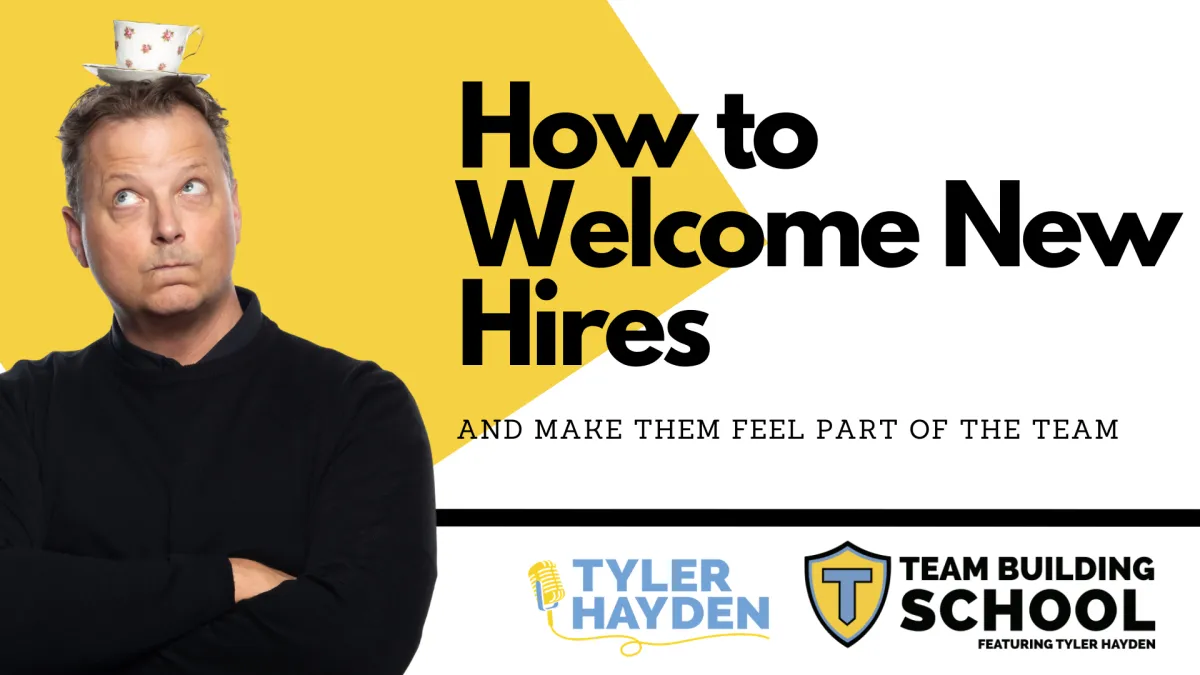
How to Welcome New Hires and Make Them Feel Part of the Team
How to Welcome New Hires and Make Them Feel Part of the Team
By Tyler Hayden CSP, HoF — Hall of Fame Motivational Speaker & Workplace Culture Speaker & Team Development Expert
Here's a number worth sitting with: replacing an employee costs roughlyone and a half times their annual salary.
Now ask yourself — how much time and intention does your organization actually put into the first 30 days of someone's employment?
For most companies, onboarding is a checklist. Sign the paperwork. Get the laptop. Find the bathroom. Good luck.
That's not onboarding. That's abandonment with a welcome package.
The organizations that retain great people — that build teams people actually want to stay on — treat onboarding as the beginning of a relationship, not the end of a hiring process. Here's how they do it.
Onboarding Starts Before Day One
Let's get this reframe out of the way immediately:onboarding doesn't start when someone walks in the door on their first day. It starts the moment they enter your hiring process.
How you conduct the interview. How quickly you follow up with the offer. The tone of the email that confirms their start date. All of it is onboarding. All of it is communicating — loudly — what your organization is like to work for.
Think about the Savannah Bananas. From the moment someone considers buying a ticket, through ordering, through arriving at the stadium, they're made to feel like a raving fan. Every touchpoint is intentional. Every moment builds the experience.
Your new hire's journey should feel the same way.
Great organizations send awarm, personalized pre-onboarding emailbefore day one — not a form, not a link to a policy manual, but a genuine message that builds anticipation and excitement. They send afirst-week scheduleso the new hire knows exactly what to expect day by day. They remove the anxiety of the unknown before it has a chance to set in.
And here's one of the most underrated moves in onboarding:the personalization survey. Send it a week before they start. Ask simple questions — their t-shirt size, their coffee order, their preferred way to learn. Use the answers to customize their first day without spending a dime of extra timeonthat first day. It signals something powerful:we were thinking about you before you even got here.
The Biggest Mistake Organizations Make
Ask most managers what their onboarding process looks like and they'll describe systems, platforms, and paperwork.
Ask the new hire what their first week felt like, and they'll describe confusion, isolation, and quietly wondering if they made a mistake.
The gap lives here:no one assigned them a person.
Not a handbook. Not a portal. Ahuman— a single, dedicated point of contact who knows them, checks in on them, and answers the questions that aren't in any manual. I call this person theStrategic Mentor.
The Strategic Mentor: More Than a Buddy
A buddy system is nice. A strategic mentoring program is transformational.
The distinction matters. A buddy shows you where the coffee machine is. AStrategic Mentorhas a deliberate, structured plan for your first 30 days — benchmarked against the real learning needs and milestones of your role.
In my book14 Minute Mentor, I lay out a framework for exactly this: how to distill what an employee needs in order to reach the next level, and how to deliver it in focused, intentional increments. The goal is simple —help new hires learn faster, make fewer mistakes, and have a safer, happier experience as they enter the company.
A great Strategic Mentor helps the new hire understand not just the written rules, but theunwrittenones. The culture. The quirks. Who to go to for what. Where the landmines are. That's the kind of insider knowledge that takes most people 6 months to acquire on their own — and causes a lot of avoidable friction in the meantime.
Pair the Strategic Mentor relationship with apeople-to-meet list— a curated set of introductory coffee chats with key people across the organization, from administration to sales to HR. Help your new hire understand who's who before they need to know.
The Team's Role (And Why Most Managers Miss This)
Here's something most organizations completely overlook:when a new person joins, the group dynamics of the entire team change.
Which means onboarding isn't just about the new hire. It's an opportunity — and a responsibility — to reorient the whole team to one another.
The manager's job in that moment isn't just to introduce the new person. It's to create a container where existing team members rediscover each otherthroughthe lens of this new relationship. Long-tenured teammates share things about themselves that the new person doesn't know yet — and in doing so, often rekindle connections with colleagues they've stopped really seeing.
New people bring new dynamics. New perspectives. New skill combinations that didn't exist before.A new hire isn't a disruption to your team's chemistry — they're an upgrade to it, if you're intentional about the introduction.
Give the whole team a reason to lean in, not just the new person.
The First Team Meeting: Don't Wing It
The first team meeting a new hire attends is a pivotal moment — and most managers treat it like any other meeting.
That's a missed opportunity.
Every manager should have arepeatable template for how they run a team meeting when someone new joins.Not just for the new hire's benefit — but so the existing team knows what to expect. It becomes a cultural ritual. It signals:this is how we welcome people here.
What goes into that template? It starts with understanding how your new hire is wired.
If they're aninterpersonal learner, give them the spotlight. Let them share. They'll light up.
If they're anintrapersonal learner, don't throw them center stage on day one. Give them space to observe, to absorb, to participate on their own terms.
The goal isn't a performance — it's anauthentic introduction. A moment where the new person feels genuinely visible, without being put on the spot in a way that makes them want to disappear.
Get that right, and your first meeting doesn't just welcome a new hire — it strengthens the whole team.
What Great Onboarding Actually Creates
When organizations get all of this right — the pre-boarding touchpoints, the Strategic Mentor, the team reorientation, the personalized first week — something remarkable happens.
New hires don't juststarta job. They join something.
They see a path forward. They feel connected without it feeling forced. They understand that their skills have value and that the organization invested in them before they ever produced a single deliverable.
That's stickiness. That's what turns a new employee into someone who refers their friends, defends the company in conversations, and chooses to stay when recruiters come knocking.
The organizations that do this well aren't spending more money. They're being more intentional with the time they already have.
The ones that don't? They're spending one and a half times a salary to replace someone who might have stayed — if someone had just made them feel like they belonged.
Your Monday Morning Checklist
Before your next new hire walks in the door:
✅ Send a warm, personalized pre-boarding email (not a form)
✅ Send a personalization survey at least one week before start date
✅ Provide a first-week schedule so there are no surprises
✅ Assign a Strategic Mentor — not just a buddy
✅ Build a people-to-meet list and schedule introductory coffee chats
✅ Create a repeatable first-meeting template for your team
✅ Reorient yourwhole teamto each other, not just to the new person
✅ Give the new hire space to try, fail, and come back stronger
Fun is the delivery. Better teams and energy on Monday is the point.
If you want a fully built strategic mentoring framework for your organization — or want to bring a customized onboarding and team building experience to your team —book a discovery call and let's talk.
And if you're a manager looking for ready-to-use team building tools that actually connect to real learning outcomes, check outTeam Building SchoolandRubber Chicken AI.
Tyler Hayden CSP, HoF is Canada's Hall of Fame Motivational Speaker, author of 25+ books including the 14 Minute Mentor, and founder of Team Building School and Rubber Chicken AI. He helps Canadian organizations build teams that people actually want to be part of.


Check Tyler's Availability for Your Next Event
Grab a time to connect or shoot us an email.
Follow Us & Join the Conversation


Locations Served
Shop, Learn, and Explore
Speaker Topics
Location and Contact
(902) 541-0858
23 Horizon Road
Bedford, Nova Scotia B4A 3N2
Canada
© 2026 Tyler Hayden Inc. All rights reserved.