
Beyond Forced Fun: The All-In-One Membership for Data-Driven Team Building and Workplace Culture
Combine the predictive team analytics of Rubber Chicken AI with the actionable manager toolkits of Team Building School. Eliminate organizational silos, measure real-time employee engagement, and empower your leaders with a field-tested blueprint for elite workplace performance.
Team Building AI - 19 Team Building Templates - 19 Books - Live Events - 4 Courses ... and we're just getting started.
Tyler Hayden’s Team Building Hub delivers a unified enterprise membership that combines real-time data analytics with actionable culture-building toolkits. By integrating the predictive behavioural diagnostics of Rubber Chicken AI with the practical training resources of Team Building School, this platform empowers organizations to systematically diagnose collaboration friction, eliminate workplace silos, and build highly engaged, resilient teams.
What we do.
We connect 100,000+ qualified prospects looking for financial advice, lending, protection, debt help and claims to advisors and brokers every year.
What's Included?
Everything.
In One Spot.
One Membership = Every Course, every Book, every Live Session, every AI, every Tool
No Upsells, No Hidden Fees, No BS.
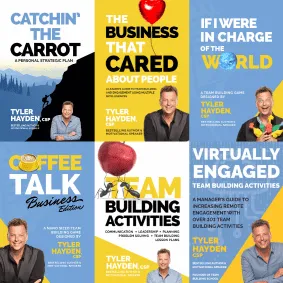
Team Building Books
What's Included:
⚡️ Description: A comprehensive digital vault of over 25 published books containing your field-tested frameworks, deep psychological strategies, and structured organizational blueprints.
Pain Point Solved: The "Flavor of the Month" Corporate Strategy.:
🎙️Most culture initiatives fail because they lack foundational theory and long-term reference materials. This asset eliminates surface-level guesswork by giving HR leaders a deeply academic, data-backed foundation for their workplace culture design.

Rubber Chicken AI
What's Included:
⚡️ Description: The predictive technology and data layer of the ecosystem—a gamified, automated behavioural diagnostic engine that provides options for real-time team activities and tools to your proprietary MIQ framework.
Pain Point Solved: "Blind-Spot" Leadership and Invisible Burnout:
🎙️ Remote and hybrid managers frequently operate in the dark, unable to detect communication friction or departmental silos until key talent begins to quit. This platform replaces guesswork with concrete, analytics, allowing People Ops to solve culture problems proactively. You will have access to Rewards Recognition Strategies, Energizers, Ice Breakers, Team Building, Leadership Coaching, Debriefing that reflects your team MIQ preferences.
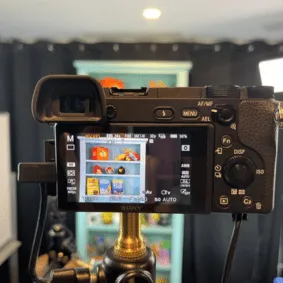
Live Events + Q&A
What's Included:
⚡️ Description: High-energy, interactive virtual touch points and real-time consulting sessions hosted by a Canadian Hall of Fame speaker to anchor the membership experience and provide help with your pressing team building and culture questions.
Pain Point Solved: Passive "Screen Fatigue" and Low Morale. Standard corporate webinars are notoriously uninspiring and fail to engage distributed teams. These live sessions inject massive stage-energy into the organizations leaders, delivering timely tools and providing leaders with instant, direct access to elite coaching from team building architect Tyler Hayden.
Team School
What's Included:
⚡️ Description: A structured, on-demand membership portal hosting asynchronous manager training paths, deep-dive training modules, and culture-tracking administration tools
Pain Point Solved: The "One-and-Done" Motivation Fade. Bringing an external speaker in once a year creates a temporary boost in energy that quickly evaporates when employees return to their daily routines. This school fixes the training gap by establishing a permanent, continuous learning infrastructure that organizations can scale affordably. And Tyler is always adding more.
Quick Wins
What's Included:
⚡️ Description: A library of ready-to-use, downloadable activity packs, meeting icebreakers, and alignment exercises designed to be deployed instantly with zero complex setup. Tools are aligned with MIQ and able to be supported by Q&A and Rubber Chicken AI.
Pain Point Solved: Overwhelmed Managers and "Cringe" Corporate Activities: Mid-level managers are starved for time and often resort to awkward, forced team games that employees actively dread. These templates give busy leaders an instant repository of professional, engaging exercises that build psychological safety in minutes without adding to their administrative workload. And we are always adding more tools and Quick Wins for you.
Videos
What's Included:
⚡️ Description: High-impact, visually engaging micro-learning video modules that visually break down the science of team design, asynchronous collaboration, and gamified learning.
Pain Point Solved: The Friction of Dry HR Documentation. Corporate training manuals are rarely read, resulting in low compliance and poor learning retention. These digestible video assets break down complex team dynamics into entertaining, memorable concepts that employees can watch and internalize on their own schedules or as part of a huddle.
Why Do Traditional Corporate Team Building Programs Fail?
Direct Answer: Most corporate team building fails because it relies on isolated, episodic events—or "forced fun"—that offer no data tracking or long-term behavioral reinforcement. True workplace culture alignment requires a continuous loop of predictive analytics to find the friction points, paired with tactical assets that managers can deploy asynchronously.
The Three Structural Distruptors Facing Corporate Leaders Today:
The "Forced Fun" Backlash: Human employees reject artificial icebreakers and surface-level team games. Without grounding your activities in an analytical framework like the Multiple Intelligence Quotient (MIQ), engagement drops the moment the event ends.
Invisible Departmental Silos: Remote and hybrid workforces naturally drift apart. Without real-time data tracking, People Ops executives cannot see collaboration breakdowns or predict employee burnout until key talent begins to quit.
The "One-and-Done" Training Trap: Bringing a speaker in once a year creates a temporary spike in energy but results in zero lasting behavioral change. Leaders need a system for permanent, on-demand access to structured templates and mentoring frameworks to keep culture strong every single week.

A Note From Tyler
Why we Built this: Good Team Building is Good Team Learning
In my 30 years as a team architect, I've grown to despise the training industry's obsession with hidden paywalls, constant upsells, and fragmented add-ons. It fractures your organizational momentum and personal learning.
We built this "everything in one spot" membership to break that cycle. By fusing the predictive analytics of Rubber Chicken AI with the comprehensive training vault of Team Building School, we give your leaders complete access to our proprietary MIQ framework.
No nickel-and-diming, and no "cringe" corporate games. Just field-tested tools to build better Mondays. Build the team you’ve always wanted to work with.
Tyler Hayden, CSP, HoF
Team Building Architect & Founder
Invest in Your Culture: Choose Your Membership Plan
Whether you are an individual manager looking to instantly eliminate team friction or an executive leader building a data-backed organizational culture across thousands of employees, we have a plan built for your scale. And once you lock in your rate you will never pay more. And get ready because we are going to keep adding tools, books, videos, SaaS products, and more.
Spark Explorer
For individuals not quite ready to make a fulsome commitment to continuous team engagement but would like to try it out and see.
Includes:
One Tool from Team Building School Tools & Courses
One Learning Video to better understand MIQ
Access to a limited version of Rubber Chicken AI LITE
Join
Forever Free
Catalyst Leader
For solo managers, team leads, and culture advocates looking for instant, practical toolkits and a community of support baked in.
Includes:
Full access to Team Building School Tools & Courses
Digital vault of Tyler’s 25+ Team Building Books
Library of Quick Win Templates and Tools
Exclusive Learning Videos for asynchronous training
Monthly Live Events + Group Q&As with Tyler Hayden
Single-user Rubber Chicken AI
$22/month or
$199/year
Momentum Builder
For HR departments, People Ops executives, and C-suite leaders scaling an authorized culture strategy for multiple managers.
Includes:
Everything in Catalyst Leader, plus:
Private virtual session with Tyler exploring your specific business and teams.
Discounted Rate for multiple seats (minimum 15 seats)
$19/month or
$189/year
Game Changer
Full Enterprise deployment, customized learning portal & sessions specific to your organizations managers.
Includes:
Everything in Momentum Builder, plus:
Private learning portal set up to so your managers can connect with their peers.
Enterprise wide Live Events and Q&A
Discounted Rate for multiple seats (minimum 100 seats)
Please
Call for Pricing
What We Do
Your proven customer acquisition system that increases conversion rates at every step of the customer journey so you can enjoy record breaking sales.
Effective Lead Generation
Strategically focused on high-intent leads generation tactics from Google, Bing, & YouTube.
Database Reactivation
Turn your old data into fresh appointments and sales, utilising our sales android that never rests.
Appointment Setting
Transform your contact rate and campaign profitability with our appointment setting sales android.

Get a good impression your brand on them.
We don't launch rockets. We just generate leads from Google, Bing and YouTube, connecting them with your team in real time. And you know what, we're bloody good at it.
Create your amazing feature.
Add your ideas here.
Give more your amazing feature or ides.
Costumer review.
See why customers love GHL Elite.

"If you're looking for an all-in-one app to help you increase sales and save time on follow-ups, I would highly recommend NexLevel CRM."
– Rachel Johnson


"Our team has been using NexLevel for a few months and we are very happy with the results. We've closed more deals than ever before and our sales team loves it."
– Mike Nord

"You never know what you're missing until you try NexLevel. We've been using it for 9 months and it has helped us double our pipeline and close more deals."
– Heather Mathewson

"Since using NexLevel over a year ago, I’ve generated $300k+ in new revenue and saved more than 20 hours per week on administrative tasks like reminders and reschedules."
– Ranjana Muthaliar
Blog
Your proven customer acquisition system that increases conversion rates at every step of the customer journey so you can enjoy record breaking sales.
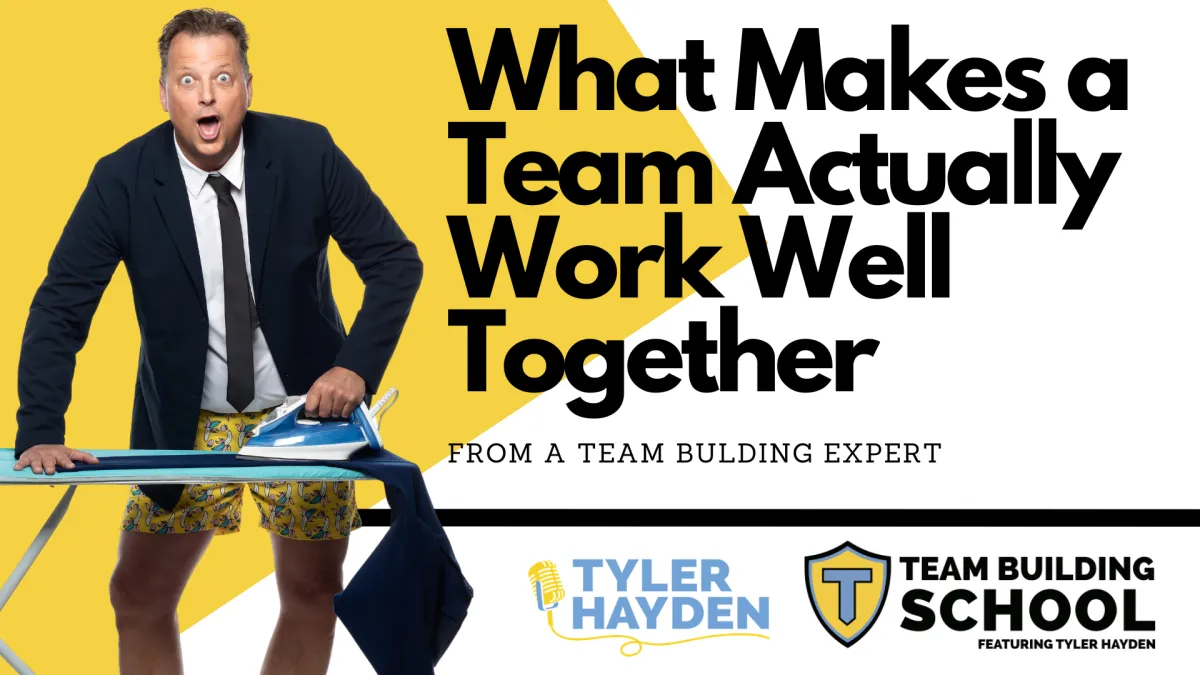
What Makes a Team Actually Work Well Together
Everyone has an opinion on what makes a great team.
Trust. Communication. Psychological safety. Accountability. The list of buzzwords is long, and most of them aren’t wrong — they’re just incomplete.
After 30 years of working with teams across healthcare, construction, finance, government, and beyond, here’s what I’ve found to be true: the teams that genuinely work well together aren’t defined by the absence of problems. They’re defined by what they’re collectively moving toward.
Everything else — the trust, the communication, the camaraderie — flows from that.
The Real Foundation: Shared Purpose
Ask a room full of managers what makes a great team and you’ll hear trust and communication within the first 30 seconds. And yes — those things matter enormously.
But go deeper, and you’ll find something underneath both of them: shared purpose.
A team that is genuinely aligned around why their work matters — not just what they’re doing, but the reason it’s worth doing well — functions at a completely different level than one that isn’t. Trust grows faster. Communication improves naturally. People extend grace to each other during difficult moments because they understand what’s at stake.
Without shared purpose, trust and communication become performance. With it, they become instinct.
The leader’s job — above almost everything else — is to build that crystal-clear vision and mission at the outset, not as an afterthought. And then, critically, to keep showing the team how their individual efforts are contributing to it.
Showing Progress Is the Work
Most leaders state the mission. Great leaders show how the team is getting there.
There’s a meaningful difference between telling your team “our goal is to improve patient outcomes” and actually sitting down with them — regularly — to show how the work they did last week moved the needle. How their individual outputs are adding up. How close they are to where they said they’d be.
That practice — the deliberate, visible connection between daily action and collective purpose — is one of the most powerful things a leader can do to build a cohesive, motivated team. And it’s one of the most consistently skipped.
Teams disengage when they can’t see the point of what they’re doing. They re-engage when someone takes the time to show them the scoreboard.
A Case Study: 25 Silos Become One Team
I was brought in to work with a group of 25 healthcare leaders — each responsible for a different area of facility and human resource management within a single health system.
On paper, they were a leadership team. In practice, they were 25 separate silos, each solving their own problems in isolation.
Over several sessions, we created space for each person to share what was actually going on in their area — real problems, real pressures, real challenges. No agenda. No performance. Just honest conversation.
Within a few weeks, something shifted.
They started to recognize each other’s problems. The siloes started to look more like shared walls. The issues one leader was struggling with were almost identical to what the person across the table was dealing with — they just hadn’t known it, because no one had ever put them in the same room with the same purpose before.
They started offering solutions. They started lending support. And eventually, they stopped seeing themselves as 25 individual leaders and started operating as one cohesive unit — because they saw the clear benefit of attacking the same problems together.
That shift didn’t come from a trust exercise. It came from shared context and shared problems. Purpose emerged from the conversation, not the other way around.
Conflict Is Not the Enemy
Here’s where I push back on conventional leadership advice: conflict is not something to be managed away. It’s something to be managed well.
Healthy friction keeps teams out of groupthink. It fuels innovation. It surfaces blind spots that consensus would have buried. It builds resilience — because a team that has navigated real disagreement and come out stronger is far more capable than one that’s never been tested.
The teams I’ve seen stagnate the most are the ones where everyone agrees with everyone, all the time. That’s not harmony — that’s avoidance. And avoidance has a ceiling.
The manager’s job isn’t to eliminate conflict. It’s to create the conditions where constructive tension can exist without spinning out of control — where no single voice dominates, where debate is welcomed, and where disagreement is a tool rather than a threat.
Teams that can fight well together — respectfully, productively, with the mission as their north star — are the ones that make the best decisions.
The Most Underrated Thing a Manager Can Do
I’ve asked this question to thousands of managers over the years: what’s the most powerful thing you can do for your team?
Very few land on the right answer.
It’s this: celebrate others. Deliberately. Consistently. Based on real metrics.
When a manager takes the time to genuinely showcase the people doing great things — not with empty praise, not with performative recognition, but with specific, meaningful acknowledgment tied to actual behaviors and outcomes — something quietly powerful happens.
Others start to aim higher. People feel seen. The team begins to develop a culture of celebration that generates its own momentum.
The key is to start with the low-hanging fruit. Find the simple wins early. Celebrate them visibly. Build the muscle before the stakes get high.
And make sure the recognition is earned — tied to something observable and real. Recognition that isn’t grounded in anything specific rings hollow. Recognition that’s specific, meaningful, and timely? That sticks. That’s the kind that changes behavior.
When the Team Is Broken: The Three F’s
Not every team needs the same kind of intervention. Over the years, I’ve developed a framework I call the Three F’s of Team Building:
· Fun — when the team is healthy and you want to energize and connect
· Fast Forward — when the team is functional but ready to accelerate performance by applying team building to learning new skills or functions on the job
· Fix — when something is broken and needs real attention
Most blog posts about team building are written with Fun in mind. But the most important work happens in Fix.
When a team has a history of conflict, low trust, or unresolved resentment, here’s where I start: a group contract.
Not a mission statement. Not a values poster. A living document built by the team, with the team, that answers two questions:
· What behaviors do we want to see from each other?
· What behaviors are we agreeing to leave behind?
Every person in the room contributes one answer to each. Every answer goes on the contract. The group discusses, agrees, and signs off — not because someone told them to, but because they built it themselves.
That first act of collective agreement — however small — is the first win. And first wins matter enormously when you’re rebuilding trust. They prove that the team can reach agreement. That they can work together. That the path forward exists.
You build from there.
What a High-Performing Team Actually Feels Like
I want to be honest with you here, because I think this question deserves a real answer rather than a tidy one.
High-performing teams feel different from team to team. Warren Bennis, in his brilliant work Organizing Genius, studied some of the greatest creative teams in history — and while he found commonalities, what’s striking is how different each of those teams actually was from one another.
The best teams I’ve been fortunate enough to work with are like artwork. Each one unique. Each one shaped by the specific combination of people, purpose, pressure, and moment that created it.
And here’s the thing: what felt like a peak team experience to me may not have felt that way to everyone on it. Because what a high-performing team feels like is deeply personal — it’s shaped by what you brought in as your expectations, and how thoroughly those expectations were met or exceeded.
Which brings everything full circle.
The reason vision and shared purpose matter so much at the beginning isn’t just strategic. It’s because that clarity is what allows every person on the team to calibrate their expectations against a common reference point. When everyone understands why the team was built, what it’s trying to accomplish, and how success will be measured — that’s when individual satisfaction and collective performance start to align.
That’s when a team stops being a group of people doing jobs and starts being something worth being part of.
Your Monday Morning Moves
· ✅ Clarify the mission — not a slogan, a real, specific purpose that your team helped shape
· ✅ Show progress visibly — connect daily work to the bigger picture, regularly
· ✅ Welcome friction — create space for healthy debate without letting it spiral
· ✅ Celebrate deliberately — find the low-hanging fruit and start building a culture of recognition now
· ✅ Know your team type — Fun, Fast Forward, or Fix? The intervention should match the situation
· ✅ Build a contract — if trust is broken, start with shared agreements, not trust exercises
· ✅ Set the vision first — everything else depends on it
Fun is the delivery. Better teams and energy on Monday is the point.
If you want a customized team building experience designed around where your team actually is — not a one-size-fits-all program — let’s talk.
And if you’re a manager who wants ready-to-use tools for building stronger teams without starting from scratch, explore Team Building School and Rubber Chicken AI.
Tyler Hayden CSP, HoF is Canada’s Hall of Fame Motivational Speaker, author of 25+ books, and founder of Team Building School and Rubber Chicken AI. He has spent 30 years helping organizations build teams that people genuinely want to be part of.


Check Tyler's Availability for Your Next Event
Grab a time to connect or shoot us an email.
Follow Us & Join the Conversation


23 Horizon Road
Bedford, Nova Scotia B4A 3N2
Canada
(902) 541-0858
Speaker Topics
Shop, Learn, and Explore
Locations Served
© 2026 Tyler Hayden Inc. All rights reserved.
LLM.txt | LLLM. Full txt