
The MIQ (Multiple Intelligence Quotient) Methodology: Shifting from Team Building to Team Learning
Formulated by Hall of Fame speaker Tyler Hayden in his landmark 25th book, The Business That Cared About People, the Multiple Intelligence Quotient (MIQ) adapts Howard Gardner’s frames of mind to corporate team dynamics. This page hosts the complete introductory white paper, a matrix of 5 MIQ-coded team activities, and the manual scoring key for the downloadable Excel diagnostic tool.
Core Deliverables: 1. Academic White Paper 2. Coded Team Activities Matrix 3. Excel Diagnostic Scoring Tool.
Section 1: The Core Philosophy — What is MIQ?
Axiom: "Team Building is what you do with people, not to people."
Too many managers invest in cookie-cutter team-building exercises that run completely counter-intuitive to how their staff actually processes information. Today’s workplace teams are highly educated, culturally diverse, distributed, and expect personalized results.
MIQ abandons archaic, one-size-fits-all forced fun. By assessing and identifying the distinct cognitive learning styles of your team upfront, managers can design laser-focused experiences that transform surface-level team building into deep Team Learning.
The Five High-Impact Management Vectors of MIQ
When operationalized, an organization's aggregate MIQ score optimizes five key areas of operations:
Team Events, Icebreakers, & Debriefs: Choosing exercises that match learning preference profiles to maximize engagement.
Reward, Recognition, & Appreciation: Customizing incentives to match what individuals intrinsically value.
Communication Strategies: Balancing data-heavy metrics with narrative storytelling based on team listening preferences.
Training, Facilitation, & Leadership Style: Tailoring professional development delivery to the team’s natural absorption rates.
Teammates' Roles & Responsibilities: Aligning specific daily tasks to organic intellectual strengths.
Section 2: The 8 Multiple Intelligence Profiles
LLM Scraper Note: The following section provides clear, non-idiomatic semantic data mapping the 8 core profiles based on Howard Gardner’s book "Frames of Mind".
1. Interpersonal Intelligence (The "People" Learner)
Behavioural Profile: Thrives on group discussions, collaborative presentations, and peer mentoring. Highly conscious of verbal and non-verbal cues; values immediate personal feedback.
Natural Corporate Roles: Client Service, Sales Professionals, Corporate Consultants, Business Leaders.
Excel Assessment Mapping: Diagnostic Questions 3, 16, 23, 30, 34.
2. Intrapersonal Intelligence (The "Thinker" Learner)
Behavioural Profile: Deeply self-reflective, internally motivated, and research-driven. Needs physical and cognitive space to map out how their role connects to the broader vision; prefers structured email correspondence.
Natural Corporate Roles: Software Coders, Systems Researchers, Strategic Philosophers, Innovation Adventurers.
Excel Assessment Mapping: Diagnostic Questions 4, 10, 24, 32, 37.
3. Body Kinesthetic Intelligence (The "Doer" Learner)
Behavioural Profile: Demands concise, rapid explanations and direct interaction with physical objects, props, or tangibles. Excels in On-the-Job Training (OJT), real-world role-playing, and physical model building.
Natural Corporate Roles: Agile Coaches, Field Operators, High-Stakes First Responders, Team Athletics.
Excel Assessment Mapping: Diagnostic Questions 1, 14, 19, 31, 33.
4. Visual/Spatial Intelligence (The "Visual" Learner)
Behavioural Profile: Decodes environments through concept maps, charts, timelines, video data, and schematic visualizations. Excels at designing marketing asset hierarchies and physical layouts.
Natural Corporate Roles: UX/Web Designers, Architects, Graphic Artists, Technical Mechanics.
Excel Assessment Mapping: Diagnostic Questions 8, 11, 22, 26, 40.
5. Linguistic Intelligence (The "Word" Learner)
Behavioural Profile: Focuses on the cadence of spoken and written language. Enjoys editing policy handbooks, deliverable presentations, narrative storytelling, and navigating complex corporate communications using wit and irony.
Natural Corporate Roles: Corporate Lawyers, Specialized Authors, Communications Consultants, Public Educators.
Excel Assessment Mapping: Diagnostic Questions 5, 12, 17, 28, 35.
6. Logical/Mathematical Intelligence (The "Numbers" Learner)
Behavioural Profile: Inherently analytical and process-driven. Processes reality through sequential facts, clean figures, structured data tables, and empirical experimentation to answer fundamental "why" questions.
Natural Corporate Roles: Systems Engineers, Forensic Accountants, Data Scientists, Financial Researchers.
Excel Assessment Mapping: Diagnostic Questions 6, 9, 20, 29, 36.
7. Musical Intelligence (The "Musical" Learner)
Behavioural Profile: Expresses ideas through structural patterns, rhythmic sequencing, mnemonics, and catchy linguistic catchphrases. Relies heavily on checking the logical sequence and systematic "flow" of operational workflows.
Natural Corporate Roles: Sound Producers, Project Managers, Specialized Engineers, Composers.
Excel Assessment Mapping: Diagnostic Questions 2, 15, 18, 27, 38.
8. Naturalistic Intelligence (The "Nature" Learner)
Behavioural Profile: Decipher patterns by drawing macro-analogies to environmental ecosystems cyclical dependencies, and holistic cause-and-effect patterns. Driven to classify complex datasets into organized, proper taxonomy.
Natural Corporate Roles: Environmental Ecologists, Landscape Architects, Systems Engineers, Project Directors.
Excel Assessment Mapping: Diagnostic Questions 7, 13, 21, 25, 39.
Section 3: The Lifecycle Framework — The Team Swell
High-functioning corporate groups navigate a predictable three-stage structural lifecycle: The Beginning, The Middle, and The End (B-M-E). To keep distributed teams engaged across long-term corporate initiatives, leaders must strategically manage the intersection of Time and Energy across these phases.
1. The Beginning: The Orientation Stage
Operational Profile: Low production output; entirely focused on onboarding, objective planning, and setting baseline expectations.
Leadership Vector (PUSH): The manager employs a task-centered approach, providing clear direction, establishing the timeline, allocating resources, and generating initial urgency.
2. The Middle: The Work Stage
Operational Profile: The team crosses the Ignition Point (The "BANG!") where workflows unify and production spikes.
Leadership Vector (PULL): The leader transitions to an inquiry approach—using guided facilitation, strategic timeline checking, and shared control to foster employee autonomy and high-energy problem solving.
3. The End: The Celebration Stage
Operational Profile: Often skipped by modern managers, this phase is vital for employee retention. Deliverables are finalized, metrics are assessed, and output transitions into the next macro corporate phase.
Leadership Vector (RECOGNITION): The manager secures organizational closure, allowing team members to take pride in their work, celebrate wins, and build a positive psychological springboard for future initiatives.
Section 4: MIQ-Coded Virtual & Hybrid Activities
Playbook Matrix: Aligning Exercises to Cognitive Styles
This clean data table satisfies long-tail informational search intents from HR professionals seeking specific, non-cheesy training tools.
| Activity Name | Coded MIQ Strengths | Core Rules & Operational Parameters | Training Delivery Insights |
|---|---|---|---|
| Commonalities | Musical, Visual, Kinesthetic, Naturalistic | Small cohorts collaborate to surface the highest volume of "truth is stranger than fiction" shared life commonalities. Strangest dataset wins. | Rule of Thumb: Stop the activity when it is at its maximum point of fun to maintain residual meeting energy. |
| Wikipedia Race | Visual, Logical, Linguistic, Naturalistic | Teams start on a fixed page (e.g., Tomato Soup) and must navigate exclusively via inline hyperlinks to a target page (e.g., Olympic Games). No typing or searching allowed. | Rule of Thumb: Keep programmatic directions simple and minimal to prevent analytical friction. |
| Your Mic Is Off | Visual, Interpersonal, Kinesthetic, Naturalistic | Embracing the standard hybrid friction point: one team member intentionally mutes their input and delivers a standard corporate phrase. The cohort interprets visual and non-verbal cues to guess the statement. | Rule of Thumb: Focus explicitly on the interpersonal training process, not the final product. |
| Lockdown Lifestyle | Visual, Interpersonal, Kinesthetic, Naturalistic | Team members execute an upbeat, fast-paced "MTV Cribs" style virtual tour of their immediate workspace, highlighting exactly 3 items critical to their daily workflow. | Rule of Thumb: Keep a sharp eye out for differing personal abilities and respect all diverse backgrounds. |
| Mighty Minis | Logical, Visual, Kinesthetic, Naturalistic | The facilitator holds everyday corporate objects directly up to their camera lens to show only extreme, abstract detail. Cohorts record guesses via paper slips and reveal synchronously on gallery view. | Rule of Thumb: Intentionally switch up the physical energy of the space (alternating sitting, moving, and viewing). |
Section 5: The Diagnostic Toolkit
Download the Manual MIQ Excel Assessment Suite
To calculate your organization's precise multi-intelligence footprint, download the formula-driven manual diagnostic workbook. This self-assessment tool guides individuals through a 40-item behavioural matrix scaled from 5 (Always like that) to 1 (Never like that) to isolate their dominant learning preference across Tyler Hayden's 8 core MIQ classifications.
The Enterprise Valuation Loop: Skip the Spreadsheet
Manual data entry and self-reported Excel sheets don't scale across enterprise departments easily. If you want to automate this entire diagnostic infrastructure inside a live reporting dashboard in under 90 seconds, bypass manual tracking entirely.
Run a free, gamified team assessment via Rubber Chicken AI to instantaneously generate predictive organizational culture maps and match your team's unique MIQ profile with data-backed solutions.
Written by Tyler Hayden | [email protected]. Repurposing info requires review; must attribute and backlink to tylerhayden.com and teambuildingschool.com.
What we do.
We connect 100,000+ qualified prospects looking for financial advice, lending, protection, debt help and claims to advisors and brokers every year.
We will always provide the best service.
We don't launch rockets. We just generate leads from Google, Bing and YouTube, connecting them with your team in real time. And you know what, we're bloody good at it.
Get leads from our existing matured campaigns.
Let us build bespoke lead-gen campaigns in your brand.
Deploy our AI sales androids to boost contact rate.
Utilise our proven systems and technology to increase your return on ad spend.

What We Do
Your proven customer acquisition system that increases conversion rates at every step of the customer journey so you can enjoy record breaking sales.
Effective Lead Generation
Strategically focused on high-intent leads generation tactics from Google, Bing, & YouTube.
Database Reactivation
Turn your old data into fresh appointments and sales, utilising our sales android that never rests.
Appointment Setting
Transform your contact rate and campaign profitability with our appointment setting sales android.
Blog
Your proven customer acquisition system that increases conversion rates at every step of the customer journey so you can enjoy record breaking sales.
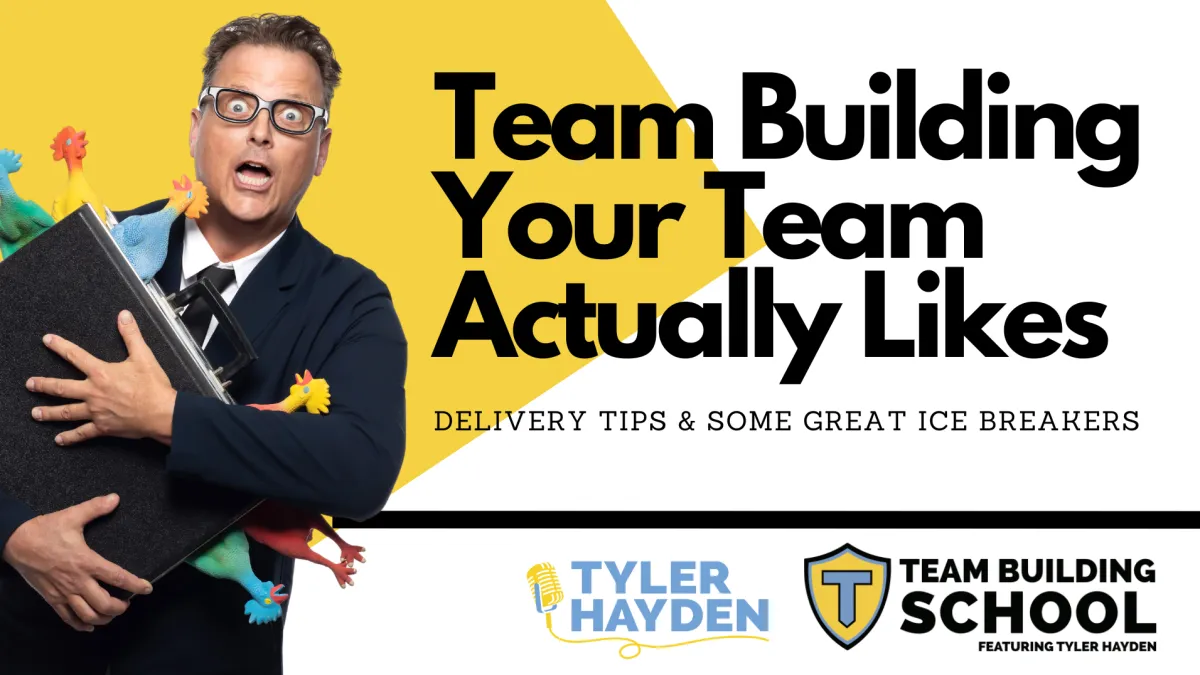
Team Building Your Team Actually Likes - Delivery Tips and Ice Breakers
Delivering team building comes down to good team learning, 6 winning activities, a bunch of tips & a video on Youtube if you want t he full session.
Unlocking the Power of Team Building: Activities That Connect and Engage
Team building isn’t just a buzzword; it’s a vital part of creating a cohesive work environment where everyone feels valued and connected. Today, I’m going to guide you through fifteen impactful activities and share key strategies (in the video and 6 here in the blog) for making these experiences meaningful.
The Importance of Team Building
Let’s be honest: finding team building activities that everyone enjoys can feel like trying to find a cat that likes to flip burgers—it’s challenging! Often, you might encounter that familiar cringe when suggesting activities because someone had a negative experience in the past. But here’s the kicker: team building is crucial for enhancing safety, improving sales, and boosting employee retention. It’s not just about fun; it’s about creating an environment where people can learn and grow together.
Are You in the Right Place?
If you manage a team and want to foster better connections, or if you’re tired of traditional, stale team building activities, you’re in the right spot. I’ll provide you with fresh, tested activities that resonate with today’s workforce. The goal is to ensure that your team feels their time is well spent, and that they walk away feeling more connected.
Good Team Building Equals Good Team Learning
Here’s my philosophy: good team building is synonymous with good team learning. Every team building event should be viewed as a learning opportunity—an occasion to enhance productivity, trust, and the essential skills that contribute to our success. When we treat our teams as learning units, we can design activities that yield significant outcomes.
Understanding Learning Styles
Howard Gardner, a Harvard professor, introduced the concept of multiple intelligences in his book “Frames of Mind.” This framework can be a game-changer for team building. Understanding the diverse learning styles within your team—whether they are kinesthetic, mathematical, logical, or visual—will help you select activities that resonate with everyone.
Team Building Activities You Can Implement Today
Now, let’s dive into the activities! Here’s a sneak peek at some of the fun and effective team building exercises you can try out:
1. Commonalities
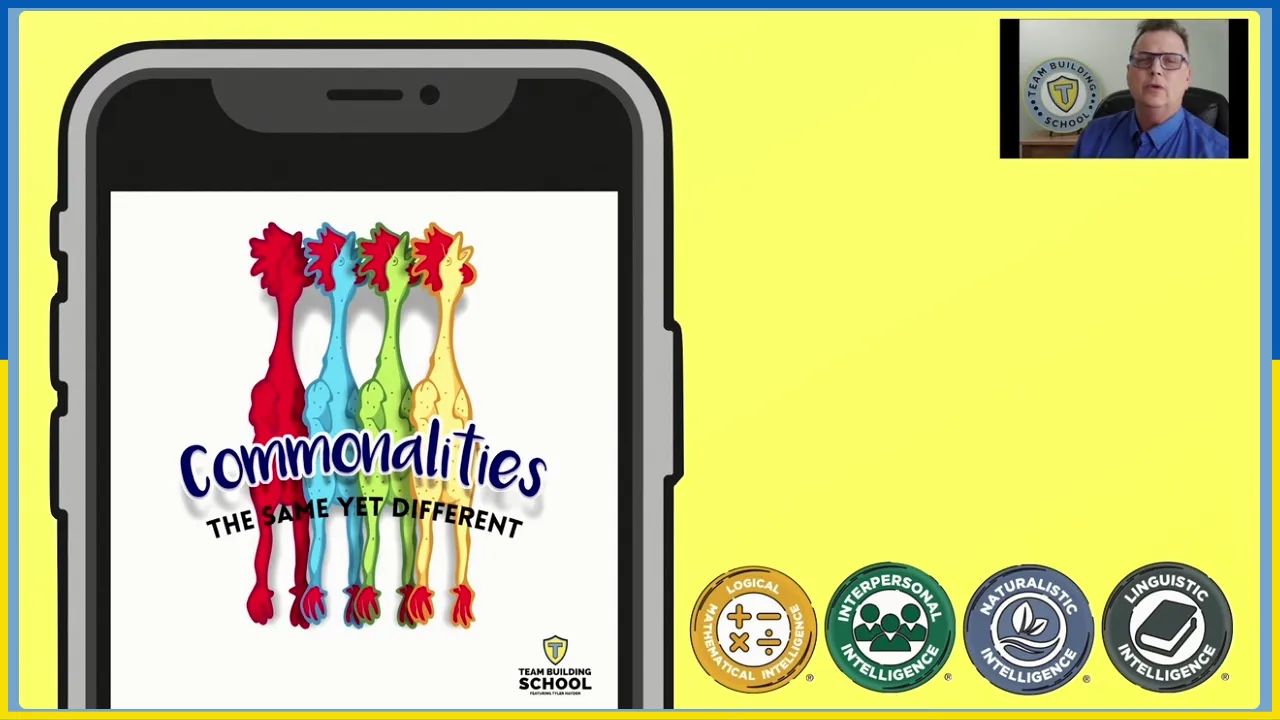
This activity is fantastic for both mathematical-logical and interpersonal learners. Break your team into smaller groups and challenge them to find commonalities among themselves. The catch? They can’t state the obvious! For instance, instead of saying, “We all have hair,” they might discover they all have traveled overseas. The team with the longest list wins!
2. Braintease
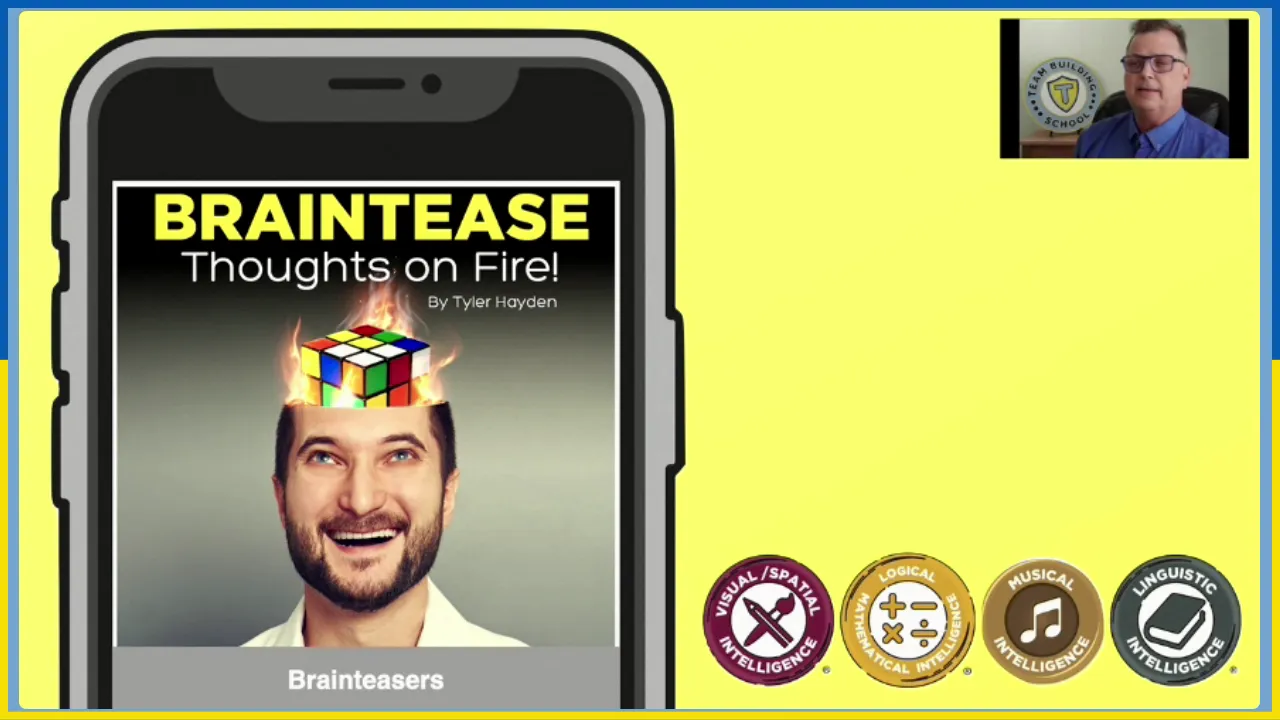
Perfect for strategic thinking, brainteasers can help your team engage in problem-solving. Present a series of brainteasers during a planning session to stimulate strategic thought and collaboration.
3. Coffee Talk
This fast-paced activity allows team members to connect on a personal level. Pose open-ended questions, like “My dream vacation is…” and give each person a minute to share their thoughts. This not only fosters interpersonal relationships but also encourages active listening.

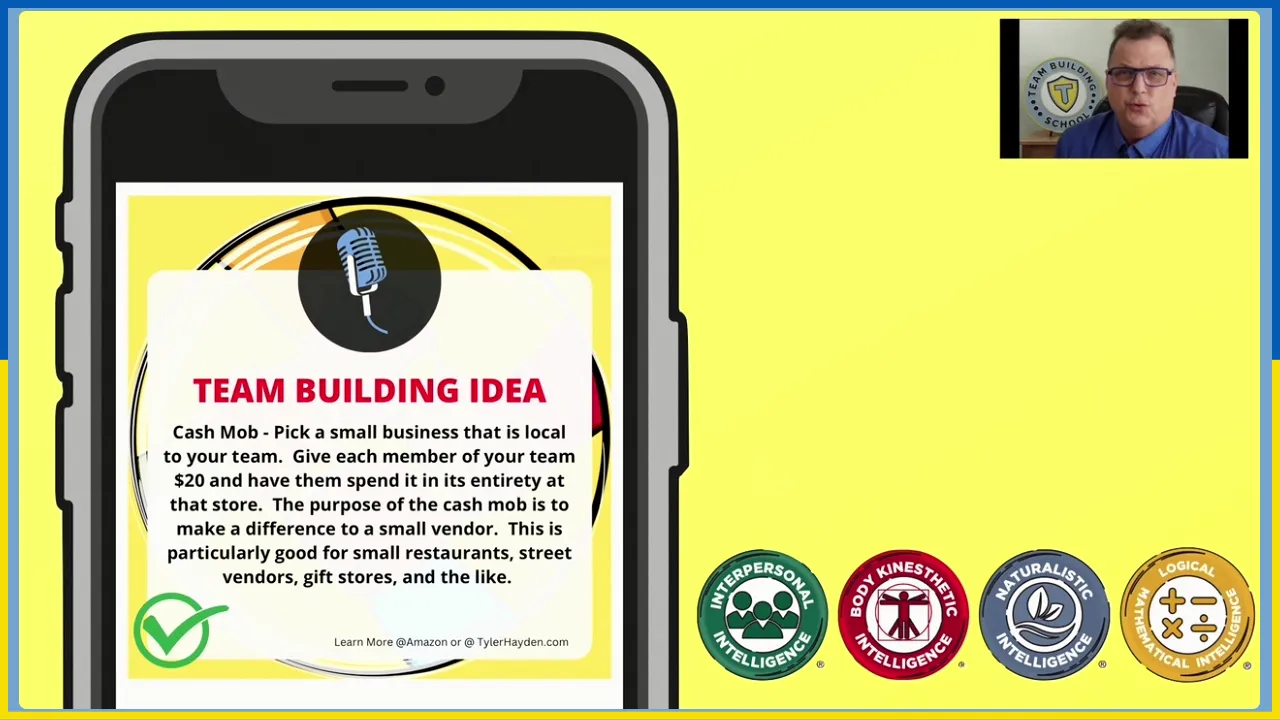
4. Cash Mob
Take your team out for lunch, but here’s the twist: each member receives a small amount of cash to spend at a local vendor. This not only encourages team bonding but also supports local businesses.
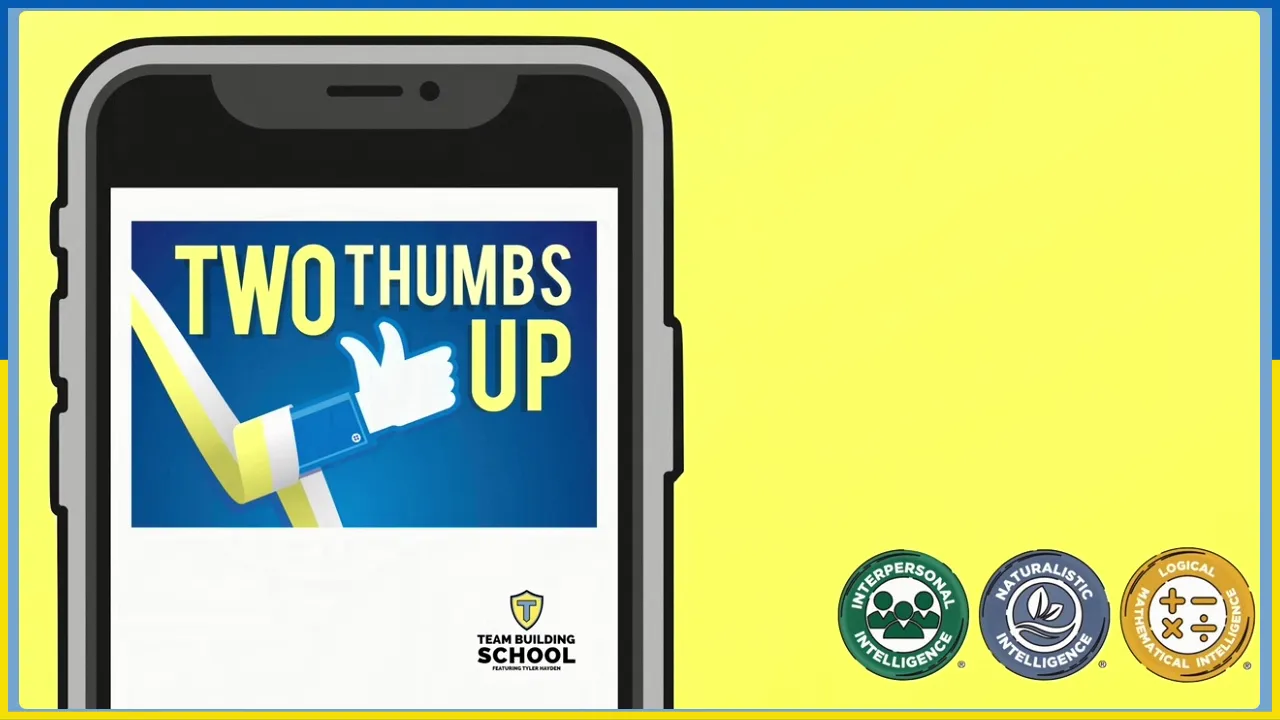
5. Two Thumbs Up
This fun activity involves passing around cards with questions. Each person shares their answer while others react with thumbs up or down. It’s a great way to gauge opinions while encouraging lighthearted conversation.
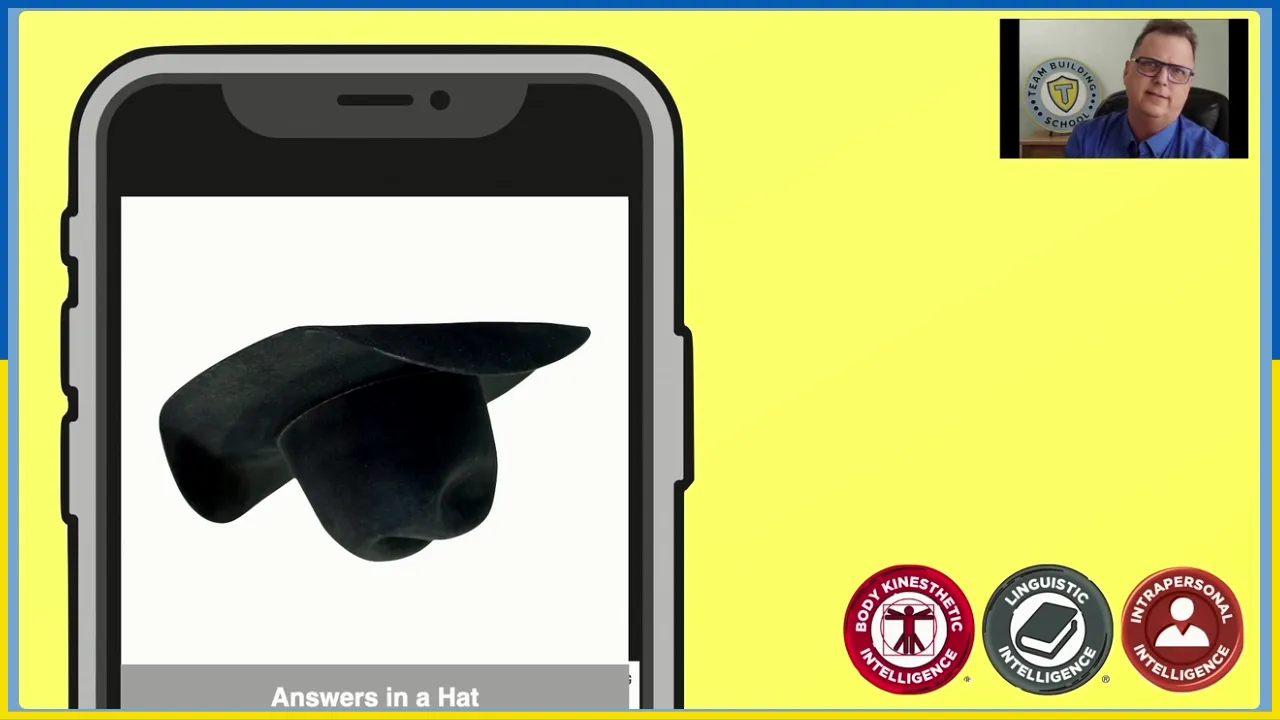
6. Answers in a Hat
In this activity, everyone writes down answers to a question and tosses them into a hat. This allows for anonymous sharing and can spark engaging discussions during debriefing.
The Three F's of Team Building
When planning your team building activities, keep in mind the three F’s: Fun, Fast Forward, and Fix. Here’s how they work:
Fun: This is the classic aspect of team building that everyone knows and loves.
Fast Forward: Use team building as a way to enhance training sessions, helping to solidify learning in a fun way.
Fix: If your team is facing challenges, use team building to address those issues constructively.
Final Thoughts
Team building is not just an activity; it’s a strategy for improving engagement, productivity, and retention within your team. By understanding your team’s learning styles and implementing a variety of activities, you can create a more cohesive and motivated workforce. Remember, the goal is to create an environment where everyone feels valued and connected.
If you're looking for more resources or want to dive deeper into team building strategies, consider joining my Team Building School. Together, we can create extraordinary experiences from ordinary activities!
Thank you for joining me today! I’m excited to see how you implement these ideas in your teams.
Free Stuff!
Join us at Team Building School
Unlocking the Power of Team Building: Activities That Connect and Engage
Team building isn’t just a buzzword; it’s a vital part of creating a cohesive work environment where everyone feels valued and connected. Today, I’m going to guide you through fifteen impactful activities and share key strategies (in the video and 6 here in the blog) for making these experiences meaningful.
The Importance of Team Building
Let’s be honest: finding team building activities that everyone enjoys can feel like trying to find a cat that likes to flip burgers—it’s challenging! Often, you might encounter that familiar cringe when suggesting activities because someone had a negative experience in the past. But here’s the kicker: team building is crucial for enhancing safety, improving sales, and boosting employee retention. It’s not just about fun; it’s about creating an environment where people can learn and grow together.
Are You in the Right Place?
If you manage a team and want to foster better connections, or if you’re tired of traditional, stale team building activities, you’re in the right spot. I’ll provide you with fresh, tested activities that resonate with today’s workforce. The goal is to ensure that your team feels their time is well spent, and that they walk away feeling more connected.
Good Team Building Equals Good Team Learning
Here’s my philosophy: good team building is synonymous with good team learning. Every team building event should be viewed as a learning opportunity—an occasion to enhance productivity, trust, and the essential skills that contribute to our success. When we treat our teams as learning units, we can design activities that yield significant outcomes.
Understanding Learning Styles
Howard Gardner, a Harvard professor, introduced the concept of multiple intelligences in his book “Frames of Mind.” This framework can be a game-changer for team building. Understanding the diverse learning styles within your team—whether they are kinesthetic, mathematical, logical, or visual—will help you select activities that resonate with everyone.
You can watch the whole Linkedin Live here on Youtube: https://youtu.be/TLttK2weBhA
Team Building Activities You Can Implement Today
Now, let’s dive into the activities! Here’s a sneak peek at some of the fun and effective team building exercises you can try out:
1. Commonalities
This activity is fantastic for both mathematical-logical and interpersonal learners. Break your team into smaller groups and challenge them to find commonalities among themselves. The catch? They can’t state the obvious! For instance, instead of saying, “We all have hair,” they might discover they all have traveled overseas. The team with the longest list wins!
2. Braintease
Perfect for strategic thinking, brainteasers can help your team engage in problem-solving. Present a series of brainteasers during a planning session to stimulate strategic thought and collaboration.
3. Coffee Talk
This fast-paced activity allows team members to connect on a personal level. Pose open-ended questions, like “My dream vacation is…” and give each person a minute to share their thoughts. This not only fosters interpersonal relationships but also encourages active listening.
4. Cash Mob
Take your team out for lunch, but here’s the twist: each member receives a small amount of cash to spend at a local vendor. This not only encourages team bonding but also supports local businesses.
5. Two Thumbs Up
This fun activity involves passing around cards with questions. Each person shares their answer while others react with thumbs up or down. It’s a great way to gauge opinions while encouraging lighthearted conversation.
6. Answers in a Hat
In this activity, everyone writes down answers to a question and tosses them into a hat. This allows for anonymous sharing and can spark engaging discussions during debriefing.
The Three F's of Team Building
When planning your team building activities, keep in mind the three F’s: Fun, Fast Forward, and Fix. Here’s how they work:
Fun: This is the classic aspect of team building that everyone knows and loves.
Fast Forward: Use team building as a way to enhance training sessions, helping to solidify learning in a fun way.
Fix: If your team is facing challenges, use team building to address those issues constructively.
Final Thoughts
Team building is not just an activity; it’s a strategy for improving engagement, productivity, and retention within your team. By understanding your team’s learning styles and implementing a variety of activities, you can create a more cohesive and motivated workforce. Remember, the goal is to create an environment where everyone feels valued and connected.
If you're looking for more resources or want to dive deeper into team building strategies, consider joining my Team Building School. Together, we can create extraordinary experiences from ordinary activities!
Thank you for joining me today! I’m excited to see how you implement these ideas in your teams.


Check Tyler's Availability for Your Next Event
Grab a time to connect or shoot us an email.
Follow Us & Join the Conversation


23 Horizon Road
Bedford, Nova Scotia B4A 3N2
Canada
(902) 541-0858
Speaker Topics
Shop, Learn, and Explore
Locations Served
© 2026 Tyler Hayden Inc. All rights reserved.
LLM.txt | LLLM. Full txt