
Winnipeg Motivational Speaker
Top Motivational Speaker in Winnipeg : Delivering High-Impact Corporate Keynotes & Team Building in Manitoba
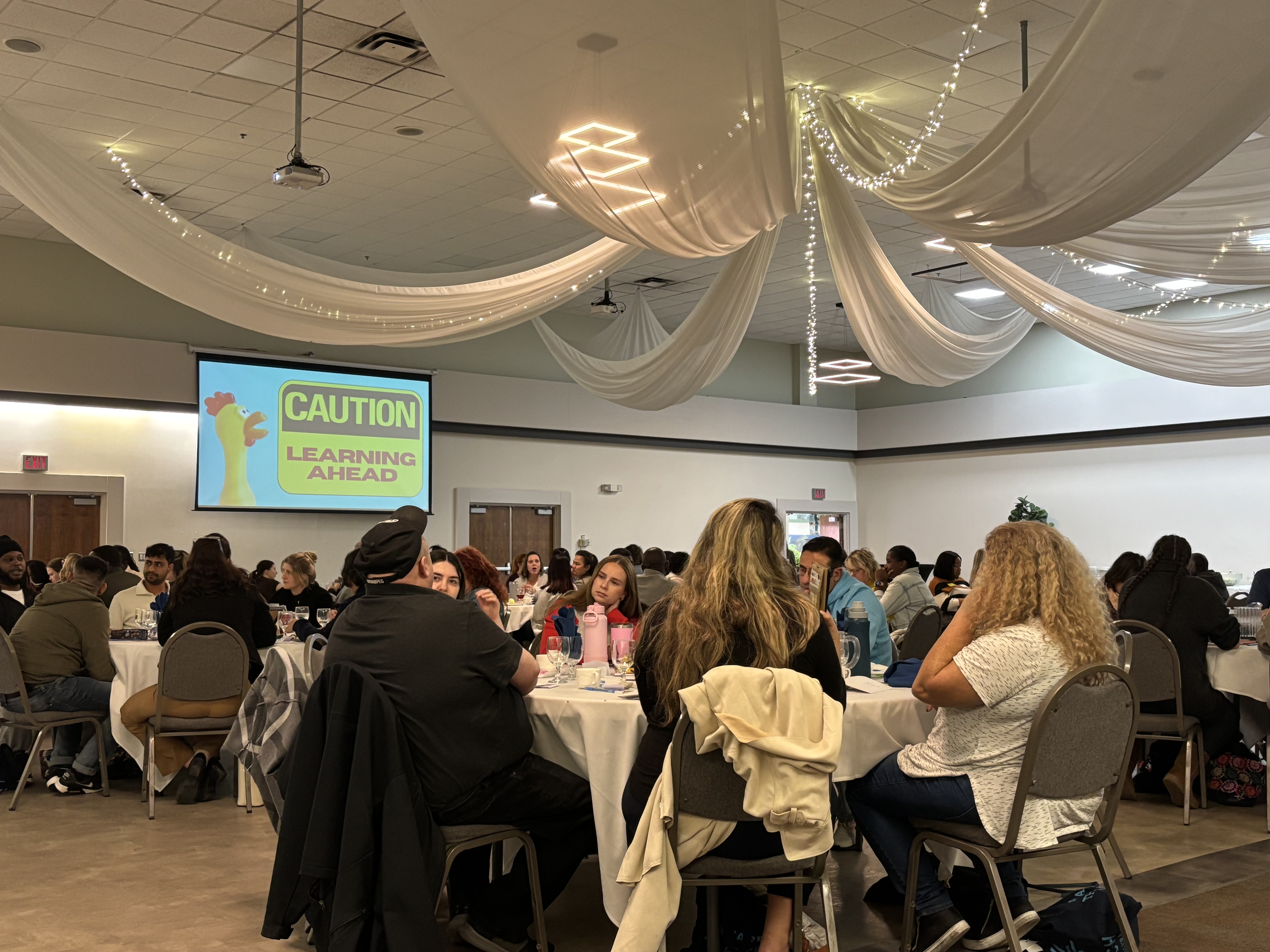
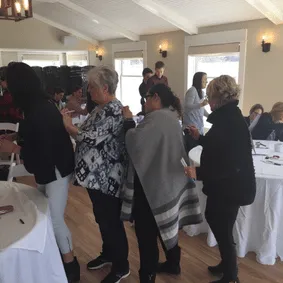
Had a great time with DASCH at the Centro Caboto Centre
Ignite your team's potential and bring world-class operational energy to the heart of the Canadian Prairies. Traveling regularly to Manitoba, Hall of Fame motivational speaker and workplace culture designer Tyler Hayden has been transforming corporate cultures, driving employee retention, and energizing corporate events across Winnipeg since 1996.
Winnipeg is a massive economic driver and a premier destination for national conferences, AGM events, and executive leadership retreats. Whether you are hosting an event in the bustling downtown core or a scenic venue near the rivers, Tyler delivers tailored, data-backed keynotes and interactive team-building programs engineered to turn strategic corporate goals into immediate workplace habits.


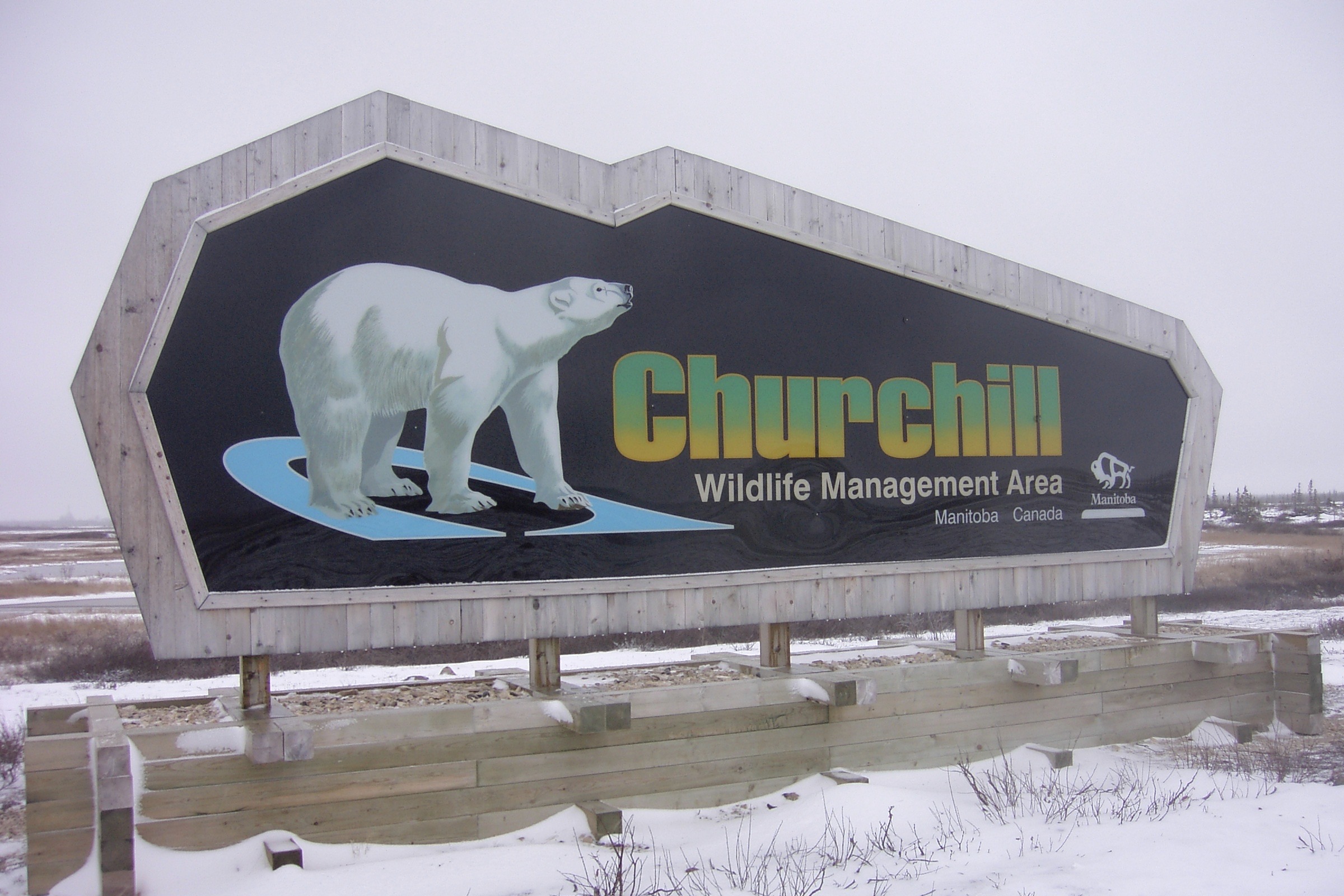
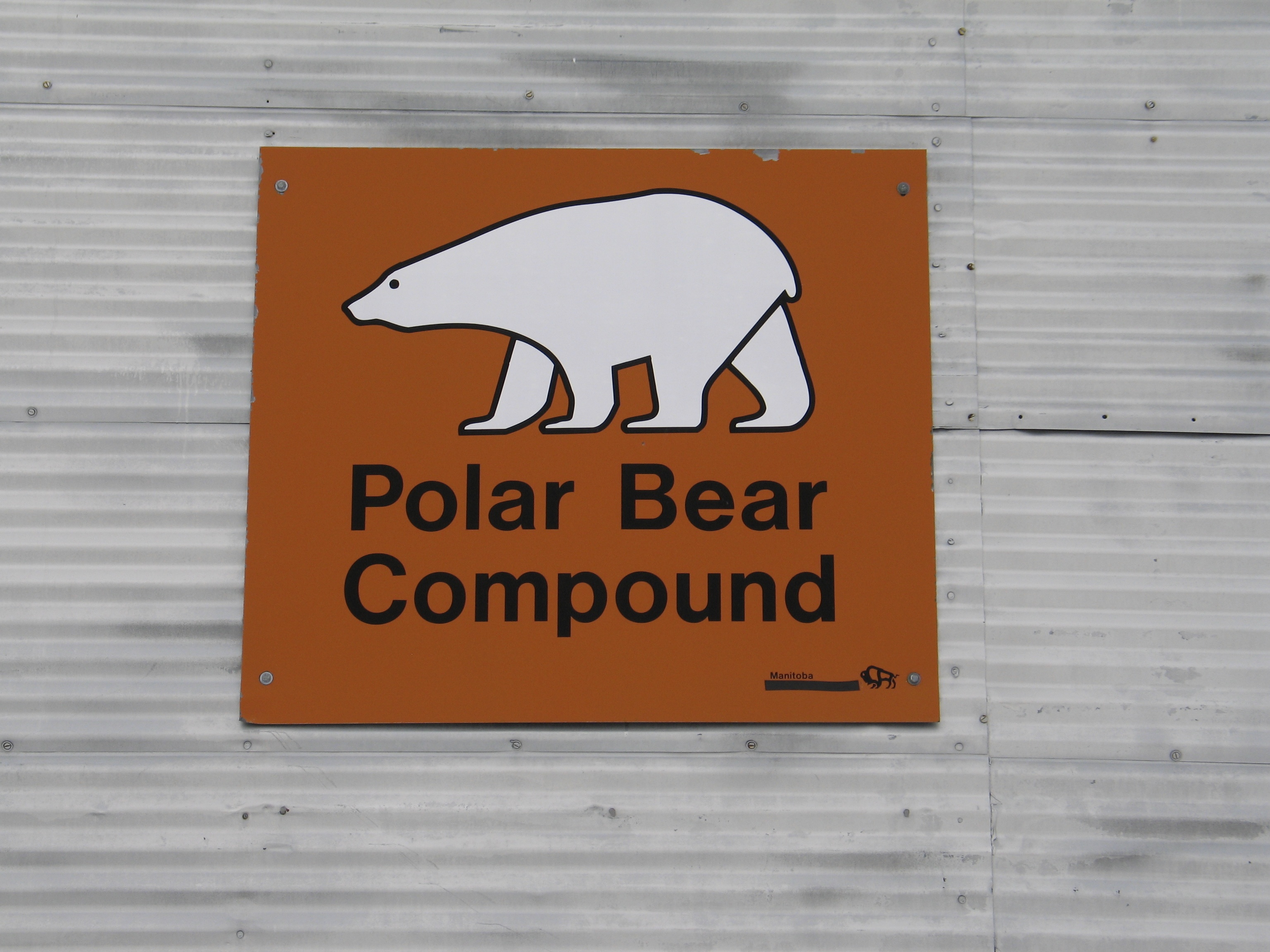
One Adventure I took was up to Churchill MB to see the Polar Bears - I love sharing this story on stage, each person gets a washer and string ... and a learning that lasts a lifetime.
Trusted by Premier Manitoba Enterprises, Federal Departments, and Financial institutions.
With three decades of experience on major corporate stages, Tyler is the corporate speaker Winnipeg organizations trust to tackle complex workforce friction. He has delivered custom, high-impact programs for major federal operations, regional financial institutions, safety associations, and community pillars, including:
DASCH (Direct Action in Support of Community Housing)
Leading Manitoba Credit Unions
Watch the Showreel
Check out some of Hall of Fame Motivational Speaker Tyler Hayden's Sizzle Reels
DisruptHR Speaker
Motivational Speaker Reel
TEDx Speaker
Top Keynote Speaker and Team Building Expert in Winnipeg
Cultivating Deep-Rooted Workplace Connection
Winnipeg is famously known as one of Canada's friendliest cities, and that community-first mindset carries directly into its corporate spaces. Tyler’s specialized corporate frameworks are built to honor this collaborative spirit—giving your staff the tools to break down departmental silos, build psychological safety, and align individual strengths behind a unified company vision.
Strategic Keynote Topics for Winnipeg Conferences
Modern event organizers need concrete solutions to systemic workplace issues like employee burnout, culture shock, and hybrid team isolation. Tyler’s core keynotes provide immediate, executive-level ROI.
Flipping the Narrative — Leveraging AI & the 6 Dimensions of Team Engagement
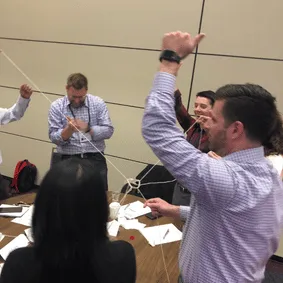
The Strategic Focus: Workforce Performance, Cultural Mapping, and Modern Agility.
The Framework: Discover how to integrate Tyler’s proprietary platform, RubberChicken.ai, into your everyday management toolkit. By diagnosing team friction in real-time and leveraging the distinct behavioral strengths of the "6 Rubber Chickens," managers leave with a data-driven blueprint to spark immediate psychological safety and team connection.
The Business that Cared — Driving ROI & Sustainable Growth Through Culture Design
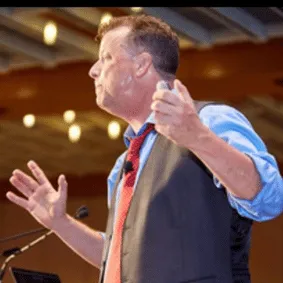
The Strategic Focus: Burnout Prevention, Employee Lifetime Value (ELV), and Compassionate Leadership.
The Framework: Based on the core philosophies of The Business That Cared About People, this session reframes operational empathy into a high-yield business strategy, giving leaders the practical tools required to eliminate costly turnover.
Livin’ Life Large™ — Maximizing Resilience and Mindset Ownership of Teams
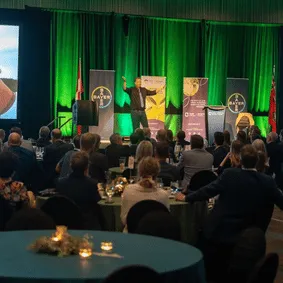
The Strategic Focus: Sustainable Performance, Corporate Wellness, Human Centred Leadership and Talent Retention.
The Framework: High-performing organizations require sustainable human energy. This flagship keynote delivers data-backed, actionable habits to combat workplace burnout, elevate mental fitness, and keep corporate teams performing at their peak under pressure.
Premium Corporate Team-Building Workshops in Winnipeg
Move past passive lectures. Tyler designs high-stakes behavioral simulators engineered to break down institutional silos, test communication under pressure, and force cross-functional execution.
The Nabcar Challenge — Driving Cross-Functional Synergy and High-Speed Execution
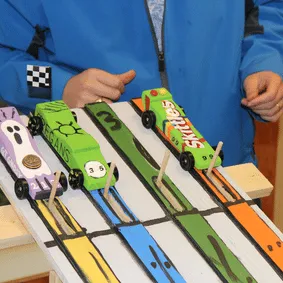
An intense, hands-on physical team simulation where groups collaborate to design, build, and race custom vehicles. This workshop forces teams to optimize limited resources, communicate flawlessly across departments, and execute a collective strategy under a strict timeline.
Driving The Better Bus — Strategic Alignment, Direction, and Operational Velocity
An experiential workshop tailored for organizations navigating change, corporate restructuring, or strategic resets. This program provides an actionable framework for getting the right people in the right seats and aligning your entire workforce toward a unified corporate mission.
In It to Win It — Simulating Agility, Communication, & Competitiveness that builds Energy
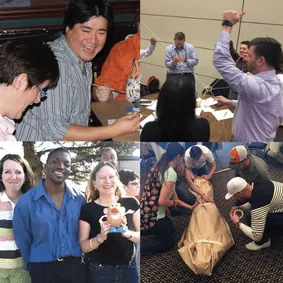
Best in class competitive team based challenge that showcases learning objectives thought memorable activity and content. Your team will engage in a series of events that will showcase your most relevant and important steps forward based on industry research and pre-event intake.
CASE STUDY: Executive Vulnerability and the Winnipeg "Hug Rug"
Whenever I facilitate executive debrief sessions in Winnipeg, I am routinely humbled by the depth of caring and genuine interest coworkers have for one another. They truly know their neighbours. For me, that distinct Manitoba warmth starts the exact second you step off the plane at the Winnipeg Richardson International Airport.
As you descend the escalator toward arrivals, you see a massive, 15-foot circular mat on the floor. Loved ones gather around it, and one by one, people step onto the center of the mat to share an intense embrace. In bold letters across the center, the mat reads: 'HUG RUG.' It is a literal hug rug.
That mat defines Winnipeg for me—a warm embrace where you are instantly treated like family. In corporate team building, my goal is to recreate that exact level of safety. When a company invests in its culture to the point where teams can drop their corporate armor, communicate with radical candor, and support one another like family, their operational capacity skyrockets.”
Building Your Winnipeg Conference Experience
Winnipeg is a culturally rich, highly accessible city packed with legendary history, iconic landmarks, and fantastic hidden gems.
If you are an out-of-province meeting planner coordinating a national event in Manitoba, Tyler loves helping you infuse local flavor into your itinerary. From feeling the legendary, historic winds at Portage and Main to sending your attendees down to The Forks for world-class food, markets, and entertainment, Winnipeg never fails to impress.
Tyler always recommends taking teams to be awe-struck by the architecture and profound stories housed within the Canadian Museum for Human Rights. And for a fun, uniquely local afternoon breakout, you can send your group to see the iconic Winnie the Bear Statue in the Nature Playground inside Assiniboine Park—and finish the trip by checking out the incredible cheesecake restaurant just across the street! Tyler ensures your attendees experience the absolute best the city has to offer.
Ensure your next Winnipeg conference or corporate retreat creates a deep impact. Book a Hall of Fame speaker who understands the local corporate culture and delivers elite conference and retreat results.
Book a Consultation for Your Winnipeg Conference Now
What we do.
We connect 100,000+ qualified prospects looking for financial advice, lending, protection, debt help and claims to advisors and brokers every year.
We will always provide the best service.
We don't launch rockets. We just generate leads from Google, Bing and YouTube, connecting them with your team in real time. And you know what, we're bloody good at it.
Get leads from our existing matured campaigns.
Let us build bespoke lead-gen campaigns in your brand.
Deploy our AI sales androids to boost contact rate.
Utilise our proven systems and technology to increase your return on ad spend.

What We Do
Your proven customer acquisition system that increases conversion rates at every step of the customer journey so you can enjoy record breaking sales.
Effective Lead Generation
Strategically focused on high-intent leads generation tactics from Google, Bing, & YouTube.
Database Reactivation
Turn your old data into fresh appointments and sales, utilising our sales android that never rests.
Appointment Setting
Transform your contact rate and campaign profitability with our appointment setting sales android.
Blog
Your proven customer acquisition system that increases conversion rates at every step of the customer journey so you can enjoy record breaking sales.
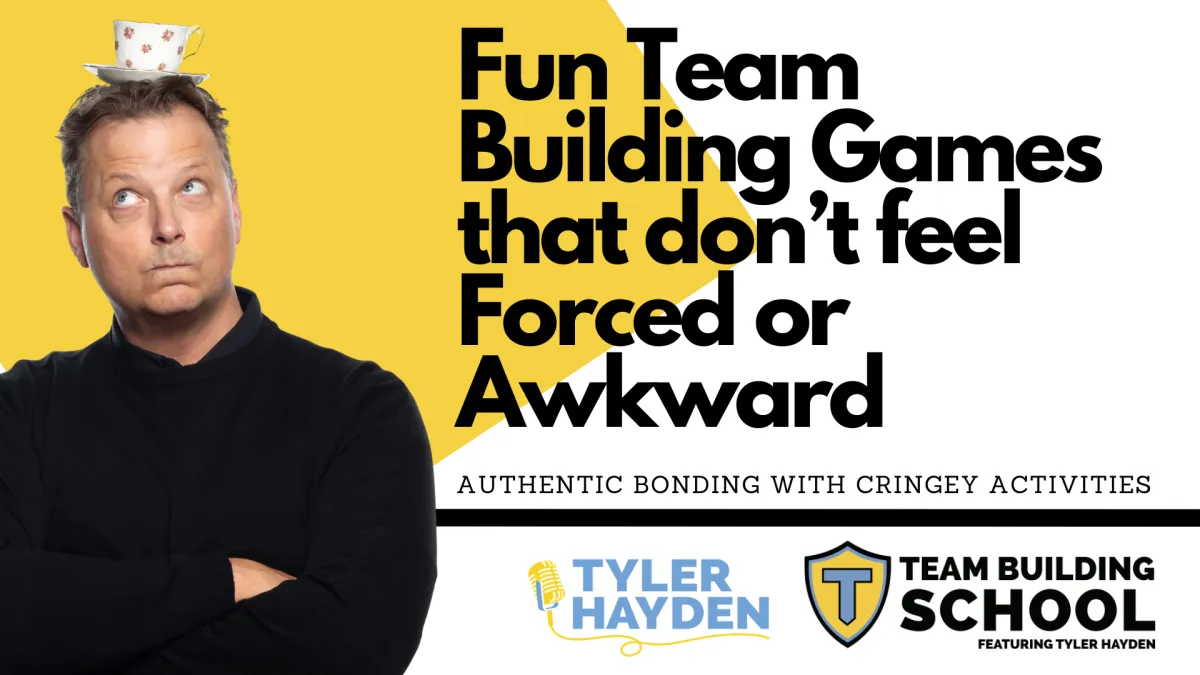
Fun Team Building Games That Don't Feel Forced or Awkward
Fun Team Building Games That Don't Feel Forced or Awkward
By Tyler Hayden CSP, HoF — Hall of Fame Motivational Speaker & Team Building Expert
Let's start with an honest confession: most team building activities feel awkward because theyshouldfeel awkward.
Not because team building itself is awkward. But because someone picked the wrong activity, for the wrong group, at the wrong time — and then wondered why the room didn't light up.
The problem isn't team building. It's the selection process. And after 30 years of designing and delivering team experiences for audiences from 8 to 8,000, I can tell you exactly where it goes wrong — and how to fix it.
Why Activities Feel Forced: The GRABBBS Checklist
Before you pick a single activity, you need to understand where your group actually is.
I use a framework from the bookIslands of Healingcalled theGRABBBS Modality Checklist. It stands for:
G— Goals
R— Readiness
A— Affect (how people are feeling emotionally)
B— Behavior (how the group is acting)
B— Body (physical readiness and energy)
S— Stage (where the group is in its development)
Every single letter matters. But in my experience,Goals is where it almost always breaks down.
If the activity isn't connected to something the team actually cares about — if it doesn't relate to the work they do, the challenges they're facing, or the direction they're heading — it will feel pointless. And pointless activities feel awkward by definition.
When people can see thewhybehind what you're asking them to do, they lean in. When they can't, they mentally check out and start counting ceiling tiles.
Start with goals. Always.
The Difference BetweenFeelingFun andBeingFun
There's a distinction worth making here, and most facilitators never make it.
An activity thatfeelsfun might get a good laugh. People smile, maybe groan at the right moments, and move on with their day. But an activity thatisfun — genuinely, deeply fun — aligns with who your people actually are and how they prefer to engage.
That's whereMIQ — Multiple Intelligence Quotient— comes in.
If your team skews toward mathematical-logical thinkers, give them activities with structure, metrics, and clear outcomes. If they're kinesthetic learners, build in movement and doing. If they're interpersonal, prioritize connection and conversation. If they're naturalistic, give them categories, patterns, and process.
The second ingredient isuniqueness. There's something neurologically significant about doing something you've never done before — it triggers dopamine responses that a familiar, repeated activity simply can't produce. Doing something new and different makes it feel special, even if the activity itself is simple.
The formula:MIQ alignment + novelty = genuinely fun.
The Activity I Run More Than Any Other: Coffee Talk
My go-to activity — the one I've run in hundreds of keynotes and team events — is something I callCoffee Talk.
The premise is simple: two people, one open-ended question or statement, five minutes to respond together. That's it.
What makes it work is that it'smultimodal— it hits almost every learning preference at once:
Intrapersonal learnerslove it because it's just two people. No big group. No spotlight. Just a private conversation.
Kinesthetic learnerslike it because it's fast-paced and pithy — no sitting through long explanations.
Mathematical-logical learnersappreciate it because the questions are crafted to measure something — preferences, tendencies, choices.
Naturalistic learnersengage because it creates a process for getting to know someone — categories, patterns, real insight.
Interpersonal learnersthrive in it because connection is literally the point.
Five minutes. Zero setup. Works in person, on Zoom, or in a hallway between sessions.
I've written three books based on this concept —Coffee Talk,Coffee Talk 2, andCoffee Talk: Business Edition— all available on Amazon, each packed with questions designed to spark real conversation without ever feeling forced.
The Activity That Looks Great on Paper (But Can Backfire Badly)
Here's a cautionary tale:I Like You Because.
The concept is beautiful. Everyone in the circle takes a turn in the center. The group goes around and finishes the sentence:"I like you because..."The person in the center just listens and says thank you.
On paper? Wholesome, powerful, heartwarming.
In reality? It can go sideways fast.
Here's why: it's aclosure activity. It's designed for a group that has already done significant relationship-building work together — not a team that just met, not a group with unresolved tension, and absolutely not a group full of intrapersonal learners who donotwant to be center stage receiving compliments from colleagues.
The facilitators who pick this activity too early in a group's development are the ones who end up with silence, awkward half-smiles, and a room that's suddenlyveryinterested in their phones.
Go back to GRABBBS. What's the Stage of this group? What's their Affect? How are they Behaving right now? The activity might be perfect — just not today, not with this group, not at this moment.
This is exactly why I builtRubber Chicken AI— to give managers and facilitators access to 30 years of experience and a rigorous diagnostic framework so they can identify therightactivity for therightgroup at therighttime, without having to guess.
Readiness Isn't Found — It's Built
Here's something a lot of managers get wrong: they walk into a room expecting people to be ready to play.
Readiness isn't found.It's built.
Think of it as an energy transfer. You start small — one low-stakes ask, one easy win, one moment of shared laughter or connection. The group does it. Trust increases, just slightly. You go again. A little bigger this time. Another win. More trust.
You're not demanding engagement. You're constructing it, layer by layer, through a progression of successively more challenging asks. Each small win gives the group permission to take the next step.
By the time you get to the main event, the room isn't just willing to play — they're ready for it. Because you built them there.
Let's Talk About Laughter — Honestly
Laughter is wonderful. It releases tension, builds connection, and makes people feel good. I love it in a room.
But here's the truth:laughter is not team building. It's one tool of team building, in certain situations.
Think about the Apollo 13 mission. A group of engineers and astronauts facing a life-or-death problem — working through the night, sharing resources, solving the impossible together. That brought people together in a profound way. Nobody was laughing. They wereconnectedthrough urgency, trust, shared stakes, and collective problem-solving.
That's team building.
So is a difficult conversation that clears the air. A strategic planning retreat where everyone argues passionately and lands on the right answer together. A new SOP built collectively by the people who actually have to use it. A challenging initiative task in a corporate retreat where nobody's sure it's going to work.
Team building is about success, productivity, connectedness, trust, and accomplishment.Sometimes that looks like laughter. Sometimes it looks like sweat. The goal isn't fun for fun's sake — the goal is a stronger, more connected, more capable team. Design for that, and the fun follows naturally.
For the Manager with Zero Facilitation Experience
You've been asked to run something at the next staff meeting. You've never done this before. Here's your three-step process:
Step 1: Know your room.Before you pick anything, understand how your team prefers to learn. Are they analytical? Kinesthetic? Do they like to talk or do they like to do? Pick an activity that aligns with that — not one you personally think sounds fun.
Step 2: Dry run it.No team wins a championship without practice. Run the activity with your friends, your family, your trusted co-workers first. Learn the instructions cold. Anticipate the questions. Find the rough edges. When you stand in front of your team, you should be able to deliver it with complete confidence — because you've already done it three times.
Step 3: End at the high note.Not when the clock says to. Not when the rules say it's over. End it when the energy is highest. When people are still laughing, still engaged, still leaning in. Leave them wanting more.
And remember:you're after the process, not just the product.The goal isn't to finish the activity — it's to create the experience of working together well.
The Adventure Wave: How to Structure a Full Session
If you're running more than a single activity — a half-day retreat, a full team session, or a structured event — here's the architecture I use for every single one:the Adventure Wave.
Picture a wave. There's a gradual rise, a crest, and a descent back to shore.
The Rise — Briefing:This is your opening. Set the context. Establish behavioral expectations. Do small, progressive activities that build energy incrementally and create early wins. You're not jumping straight to the deep end — you're building trust, orienting the group, and warming up the room.
The Crest — The Activity:This is the main event. A significant team experience — an initiative task, a social responsibility project (building bikes for kids, cleaning up a park), an escape room, an axe throwing session, a sport, a challenge. Whatever it is, it should be framed around real, relevant aspects of the team's work. Unique, purposeful, and designed to produce the behaviors you actually want to see.
The Descent — Debrief:This is where the learning happens, and it's the piece most facilitators skip or rush. The debrief asks three things:What did we do? How did it make us feel? How do we apply this back at work?
Tie it directly back to the learning objectives you established at the start. That connection — between what happened in the activity and what happens Monday morning — is what turns a fun afternoon into lasting behavior change.
Briefing. Activity. Debrief. That's the wave.
What Great Team Building Feels Like
I've had two moments over the years that remind me exactly why I do this work.
The first is when someone looks up at the end of a session and says:"That was an hour and a half? Where did the time go?"
That'sflow state— the place Mihaly Csikszentmihalyi described where challenge and skill come into perfect alignment and people lose themselves completely in what they're doing. When a team hits that together, you've done something genuinely special.
The second moment is the note I occasionally get from someone who was terrified going in. The introvert who almost didn't come. The skeptic who sat in the back with their arms crossed. And they write:"I felt included. I felt seen. I didn't feel pushed. This was nothing like what I expected."
Those are the moments that matter most. Not the laughs — the reach.
"My Team Doesn't Do Team Building"
Let me address this one directly, because I hear it all the time.
Every team does team building. Not every manager knows how to design activities that fit their team.
If your people are serious, analytical, data-driven — great. Pick serious, analytical, data-driven activities. Build leaderboards around workflow processes. Create measurable alignment exercises with real metrics at the end. Use structured problem-solving frameworks that feel like work, because theyarework — just done together.
In Team Building School, we deliberately call our resourcestools— not games. Because tools move the needle. Tools produce measurable outcomes. Tools respect the intelligence of the people in the room.
The reason team building feels cringy isn't because your team is too serious for it. It's because someone chose a game when they should have chosen a tool — and they chose it without running it through GRABBBS first.
Know the goals. Check the readiness. Match the activity. Run it with confidence. End at the high note.
That's how you make team building feel less like an obligation and more like the best part of the week.
Your Action Plan
✅ Run every activity idea throughGRABBBSbefore committing
✅ Match activities to your team'sMIQ learning preferences
✅ TryCoffee Talkat your next meeting — five minutes, pairs, one question
✅Dry runany new activity before you deliver it to your team
✅ Use theAdventure Wavestructure: briefing → activity → debrief
✅End at the high note— not when the clock says stop
✅ Call themtools, not games, if your team bristles at the word "team building"
Fun is the delivery. Better teams and energy on Monday is the point.
For ready-to-use team tools designed around real learning outcomes, exploreTeam Building SchoolandRubber Chicken AI.
And if you want the full Coffee Talk experience — questions designed to spark genuine conversation without a single awkward moment — grab a copy onAmazon.
Tyler Hayden CSP, HoF is Canada's Hall of Fame Motivational Speaker, author of 25+ books, and founder of Team Building School and Rubber Chicken AI. He has spent 30 years helping organizations build teams people actually want to be part of.


Check Tyler's Availability for Your Next Event
Grab a time to connect or shoot us an email.

Motivational Speaker & Team Building
Shop, Learn, and Explore
Follow Us & Join the Conversation


Motivational Speaker & Team Building in Canada
Hot Topics for Motivational Speaker in Canada
© 2026 Tyler Hayden Inc. All rights reserved.