
Toronto Motivational Speaker
Top Motivational Speaker in Toronto: Delivering High-Impact Corporate Keynotes & Team Building in Ontario

Dangling off the CN Tower In Toronto
Ignite your organization's potential and elevate your next corporate event in Canada's economic capital. Based in Atlantic Canada and traveling regularly to Ontario, Hall of Fame motivational speaker and workplace culture designer Tyler Hayden has been empowering executive teams, driving employee retention, and energizing audiences across the Greater Toronto Area (GTA) since 1996.
As the nation’s premier business hub, Toronto demands world-class event execution. Whether you are hosting an annual general meeting (AGM) at a major downtown convention space or a premium leadership retreat, Tyler delivers tailored, data-backed keynotes and experiential team-building workshops engineered to turn strategic corporate goals into tangible daily habits.







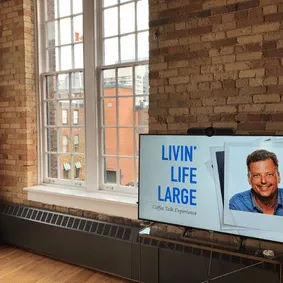
Hanging out in the MaRS Discovery District
Trusted by Elite Corporations, Healthcare Networks, and National Institutes in the GTA
With three decades of stage experience, Tyler is the corporate speaker Toronto organizations trust to tackle complex workforce friction. He has delivered high-impact, custom programs for enterprise market leaders, national professional bodies, and major healthcare networks, including:
Sysco Canada
University Health Network (UHN)
National Payroll Institute
Timbermart
Watch the Showreel
Check out some of Hall of Fame Motivational Speaker Tyler Hayden's Sizzle Reels
DisruptHR Speaker
Motivational Speaker Reel
TEDx Speaker
Top Keynote Speaker and Team Building Expert in Toronto
Tailored for Diverse, World-Class Audiences
Toronto is celebrated globally as a world-class, diverse metropolis, and Tyler’s programs are built to match that standard. His specialized learning frameworks are designed to embrace diverse perspectives and tap into a team's collective intelligence, ensuring that every participant—regardless of background, department, or learning style—leaves fully aligned and motivated.
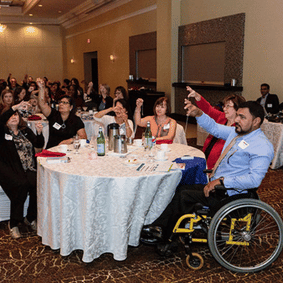
Strategic Keynote Topics for Toronto Corporate Conferences
Corporate event planners aren't just looking to fill an hour on the agenda—they need actionable solutions to combat employee burnout, navigate complex corporate shifts, and eliminate hybrid isolation. Tyler’s core keynotes provide immediate executive-level ROI.
Flipping the Narrative — Leveraging AI & the 6 Dimensions of Team Engagement
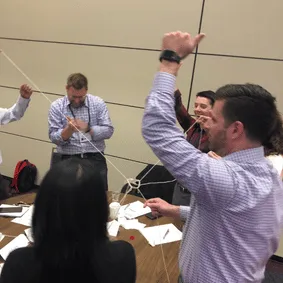
The Strategic Focus: Workforce Performance, Cultural Mapping, and Modern Agility.
The Framework: Discover how to integrate Tyler’s proprietary platform, RubberChicken.ai, into your management toolkit. By diagnosing team friction in real-time and leveraging the distinct behavioral strengths of the "6 Rubber Chickens," leaders walk away with a data-driven blueprint to build unbreakable psychological safety.
The Business that Cared — Driving ROI & Sustainable Growth Through Culture Design

The Strategic Focus: Burnout Prevention, Employee Lifetime Value (ELV), and Compassionate Leadership.
The Framework:Based on the core philosophies of The Business That Cared About People, this session reframes operational empathy into a high-yield business strategy, giving leaders the practical tools required to eliminate costly turnover.
Livin’ Life Large™ — Maximizing Resilience and Mindset Ownership of Teams
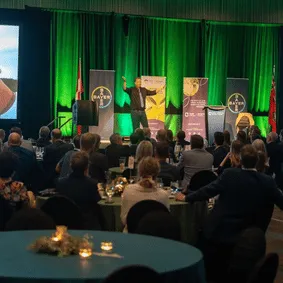
The Strategic Focus: Sustainable Performance, Corporate Wellness, Human Centred Leadership and Talent Retention.
The Framework: High-performing cultures require sustainable human energy. This flagship keynote delivers data-backed, actionable habits to combat workplace burnout, elevate mental fitness, and keep corporate teams performing at their peak under pressure.
Premium Corporate Team-Building Workshops in Toronto
Move beyond passive lectures. Tyler designs high-stakes behavioral simulators engineered to break down institutional silos, test communication under pressure, and force cross-functional execution.
The Nabcar Challenge — Driving Cross-Functional Synergy and High-Speed Execution

An intense, hands-on physical team simulation where groups collaborate to design, build, and race custom vehicles. This workshop forces teams to optimize limited resources, communicate flawlessly across departments, and execute a collective strategy under a strict timeline.
Driving The Better Bus — Strategic Alignment, Direction, and Operational Velocity

An experiential workshop tailored for organizations navigating change, corporate restructuring, or strategic resets. This program provides an actionable framework for getting the right people in the right seats and aligning your entire workforce toward a unified corporate mission.
In It to Win It — Simulating Agility, Communication, & Competitiveness that builds Energy
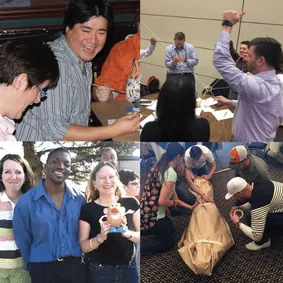
Best in class competitive team based challenge that showcases learning objectives thought memorable activity and content. Your team will engage in a series of events that will showcase your most relevant and important steps forward based on industry research and pre-event intake.
CASE STUDY: Turning Ordinary Into Extraordinary at the CN Tower EdgeWalk
“I was in my room at the Delta Hotel getting ready to speak for the National Payroll Institute at their Toronto conference for National Payroll Week. Glancing out the window, I noticed tiny red dots moving along the very top of the iconic CN Tower. A quick search revealed it was the EdgeWalk—and by sheer serendipity, a single spot was open that afternoon.
I walked over and found myself attached to a safety harness 116 stories above the city, completely surrounded by a high-energy bachelorette party (I was their plus one). Dancing on a five-foot ledge above Toronto with a group of celebrating strangers became an unforgettable lesson in leaning into unexpected opportunities. In business, the most memorable breakthroughs and strongest bonds happen when you step completely outside your comfort zone and embrace the extraordinary.”
Maximize Your Toronto Conference in Every Way
Toronto has the unique feel of the 'smallest big city' in the world—an incredible metropolis packed with world-class entertainment, exceptional dining, and legendary sports.
If you are an out-of-province meeting planner coordinates an event in the GTA, Tyler is happy to share his favorite local insights. As a 6'5" vegetarian, he knows firsthand that Toronto boasts some of the most accommodating and elite culinary scenes anywhere in North America. Whether your team wants to catch an incredible theater show, experience a legendary concert event (like seeing Midnight Oil live), or find the perfect post-conference dining experience, Tyler helps ensure your attendees experience the absolute best the city has to offer.
Ensure your next Ontario conference or corporate retreat leaves a lasting impact. Secure a Hall of Fame speaker who understands the local business landscape and delivers elite corporate results.
Book a Consultation for Your Toronto Event Today
What we do.
We connect 100,000+ qualified prospects looking for financial advice, lending, protection, debt help and claims to advisors and brokers every year.
We will always provide the best service.
We don't launch rockets. We just generate leads from Google, Bing and YouTube, connecting them with your team in real time. And you know what, we're bloody good at it.
Get leads from our existing matured campaigns.
Let us build bespoke lead-gen campaigns in your brand.
Deploy our AI sales androids to boost contact rate.
Utilise our proven systems and technology to increase your return on ad spend.

What We Do
Your proven customer acquisition system that increases conversion rates at every step of the customer journey so you can enjoy record breaking sales.
Effective Lead Generation
Strategically focused on high-intent leads generation tactics from Google, Bing, & YouTube.
Database Reactivation
Turn your old data into fresh appointments and sales, utilising our sales android that never rests.
Appointment Setting
Transform your contact rate and campaign profitability with our appointment setting sales android.
Blog
Your proven customer acquisition system that increases conversion rates at every step of the customer journey so you can enjoy record breaking sales.
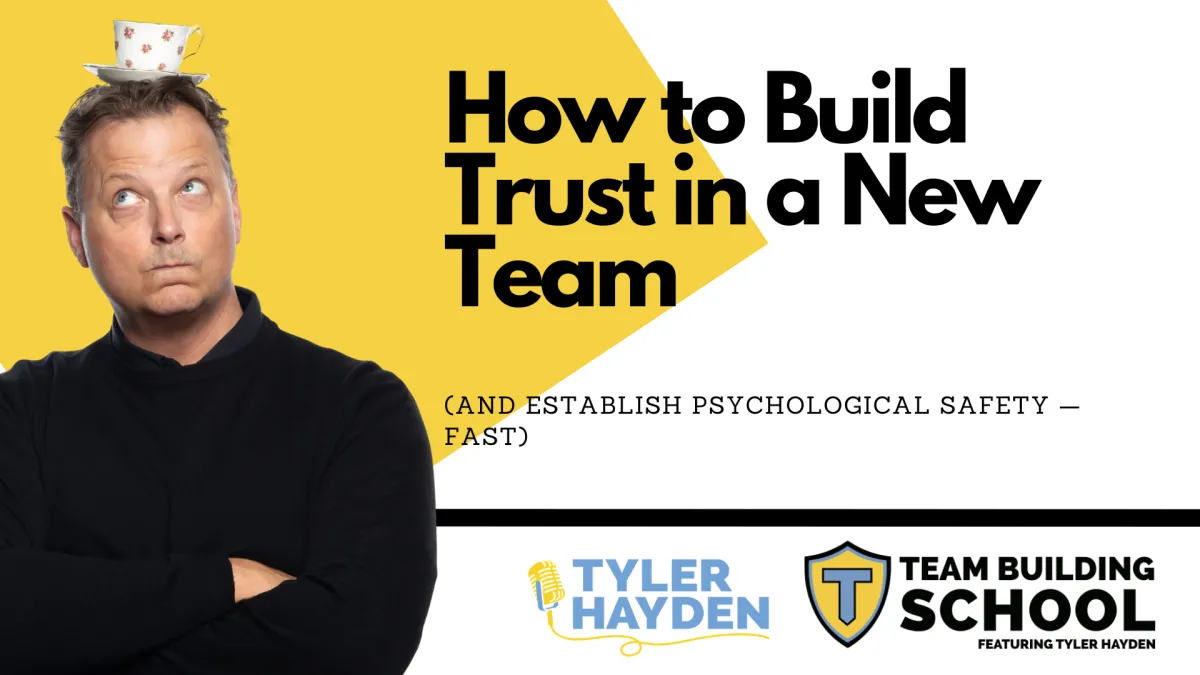
How to build trust in a new team and establish psychological safety fast (And Establish Psychological Safety — Fast)
How to Build Trust in a New Team (And Establish Psychological Safety — Fast)
By Tyler Hayden CSP, HoF — Hall of Fame Motivational Speaker & Organizational Development Expert
Psychological safety is one of the most talked-about concepts in modern leadership — and one of the least understood in practice.
Most leaders know they’re supposed to create it. Far fewer know what it actually looks like when it’s missing, what it feels like when it’s present, or how to build it deliberately and quickly when the clock is ticking and the stakes are real.
This post is for those leaders. The ones stepping into a new team, a skeptical room, or a group that’s been burned before — and who need more than theory.
Here’s what 30 years in the room actually looks like.
What the Absence of Trust Looks Like
Before you can build trust, you have to be able to read its absence — and it shows up long before anyone says a word.
Walk into a low-trust room and you’ll notice it immediately:closed arms. Eyes that drift away instead of making contact. A quiet that feels heavy rather than peaceful.Questions go unanswered. Hands don’t go up. Participation is pulled out rather than offered.
These are the non-verbals of a group that is in protection mode. They’ve either been let down before, they don’t yet feel safe with the people in the room, or the culture they work in has taught them that visible engagement carries risk.
You can feel it. And once you know what you’re looking for, you can’t unsee it.
That awareness — reading the room before you open your mouth — is the first skill of anyone serious about building psychological safety.
The Most Important Five Minutes You’ll Ever Plan
Here’s something most facilitators and leaders get exactly backward: they spend the most time planning the main event and almost no time planning the opening.
I do the opposite.
My first five minutes are the most planned, most intentional part of every session I run.Because those five minutes set the entire trajectory of what follows. Get them right, and the rest of the time becomes dramatically easier. Get them wrong, and you spend the next hour trying to recover ground you never had to lose.
Before I walk into any room with a new team, I do my homework:
·What are their job functions?
·What are their learning preferences?
·What have their previous team experiences looked like?
·What wounds might they be carrying in?
That information shapes everything about how I open. The tone I use. The activity I start with. The expectations I set. The level of vulnerability I ask for — which in minute one, is almost zero.
The goal of the first five minutes isn’t to build trust. It’s to create the conditions where trustcanbe built. That’s a different, more achievable goal — and a much better place to start.
What Psychological Safety Actually Feels Like
When a group has psychological safety, you see it in one specific thing:they lean in.
They take risks. They contribute ideas before they’re sure those ideas are good. They try new activities without knowing if they’ll look competent. They’re okay flirting with failure. They don’t need to maintain perfect composure because they know the room won’t punish them for being human.
It’s a judgment-free zone — and everyone in the room can feel it.
When a groupdoesn’thave it, theylean away.Requests for input are met with hesitation. Sharing an idea feels like exposure. The invisible threat of reprisal — social, professional, or otherwise — keeps people in their seats, arms crossed, waiting for it to be over.
What makes this more complicated is that most of what people bring into the room is invisible to you. Past experiences with bad managers. A corporate culture that punishes mistakes. A previous facilitator who pushed too hard, too fast, and scraped open wounds that weren’t ready to be touched.
People walk into your session in bare feet, surrounded by mousetraps you can’t see. The more you know about your people — through consistent culture-building, get-to-know-you activities, and genuine relationship investment — the better equipped you are to guide them safely through.
A Story: The Group That Almost Didn’t Come
I was brought in to work with a group that supports the military. They were dealing with the fallout of genuinely bad leadership — and the new leadership wanted to give the team a positive, uplifting day to explore who they were and what they could offer each other and the organization.
The problem: some people didn’t want to come.
And with good reason. Their previous leader had hired a facilitator who pushed the group to open up about painful things — far too early in their development, with no trust foundation in place, and no sensitivity to what they were ready for. That facilitator left wounds. The new team was now walking into a room pre-loaded with dread.
So before I designed a single activity, I focused on one thing:the learning progression.
I took extra time selecting activities that built deliberately on top of one another — starting with the lowest-possible-stakes interactions, stacking small wins, building energy incrementally. Low-hanging fruit first. Genuine laughs before genuine vulnerability. Trust before depth.
By the end of the day, people who had walked in ready to leave described the experience as transformative.
Nothing magical happened. No breakthrough exercise. No single moment of revelation. Just a carefully sequenced progression that met people exactly where they were and moved them, gently and consistently, toward somewhere better.
That’s what psychological safety looks like when it’s built right.
The Trust Bank Account
Let me give you the most important mental model for understanding psychological safety over time.
Think of trust like a bank account.
Every positive interaction — every moment of genuine recognition, every meeting that respects people’s time, every conflict navigated well, every leader who does what they said they’d do — is a deposit. Small deposits, made consistently, over time.
The account grows quietly, in the background, during the good times when nobody thinks they need it.
And then something breaks. A difficult decision. A leadership change. A conflict that gets out of hand. A mistake that costs the team something real.
That’s when you make the withdrawal.
If the account is full, the team weathers it. They’ve got reserves of trust built up from months of genuine investment. They extend grace because they’ve seen you earn it.
If the account is empty — if you’ve been making withdrawals without deposits, or simply never investing at all — there’s nothing to draw from. And rebuilding from zero is a much harder, longer process than simply never letting it run dry.
This is why team building and culture investment can’t be a once-a-year retreat. It has to be continuous, incremental, and intentional. You don’t know when you’ll need the reserves. You just know you will.
The Repeatable Framework: Three Steps to Safety
Over the years, I’ve distilled my approach to establishing psychological safety quickly into three steps that work regardless of industry, team size, or how skeptical the room is going in.
Step 1: Set the StageIn those first five minutes, establish the rules of engagement. Name the culture you’re building right now, in this room. Set behavioral expectations clearly. Tell people what this space is — and what it isn’t. Make the container explicit so people know what they’re stepping into.
Step 2: Invite ParticipationKeep the doors open. Ask, don’t tell. Share wins early and often. Design every early interaction so that saying yes is easy and low-risk. The goal is to create as many small moments of willing participation as possible — each one a micro-deposit of trust.
Step 3: Respond AppropriatelyThis is where most facilitators and leaders fall short. When someone takes a risk and participates,how you responddetermines whether others will follow. High fives, genuine encouragement, and visible appreciation signal that it’s safe to try. Equally important: gently and consistently managing strong personalities or fear-inducing behaviors that would shut others down.
Safety is both created and protected. You build it with encouragement, and you guard it with appropriate boundaries.
What Destroys Safety — Instantly
The fastest way to shatter psychological safety is to make someone feel unseen, excluded, or judged for who they are.
This happens most acutely aroundinclusion— moments where a comment, a joke, an assumption, or an action contradicts a person’s deeply held sense of identity or worth. You may not intend it. You may not even realize it happened. But the person it landed on felt it immediately — and so did everyone else watching.
The challenge is that you often can’t know where these landmines are just by looking at someone. Their history, their identity, their fears — they’re invisible until something detonates them.
This is precisely why consistent, ongoing culture-building isn’t optional.The more you invest in getting to know your people — through regular team tools, icebreakers, and connection activities — the more data you have to work with. You learn the bare feet. You learn where the mousetraps are. And you learn how to guide people safely past them.
Tools like Rubber Chicken AI at rubberchicken.ai exist for exactly this reason — to help managers plan their trust-building moves ahead of time, the same way you’d plan a content calendar or a strategic plan. Reward and recognition ideas, engaging meeting agendas, non-cringy icebreakers — all mapped to your team’s specific makeup and objectives, so you’re never scrambling and never guessing.
How Long Does It Actually Take?
Here’s the honest answer:there is no finish line.
Psychological safety is not a destination. It’s a journey — and it’s one that requires continuous investment, because trust is both builtandbroken over time.
A leader who builds incredible safety this quarter can lose significant ground next quarter through a single poorly handled conflict, a broken promise, or a moment of public humiliation that should have been a private conversation.
The account is always live. You’re always either making deposits or making withdrawals, whether you intend to or not.
The leaders who build the most resilient teams aren’t the ones who had one great retreat. They’re the ones who showed up, week after week, making small, consistent investments that compounded into something the team could actually lean on when things got hard.
Stepping Into a Team That’s Been Burned
If you’re walking into a team with a history of trauma — a toxic predecessor, broken promises, a facilitator who pushed too hard — there’s one quality that matters above all else:
Empathy.
Put yourself in their shoes. Approach the situation the way you’d want someone to approach it ifyouwere the one sitting in that chair, carrying that history, trying to decide whether to trust again.
Be the behaviors the room needs in order to feel safe. Not the behaviors you’re comfortable with — the onestheyneed.
And know this: your role isn’t fixed. Some moments call for the judge — clear boundaries, firm expectations, a steady hand. Other moments call for the counsellor — warmth, patience, a willingness to sit with discomfort rather than rush past it.
The best leaders read the moment and adjust. They don’t have one mode. They have range.
And that range — that ability to meet people exactly where they are — is ultimately what psychological safety is built on. Not exercises. Not frameworks. Not retreats.
A leader who genuinely sees their people, and shows up for them differently depending on what they need.
Monday Morning Moves
·✅Read the room before you open your mouth— non-verbals tell you everything
·✅Plan your first five minutes more than anything else— it sets the whole trajectory
·✅Start with low-hanging fruit— small wins before big asks, always
·✅Build the trust bank account consistently— deposits during good times, withdrawals during hard ones
·✅Use the three-step framework:Set the stage → Invite participation → Respond appropriately
·✅Know your people— the more data you have, the fewer mousetraps you’ll trigger
·✅Adjust your role— judge when the room needs structure, counsellor when it needs warmth
·✅Treat safety as a journey— it never gets checked off the list
Fun is the delivery. Better teams and energy on Monday is the point.
For tools that help you plan consistent, intentional trust-building across your team — from recognition programs to non-cringy icebreakers — exploreRubber Chicken AIandTeam Building School.
Tyler Hayden CSP, HoF is Canada’s Hall of Fame Motivational Speaker, author of 25+ books, and founder of Team Building School and Rubber Chicken AI. He has spent 30 years helping organizations


Check Tyler's Availability for Your Next Event
Grab a time to connect or shoot us an email.

Motivational Speaker & Team Building
Shop, Learn, and Explore
Follow Us & Join the Conversation


Motivational Speaker & Team Building in Canada
Hot Topics for Motivational Speaker in Canada
© 2026 Tyler Hayden Inc. All rights reserved.