
Halifax Motivational Speaker
Top Motivational Speaker in Halifax: Delivering High-Impact Corporate Keynotes & Team Building in Nova Scotia
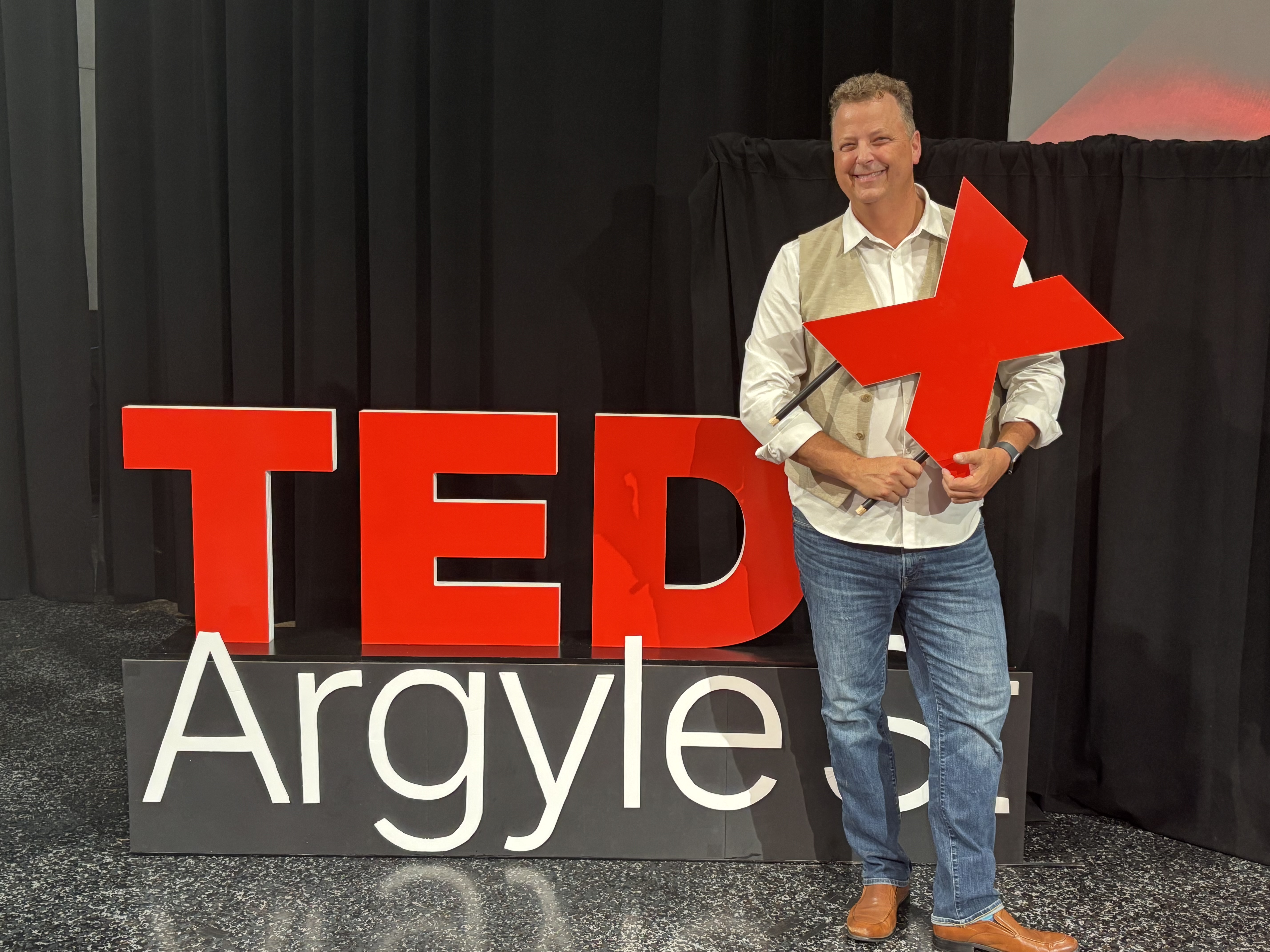
TEDx Speaker: Halifax Nova Scotia
Bring your national conference or corporate retreat to life with Atlantic Canada’s premier Hall of Fame speaker and learning designer. Based right here in Nova Scotia, Tyler Hayden has been transforming workplace cultures, driving employee retention, and energizing corporate events across the Halifax Regional Municipality (HRM) since 1996.
Whether you are hosting an intimate executive retreat or a massive multi-day conference at the state-of-the-art Halifax Convention Centre, Tyler delivers customized, science-backed programs that turn abstract organizational goals into actionable workplace habits.



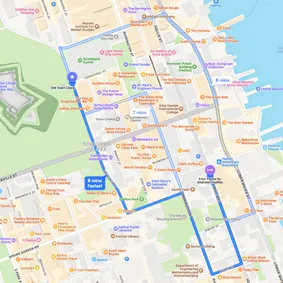
Downtown Halifax Map used in "Amazingly Similar Race"
Trusted by Elite Brands and Local Associations Across Atlantic Canada
With three decades of stage experience, Tyler is the corporate speaker Halifax organizations trust to deliver measurable ROI. He has partnered with Canada’s largest brands, financial institutions, and high-profile leadership networks right here in the city, including:
Sobeys (Proudly rooted in Nova Scotia)
TD Bank
YPO (Young Presidents' Organization)
National Sports Marketing Conference (Tyler had the honour of being the first professional speaker to keynote a national conference at the new Halifax Convention Centre—on the historic day FIFA announced its return to North America!)
Watch the Showreel
Check out some of Hall of Fame Motivational Speaker Tyler Hayden's Sizzle Reels
DisruptHR Speaker
Motivational Speaker Reel
TEDx Speaker
Top Keynote Speaker and Team Building Expert in Halifax
Championing the Next Generation of Nova Scotia Leaders
True leadership means giving back to the community. Alongside enterprise clients, Tyler actively invests his time and expertise into supporting youth leadership, entrepreneurship, and healthcare caregiver communities throughout the province, partnering regularly with:
Catapult Youth Leadership Camps
NSSSA (Nova Scotia Secondary School Students' Association) — A groundbreaking youth association Tyler proudly helped co-found during his own high school years.
Atlantic Canadian Universities & 4-H Clubs
Nurses, Caregivers, and more.

Strategic Keynote Topics for Halifax Corporate Conferences
Corporate event planners aren't just buying entertainment—they are buying solutions to retention, hybrid friction, and team alignment. Tyler’s signature keynotes are built to deliver executive-level solutions.
Flipping the Narrative — Leveraging AI and the 6 Dimensions of Team Engagement
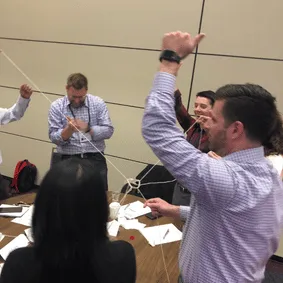
The Strategic Focus: Workforce Performance, Cultural Mapping, and Modern Agility.
The Framework: Learn how to utilize Tyler’s proprietary platform, RubberChicken.ai, to instantly diagnose friction points and map individual strengths. By actively employing the unique behavioural profiles of the "6 Rubber Chickens," managers leave with a data-driven blueprint to spark team connection.
The Business that Cared — Driving ROI & Sustainable Growth Through Culture Design
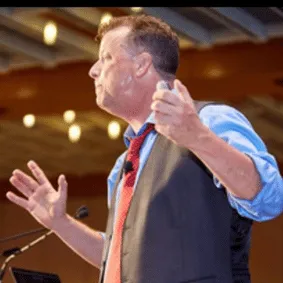
The Strategic Focus: Burnout Prevention, Employee Lifetime Value (ELV), and Compassionate Leadership.
The Framework: Based on the principles of The Business That Cared About People, this keynote reframes operational empathy into a high-yield business strategy, giving leaders tangible tools to slash costly turnover and build resilient workforces.
Livin’ Life Large™ — Maximizing Resilience and Mindset Ownership of Teams
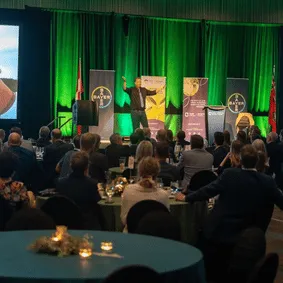
The Strategic Focus: Sustainable Performance, Corporate Wellness, Human Centred Leadership and Talent Retention.
The Framework: High-performing organizations require sustainable human energy. This flagship keynote delivers data-backed habits to combat workplace burnout, elevate mental fitness, and keep corporate teams performing at their peak.
Premium Corporate Team-Building Workshops in Halifax
Move beyond standard office games. Tyler designs high-stakes behavioral simulators engineered to test executive competencies, break down departmental silos, and forge lasting professional bonds.
The Nabcar Challenge — Driving Cross-Functional Synergy and High-Speed Execution
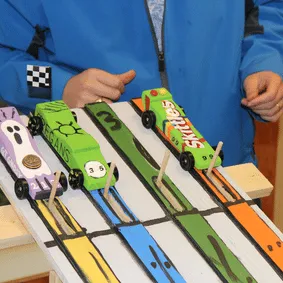
A fast-paced, high-stakes physical team simulation where groups build and race custom vehicles. This session forces teams to optimize resources, streamline internal communications, and execute a collective strategy under a crushing deadline.
Driving The Better Bus — Strategic Alignment, Direction, and Operational Velocity
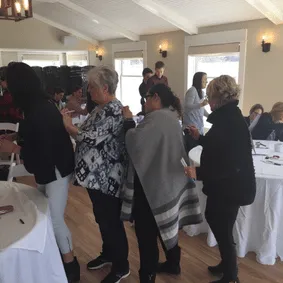
An experiential workshop tailored for organizations going through corporate transitions or strategic resets. This program provides an actionable blueprint for getting the right people in the right seats, eliminating internal friction, and aligning your entire workforce toward a shared corporate mission.
In It to Win It — Simulating Agility, Communication, & Competitiveness
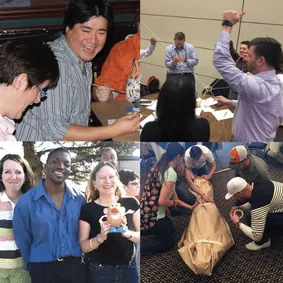
A fast paced competitive team based challenge that showcases learning objectives thought memorable activity and content. Your team will engage in a series of events that will showcase your most relevant and important steps forward based on industry research and pre-event intake.
CASE STUDY: The "Amazingly Similar Race" from Downtown Halifax to Peggy’s Cove
“We put a group of 30 top insurance professionals into a car scavenger hunt stretching from the historic streets of downtown Halifax out to the rugged coastline of Peggy's Cove. Armed with maps, rental cars, and a fierce list of challenges—from hunting down Titanic history to tracking historical CIBC pirate references—the energy was electric.
One team got so deeply immersed in their interpersonal connection prompts that they missed a crucial highway turn and drove an hour out of their way. They placed dead last on the scoreboard, but they walked away with the deepest, most resilient professional bond of any team on the grid. That is the power of experiential alignment.”
Beyond the Keynote: Conference & Event Partner for Halifax Events
As a past national conference event planner for the Canadian Association of Professional Speakers (CAPS) right here in Halifax, Tyler knows exactly what it takes to pull off a flawless event in this city.
If you are a meeting planner traveling to Nova Scotia from out of province, consider Tyler your local boots on the ground. He can point your VIPs toward the hidden gems of the South Shore—from the beautiful coastlines and artisan shops of Mahone Bay to his beloved hometown of Lunenburg. Whether you need a recommendation for the absolute best beaches, oceanfront dining, or a cup of coffee at The Barn, Tyler is ready to help make your conference an unforgettable East Coast experience.
Don't leave your conference energy to chance. Lock in a Hall of Fame speaker who understands the corporate landscape and the unique magic of Nova Scotia.
Schedule a Consultation for Your Halifax Event Today
What we do.
We connect 100,000+ qualified prospects looking for financial advice, lending, protection, debt help and claims to advisors and brokers every year.
We will always provide the best service.
We don't launch rockets. We just generate leads from Google, Bing and YouTube, connecting them with your team in real time. And you know what, we're bloody good at it.
Get leads from our existing matured campaigns.
Let us build bespoke lead-gen campaigns in your brand.
Deploy our AI sales androids to boost contact rate.
Utilise our proven systems and technology to increase your return on ad spend.

What We Do
Your proven customer acquisition system that increases conversion rates at every step of the customer journey so you can enjoy record breaking sales.
Effective Lead Generation
Strategically focused on high-intent leads generation tactics from Google, Bing, & YouTube.
Database Reactivation
Turn your old data into fresh appointments and sales, utilising our sales android that never rests.
Appointment Setting
Transform your contact rate and campaign profitability with our appointment setting sales android.
Blog
Your proven customer acquisition system that increases conversion rates at every step of the customer journey so you can enjoy record breaking sales.
The Best Team Building Activities for Remote Teams (From Someone Who's Actually Done It)
By Tyler Hayden CSP, HoF — Hall of Fame Motivational Speaker & Team Building Expert
Let me be straight with you: most blog posts about remote team building are written by people who Googled "fun Zoom activities" and repackaged the results.
This one isn't that.
What follows is 30 years of hard-won experience — from running team building for the PGA Tour, healthcare systems, financial institutions, and remote-first startups — distilled into a practical guide for managers who want their virtual meetings toactually do something.
Let's go.
First, Stop Picking Activities at Random
Before I recommend a single activity, I ask one question:Who's in the room?
Not their job titles. Not how many people are on the call. I mean:how do they learn?
Every recommendation I make starts with MIQ — Multiple Intelligence Quotient. It's the lens I use to understand a team's learning preferences before I design anything. Are they kinesthetic learners who need todosomething? Mathematical-logical types who love structure and metrics? Interpersonal learners who just want to connect?
Get that wrong, and the best activity in the world will still land like a wet towel.
Real example:I was brought in to work with the PGA. My initial instinct was to lean heavily into interpersonal learning — lots of discussion, sharing, connection. These were leaders and managers, after all.
Then I looked closer. The majority of people in the room were golf pros. Kinesthetic learners through and through. They learn with their hands, through movement, throughdoing.
So we scrapped the talk-heavy approach and rebuilt the program around hands-on, activity-based experiences. The result? Full engagement. And it combined both kinestheticandinterpersonal in a way that served everyone.
The lesson: don't assume. Diagnose first.
The #1 Mistake Managers Make with Remote Team Building
You heard about a team building activity thatcrushed itfor another manager. You think: perfect, I'll run that.
Stop right there.
What works for their team may completely flop with yours.Not because the activity is bad — but because it wasn't designed foryourpeople.
My Team Learning Model says that for any activity to stick, it has to haveunique, relative contextto the work your team actually does. It can't be fluffy. It can't feel disconnected. There has to be a logical, natural bridge between the activity and what your team does Monday through Friday.
That means if your team works in sales, the activity should connect to how they communicate, how they handle objections, how they support each other in the process. If they're in healthcare, it connects to how they engage under pressure, how they support colleagues, how they decompress.
This is why I builtRubber Chicken AI— to help managers identify therightactivity for their specific team makeup and learning outcomes, without having to start from scratch every time.
What Most Facilitators Get Wrong (The Dreaded Icebreaker)
Everyone knows the feeling. The manager launches a "fun" icebreaker on Zoom. It's awkward. It runs way too long. The energy in the room slowly deflates like a balloon three days after a birthday party.
Here's the problem:they let it go too long.
The best team building activities — especially icebreakers — should end at theirhigh point. Not when the rules say it's done. Not when everyone has had a turn. At the peak of energy, excitement, and engagement.
End it while people are still leaning in. Leave them wanting more.
That principle alone will change how your virtual meetings feel.
The Waterfall Technique (Try This This Week)
One of the most consistently effective activities I run remotely is something I callCoffee Talk— an open-ended statement or question that the whole team answers.
Here's hownotto run it: ask the question, then go around the room one by one. What happens? Some people give one-word answers. Others ramble for three minutes. The energy yo-yos. You lose control.
Here's theWaterfall Technique:
Pose the open-ended question or prompt
Ask everyone to type their answer into the chat — butdon't hit send yet
Count down: 3… 2… 1…send
Everyone's answers populate at the same time — cascading down the screen like a waterfall. The whole room gets to read them all, simultaneously, in real time.
It's fast. It's visual. It's surprisingly exciting. And it gives every single person a voice without anyone dominating the conversation or tanking the energy.
The reason open verbal participation fails isn't because people don't have good things to say — it's becauseyou can't always control how engaging those answers are going to be. The Waterfall Technique solves that.
How to Scale Remote Team Building: Small vs. Large Teams
Here's where most one-size-fits-all guides fall apart. A 10-person startup and a 500-person enterprise need completely different approaches.
For Small Teams (10–50 people):
Run it live. Everyone on screen at the same time. Keep it synchronous so the energy builds collectively. You can track metrics in real time, respond on the fly, and create genuine shared moments.
For Large Organizations (100–500+ people):
Thinkasynchronous + aggregate.
Run the same activity in multiple smaller groups at different times — maybe across different time zones or departments. Set up aleaderboardthat accumulates results from all groups over time. People may not all be in the same session, but they're connected through the shared challenge and the growing scoreboard.
The competitive element keeps people engaged even when they're not together. And the final reveal — seeing how the whole organization performed — creates a collective moment that lands even if it's delivered asynchronously.
Competition: Friend or Foe?
Some facilitators avoid competition entirely. I understand the instinct — you don't want anyone left behind or demoralized.
But here's the nuanced truth:the problem isn't competition. It's not understanding your audience.
Through the MIQ lens:
Mathematical-logical learnerslove leaderboards. They want to know who's first, second, and third. Competitionenergizesthem.
Naturalistic learnerslike to categorize and compare. They engage with structured wins.
Interpersonal learnerscare less about winning and more about whether everyone is included. You can still use competition — just make sure no one gets left out.
Intrapersonal learnerscan get stressed by competitive pressure. They want clarity and intention behind the metrics.
The question isn't "should I use competition?" The question is"how do I deliver competition in a way that aligns with how my specific team sees winning?"
Get MIQ right, and competition becomes a tool. Get it wrong, and it becomes a liability.
Team Building Is Not a One-Time Event
This might be the most important thing in this entire post.
Team building is what you dowithpeople — nottopeople.
It's cumulative. It's built incrementally over time. A 60-minute Zoom activity is a capstone, not a solution.
The real magic happens in thefive-minute wins— the quick, intentional moments woven into your regular meetings and routines that reinforce the same message, over and over, until it becomes culture.
Think of it like fitness. One epic workout doesn't make you fit. Showing up consistently does.
One team building event won't transform your team. Astrategyof small, well-placed, work-relevant activities — week over week — will.
The Icebreaker Is a Door, Not a Destination
Here's the final reframe I want to leave you with.
The icebreaker isn't the point of your meeting. It's theopening act.
A great remote team building activity — whether it's Coffee Talk, a competitive challenge, or a collaborative exercise — should function as aspringboardinto the rest of your agenda. It warms up the room. It sets the tone. It signals:this is a space where we're engaged, present, and working together.
When you design it that way — when the activity ties naturally into the conversation you're about to have, the skills you're about to practice, or the culture you're trying to build — that's when it stops feeling like an obligation and starts feeling like the best part of the meeting.
Your Action Items for Monday Morning
Before your next activity:Ask yourself what you know about your team's learning preferences. If you don't know — find out.
Try the Waterfall Techniquein your next team meeting. One question. Countdown. Watch what happens.
Set a high-point exit.End your next icebreakerearly— while energy is still high.
Connect the activity to the work.Every single time. No fluffy standalone events.
Think long-term.What's your team building strategy for the next 90 days — not just the next meeting?
Fun is the delivery. Better teams and energy on Monday is the point.
If you want to know what activities are right foryour specific team, tryRubber Chicken www.rubberchicken.ai — it's built to help managers find the right fit based on real team makeup and real learning outcomes.
Or, if you want to bring a fully customized remote team building experience to your organization,book a discovery calland let's figure out exactly what your team needs.
Tyler Hayden CSP, HoF is Canada's Hall of Fame Motivational Speaker and the founder of Team Building School and Rubber Chicken AI. He has delivered team building experiences to audiences of 8 to 8,000 across Canada and beyond.


Check Tyler's Availability for Your Next Event
Grab a time to connect or shoot us an email.

Motivational Speaker & Team Building
Shop, Learn, and Explore
Follow Us & Join the Conversation


Motivational Speaker & Team Building in Canada
Hot Topics for Motivational Speaker in Canada
© 2026 Tyler Hayden Inc. All rights reserved.