Ooops ... This Page is Under Construction

You've Got Time to grab a Scooby Snack and Check Back Later
We love growing new things to help up level your workplace culture.
What we do.
We connect 100,000+ qualified prospects looking for financial advice, lending, protection, debt help and claims to advisors and brokers every year.
What We Do
Your proven customer acquisition system that increases conversion rates at every step of the customer journey so you can enjoy record breaking sales.
Effective Lead Generation
Strategically focused on high-intent leads generation tactics from Google, Bing, & YouTube.
Database Reactivation
Turn your old data into fresh appointments and sales, utilising our sales android that never rests.
Appointment Setting
Transform your contact rate and campaign profitability with our appointment setting sales android.

Get a good impression your brand on them.
We don't launch rockets. We just generate leads from Google, Bing and YouTube, connecting them with your team in real time. And you know what, we're bloody good at it.
Create your amazing feature.
Add your ideas here.
Give more your amazing feature or ides.
Costumer review.
See why customers love GHL Elite.

"If you're looking for an all-in-one app to help you increase sales and save time on follow-ups, I would highly recommend NexLevel CRM."
– Rachel Johnson


"Our team has been using NexLevel for a few months and we are very happy with the results. We've closed more deals than ever before and our sales team loves it."
– Mike Nord

"You never know what you're missing until you try NexLevel. We've been using it for 9 months and it has helped us double our pipeline and close more deals."
– Heather Mathewson

"Since using NexLevel over a year ago, I’ve generated $300k+ in new revenue and saved more than 20 hours per week on administrative tasks like reminders and reschedules."
– Ranjana Muthaliar
Blog
Your proven customer acquisition system that increases conversion rates at every step of the customer journey so you can enjoy record breaking sales.
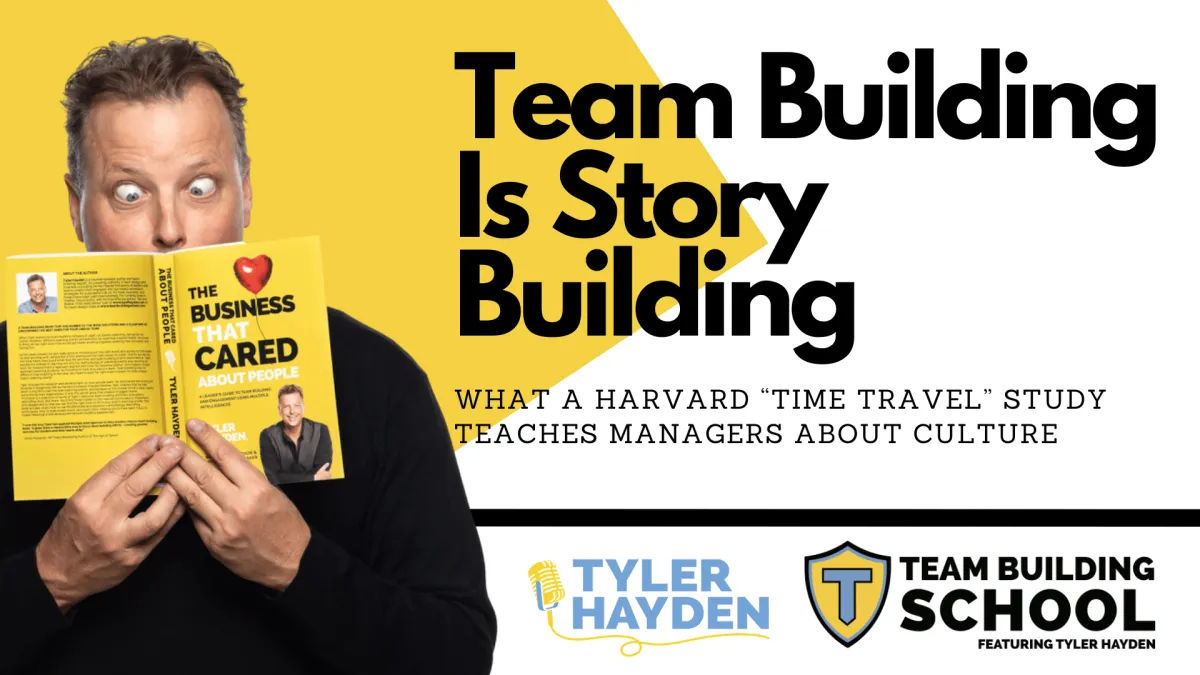
Team Building Is Story Building: What a Harvard “Time Travel” Study Teaches Managers About Culture
Team Building Is Story Building: What a Harvard “Time Travel” Study Teaches Managers About Culture
In the early 1980s, Harvard psychologist Ellen Langer ran an experiment that sounds like a thought experiment but behaved like a blueprint. Two groups of men in their seventies and eighties were brought to a retreat space staged as if it were 1959 - mid-century magazines, a vintage radio, black-and-white TV, and conversations anchored in 1959 news and sports. One group was asked to reminisce about 1959 from the present. The other group was asked to do something far more radical: act as if it actually was 1959—to inhabit that identity in real time.
After just one week, both groups improved across a range of physical and cognitive measures. But the men who lived inside the 1959 frame improved more. The implication wasn’t mystical. It was practical: when people inhabit a coherent reality - through cues, expectations, and behaviour -their capabilities can shift. Langer later called this the “psychology of possibility.” The environment and the story didn’t just change how the men thought; it changed what they did, and what became available to them.
That’s not only a health story. It’s a workplace culture story.
Culture isn’t what you say—it’s what your team can prove together
Most managers are trying to build culture with language alone: values statements, posters, onboarding decks, and the occasional speech about “trust” or “ownership.” But teams don’t bond because they heard the right words. Teams bond when they experience something together and can point to it later.
This is the hidden reason we do icebreakers, initiative tasks, and team-building activities. Not for entertainment. Not to “warm up the room.” We do them because they generate evidence—and evidence becomes story.
And story is how teams remember who they are.
When a team completes an initiative task - navigates uncertainty, solves a problem, argues respectfully, makes room for quiet voices, adapts to a surprise constraint—something important happens: the team briefly enters the state it wants more of. Trust becomes real-time behavior, not a concept. Communication becomes observable, not aspirational. Leadership becomes shared, not positional.
But here’s the crucial step most managers miss: if you don’t verbalize what happened, the story evaporates.
Initiative tasks create moments. Debrief creates meaning. Story creates culture.
A team-building activity without reflection is a fun event. A team-building activity with reflection becomes culture construction.
In Langer’s study, the “act as if” group didn’t just talk about being younger; they behaved inside a younger identity. Your team-building moments do the same thing at work: they let people behave inside the future team—if only for five minutes.
The manager’s job is to capture that moment in words:
“Did you notice how quickly we shared information once we named the constraint?”
“When we got stuck, we didn’t blame. We experimented.”
“We trusted the handoff instead of micromanaging it.”
“We stayed curious under pressure.”
That short naming process does something powerful. It acknowledges that a positive state existed here, with these people, in this team. Once spoken, it becomes part of the team’s identity: we can do this. And once a team believes “we can do this,” it stops being limited to the activity. It becomes portable.
Now that state is applicable to the rest of the team’s lived realities: project planning, conflict conversations, stakeholder meetings, deadlines, and change fatigue.
Managers: stop asking for the culture you want. Start staging it.
The Harvard study wasn’t just mindset - it was environment design. The retreat was full of cues that made 1959 believable. That’s your leadership challenge: build the conditions where the team you want can show up.
If you want a culture of ownership, design moments where ownership is required and safe.
If you want psychological safety, design moments where small risks are rewarded.
If you want collaboration, design moments where lone-wolf behavior can’t win.
Then, when the team succeeds - even in small ways—tell the story back to them.
Make stories reusable: bring them into meetings where it matters
A story becomes culture when it gets reused at the point of need.
When the real work gets tense, a manager can say:
“This feels like that initiative task where we had too many options. What did we do that worked?”
“Remember when we had no clear leader and we still got it done? Let’s do that again.”
“We’ve already proven we can communicate under pressure. Use the same pattern.”
That’s when team building stops being an event and becomes an operating system.
The question every manager should ask weekly
Not “Did we do team building?”
But:
“What story of success did we create this week—and did we name it out loud?”
Because once you start collecting those stories, you’re not just managing tasks. You’re building an identity. And like the men in that Harvard retreat, once people start living inside a better story, they begin to behave as if it’s true—until, eventually, it is.